
Kazakhstan Has Spent 23 Years Bringing Faiths Together. Now Comes the Harder Part. — Global Issues

ASTANA, Kazakhstan, October 12 (IPS) – In a world increasingly divided by war, political distrust and competing ideologies, Kazakhstan has spent more than two decades pursuing an unusual diplomatic undertaking: keeping representatives of different religions in conversation.
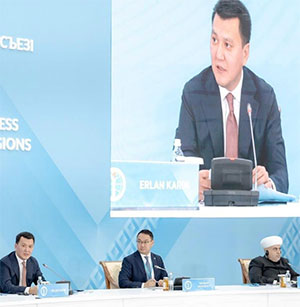
At a meeting in Astana this week, Vice President Erlan Karin made clear that maintaining those conversations was no longer enough.
“Spiritual diplomacy can play a special role,” he told participants. “It doesn’t replace political talks. But it complements them and keeps channels of communication open where diplomatic dialogue is difficult.”
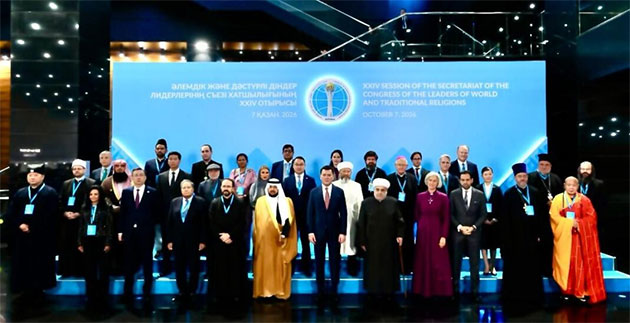
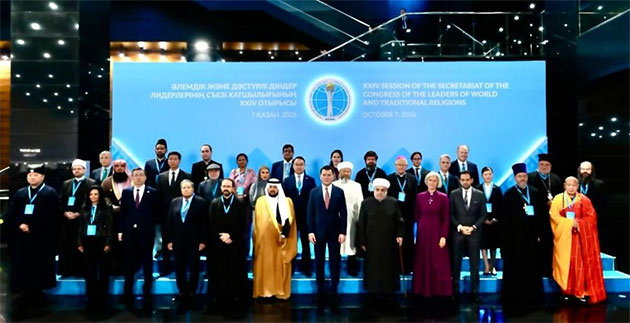
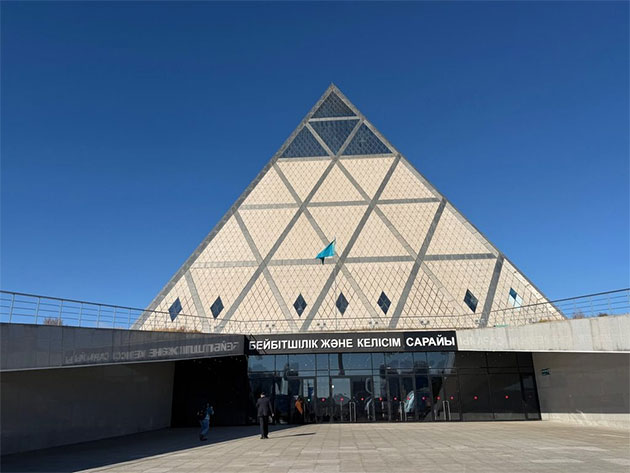
The remarks came at the 24th meeting of the Secretariat of the Congress of Leaders of World and Traditional Religions, held on Oct. 7 at the Palace of Peace and Reconciliation.
The official participant list named 38 representatives of religious communities, international organizations and Kazakh government institutions, reflecting the forum’s religious and geographical diversity.
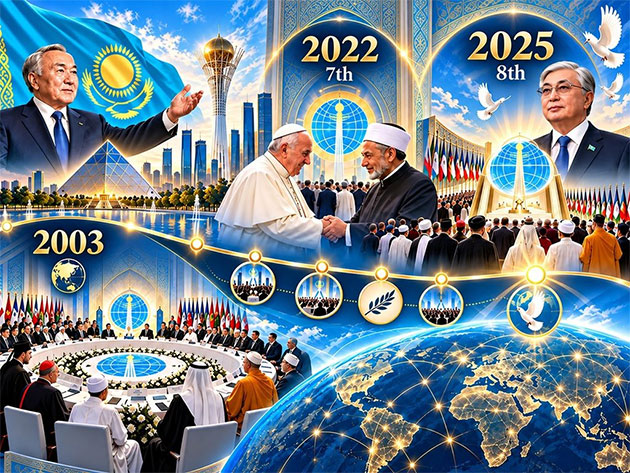
Founded in 2003 at the initiative of Kazakhstan’s first president, Nursultan Nazarbayev, the Congress initially brought 17 delegations from 13 countries to Astana.
It has since developed into an international forum that convenes major gatherings every three years while maintaining contact through its Secretariat.
Pope Francis participated in the seventh Congress in 2022, alongside the Grand Imam of Al-Azhar, Ahmed Al-Tayeb. The eighth Congress, held in September 2025, brought together religious and international representatives around the Astana Peace Declaration.
For Kazakhstan, situated between Russia and China and pursuing relations across competing centers of power, the Congress has become one expression of its wider diplomatic approach: providing a meeting place for governments, religions and civilizations that do not always share political interests.
But its participants are increasingly asking how such encounters can influence events outside the conference hall.
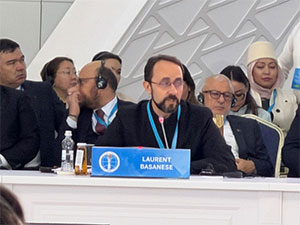
A Forum That Outlasts Its Meetings
Father Laurent Basanese, representing the Holy See’s Dicastery for Interreligious Dialogue, reminded delegates that the Vatican had supported the initiative since its founding.
He recalled Pope Francis’ participation in 2022 and emphasized the continuing work required after declarations are adopted.
The credibility of such statements, he said, ultimately depends on the willingness of their signatories to keep working together.
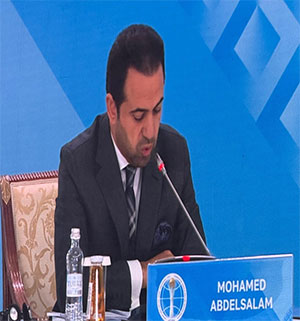
That concern was echoed by Mohamed Abdelsalam, secretary-general of the Muslim Council of Elders, who warned that principles left unimplemented risk becoming little more than words on paper.
“A declaration that is not implemented loses its functionality,” he said, according to the meeting transcript.
The appeal for continuity also came from the United Nations.
Nihal Saad, director of the United Nations Alliance of Civilizations, thanked Kazakhstan for its sustained efforts to promote cooperation across cultural and religious boundaries.
She pointed to the role of religious leaders in addressing climate change and the ethical implications of artificial intelligence, arguing that governments and technical experts could benefit from the influence of faith communities within society.
The challenge with AI, she said, was ensuring that ethics were “built into the design of AI systems rather than as an afterthought.”
Her remarks placed the Congress within a wider international debate over how technological progress can remain accountable to human values.
Turning Principles Into Projects
Kazakhstan’s latest effort to give the forum a practical role produced two documents adopted at the meeting.
One addresses the contribution of religions to combating climate change. The other establishes 11 ethical principles for using artificial intelligence in religious contexts.
Both emerged from proposals advanced by President Kassym-Jomart Tokayev at the 2025 Congress.
Gulsana Kozhabay, who heads the International Center for Interfaith and Interreligious Dialogue, explained that the climate document had been developed with contributions from 26 religious representatives, diplomats and experts.
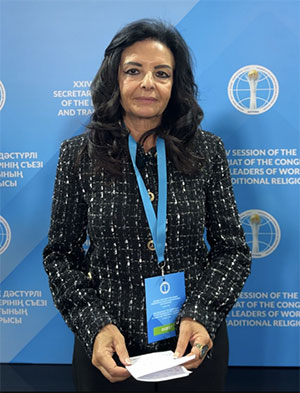
It draws on amanat, a concept rooted in Kazakh cultural heritage that emphasizes responsibility for preserving what one generation receives and passes to the next.
The AI code, refined through an interreligious commission of 24 participants, addresses human dignity, freedom of conscience, religious information and the dangers of algorithmic manipulation.
Contributors included representatives of religious traditions extending far beyond Central Asia, among them Japanese Shinto representatives and Chinese Taoist leaders.
The meeting also considered a different kind of cooperation.
Yerzhan Ashikbayev, Kazakhstan’s first deputy foreign minister, presented a joint initiative with the Holy See: a charter protecting the rights and dignity of children with incurable diseases.
Kazakhstan and the Holy See had agreed on the charter’s text during a separate colloquium in Astana on Oct. 2–3. The Secretariat subsequently supported efforts to advance it internationally.
“When medical science reaches its limits, our human responsibility does not end,” Ashikbayev said in his prepared remarks.
The charter emphasizes palliative care, relief of suffering, parental participation and support for children and their families.
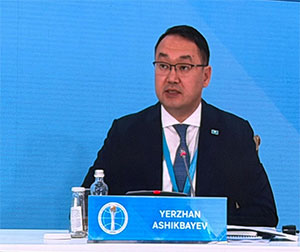
Its development, involving medical and bioethical expertise, illustrates how an interreligious relationship can extend into humanitarian cooperation.
The Next Test for Spiritual Diplomacy
None of these initiatives removes the political difficulties surrounding international cooperation.
The two ethical documents are advisory and create no legal obligations. Their influence will depend on whether religious institutions, governments and technology companies act on their recommendations.
These efforts also reflect the security challenges facing Central Asia.
As developments in Afghanistan continue to affect regional stability, Kazakhstan has worked with the United Nations to combat terrorism and prevent violent extremism.
Against this backdrop, Kazakhstan’s ability to sustain an international platform for dialogue among religious leaders of different traditions for more than two decades has become a distinctive feature of its diplomacy, linking regional security concerns with a commitment to religious diversity and mutual understanding.
At the conclusion of the meeting, Karin called for work on a proposed Global Movement for Peace, intended to strengthen cooperation among religious leaders and give spiritual diplomacy a more practical international role.
A draft concept and phased plan are to be prepared for consideration in 2027, ahead of the ninth Congress in 2028.
It remains a proposal, not an established peacebuilding mechanism.
But the assignment reflects an important shift in Kazakhstan’s approach: from demonstrating that religious leaders can meet despite their differences to asking what they are prepared to accomplish together.
After 23 years, the country has demonstrated an ability to keep the conversation going.
The next test is whether that conversation can help change the world beyond Astana.
This article is brought to you by INPS Japan in collaboration with Soka Gakkai International in consultative status with UN ECOSOC.
IPS UN Bureau



© Inter Press Service (20261012064446) — All Rights Reserved. Original source: Inter Press Service
