
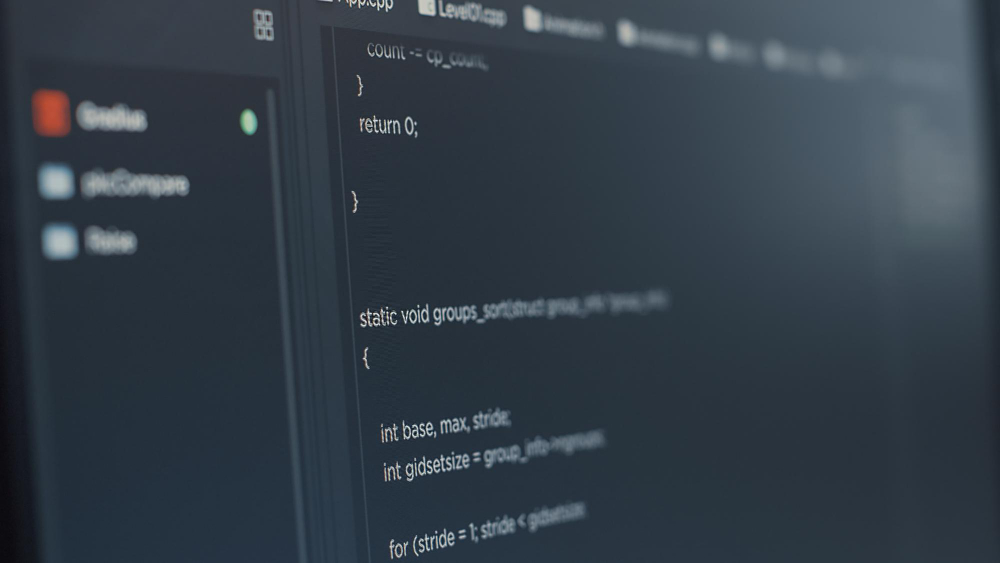

- Static Application Security Testing (SAST) is a security methodology to inspect code as it’s being written.
- The object of this analysis is to try and identify problems with the code, such as those SQL injection windows, unvalidated file paths, missing input validation flaws and other opportunities for hackers to exploit.
- It’s been well documented that the cost to fix a vulnerability increases exponentially the further along the software development lifecycle it goes.
- When a developer catches a bug as they’re working in their Integrated Development Environment through SAST testing or another method, the fix can often be implemented in a matter of seconds through a simple adjustment.
It’s not easy to create secure applications. Developers have to avoid a litany of common coding errors, and they often fail to do so. For instance, they might neglect to sanitise user inputs before passing them onto a database, which creates room for nasty SQL injection attacks. There’s also the risk of leaving hardcoded credentials, like API keys or database secrets in the source code, broken access controls, buffer errors and weak password management.
There are so many things that can go wrong when it comes to writing code, and humans being the fallible beings that we are, don’t always do things right. Neither do AI coding agents, due to their annoying tendency to hallucinate and generate the wrong logic.
For now, it seems that vulnerabilities will always exist. That’s just the reality, and it’s perhaps more worrying than ever now that cybercriminals have access to absurdly powerful AI tools that can identify flaws in software with alarming ease.
For businesses, especially the growing number of tech firms working to move from proof of concept to market-ready technology, shipping flawed source code carries real operational and financial risk. One of the best ways to curb that risk is to implement SAST (static application security testing) in order to inspect the code as it’s being written.
By catching bugs as early as possible, as soon as the code exists, security transforms into a financial imperative that dramatically reduces technical debt while accelerating developer velocity.
Data breaches cost more than ever
The importance of early detection becomes clear through a simple comparative analysis. Earlier this year, IBM reported that the average data breach now costs a staggering $4.99 million (£3.76 million) per incident, up 12% from a year earlier.
The costs come not only from the inevitable downtime that occurs while fixing the breach, but also from regulatory fines, reputational damage, asset theft and expenses that accrue from remediating the situation.
Software vulnerabilities aren’t the only cause of data breaches, but they are a major attack vector. A second report this year from Verizon revealed that vulnerability exploits accounted for 31% of all data breaches. That’s a big chunk, and it should serve as a red alert for any organisation that has not yet implemented SAST and other measures to prevent bugs in their code from slipping through the net and finding their way into production environments.
A quick fix means big savings
It’s been well documented that the cost to fix a vulnerability increases exponentially the further along the software development lifecycle it goes. When a developer catches a bug as they’re working in their Integrated Development Environment through SAST testing or another method, the fix can often be implemented in a matter of seconds through a simple adjustment.
But if a vulnerability goes unseen all the way until a software update enters production, it could easily escalate into a real crisis.
The costs of implementing a fix become much harder to quantify the longer it’s left. Enterprises must also consider the ‘cognitive penalty’ that comes with a developer having to go through an older codebase that’s already in production. This requires them to re-learn the context of code that could’ve been written weeks or even months ago, often by someone else.
That developer likely has to be pulled away from another job, such as feature development, to investigate what went wrong in much older work, hampering their productivity. When this kind of unplanned work happens often enough, it can become a real drain on a developer team’s resources, resulting in a difficult to calculate but likely significant impact on the software engineering budget.
Cleaning up code early with SAST
This is why many enterprises employ SAST as a key part of their application security strategy. As the name suggests, SAST involves analysing an application’s static source code, before that code is ever executed.
The object of this analysis is to try and identify problems with the code, such as those nasty SQL injection windows, unvalidated file paths, missing input validation flaws and other opportunities for hackers to exploit. By detecting them early, they can hopefully be closed before anyone executes the code on a server.
Static analysis inspects the actual codebase to try and identify logic flaws, syntax errors, insecure coding patterns and security rule violations. SAST essentially builds a model of the application from its source code, including abstract syntax trees, control flow graphs, data flow graphs and call graphs that map how functions interact.
Through this analysis, it’s possible to understand how data flows through the application and see if untrusted inputs can reach sensitive functions without proper access controls or validation. The great thing about SAST is that it can be done right inside the developer’s workflow, with testing integrated within the IDE and the CI/CD pipeline itself. This is why SAST has become a mainstay of the ‘shift-left’ development philosophy, which emphasises the need to root out vulnerabilities as soon as they’re created.
SAST makes it possible to provide real-time feedback for developers, warning them of any problems so they can be corrected instantly. When SAST is properly implemented, it can catch many common vulnerabilities while the code is still being written, so developers can fix them quickly, rescan and confirm the problem has gone away. It’s a stark contrast from the all-hands-on-deck, panic-stations response that’s required when a critical flaw is found in production software.
SAST is more than just an insurance policy
The investment in early vulnerability detection can be justified as both an insurance policy and an operational cost-reduction tool. Not only does it help to prevent potential $4.99 million (£3.76 million) data breaches, but it can also help developer teams to reduce their reliance on late-stage dynamic application security testing or DAST, which often creates a bottleneck that slows developer velocity by pulling team members off their current projects to plug holes in code written earlier.
In contrast, SAST enables greater self-sufficiency in terms of code security. Developers are made aware of security flaws as they’re working on the code, which means all of the context is fresh in their mind. The tool will pinpoint the exact line of code that’s found to be problematic, and the developer can correct it there and then. There’s no need for a painstaking root cause analysis to find out what went wrong, and developers won’t have to waste time remembering what the code in question is actually for.
With AI-enabled cyberattacks contributing to the soaring costs associated with remediating data breaches, any organisation that fails to implement SAST and identify bugs at the earliest opportunity is playing with fire. The exponential costs associated with the accumulation of technical debt, delayed releases and a potential data breach cannot be ignored.
Read more on cybersecurity
3 signs your cloud security setup isn’t enough to stop a live attack – Worried your cloud security setup might not catch a real attack in progress? Here are three signs it’s time to look closer, and what to ask your provider
3 Zoom scams you need to avoid – Since it’s become more popular, Zoom has become a prime target for attackers. Learn how to identify these scams so you don’t get caught out
How a major glitch by Companies House revealed an uncomfortable truth about business data – The Companies House incident highlighted the outdated way business data is handled in a time where fraud is rife. This is how we overcome it
