
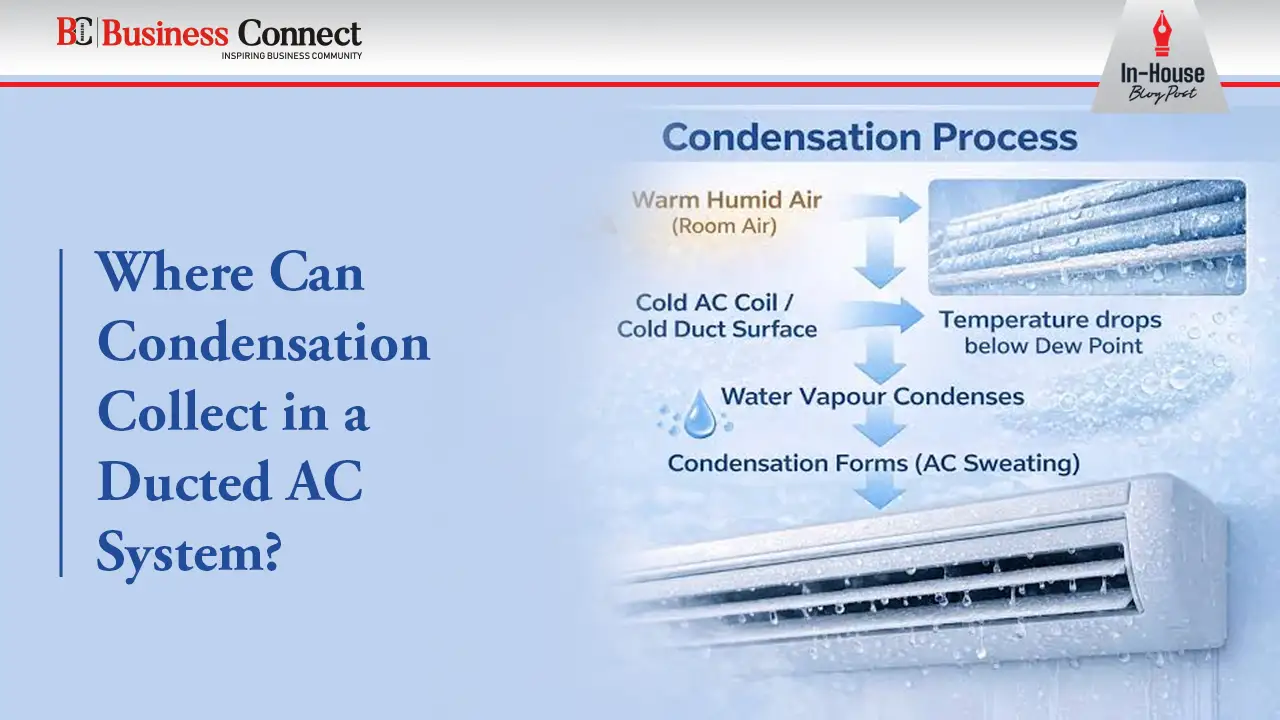

Where Can Condensation Collect in a Ducted AC System?
Condensation is a normal result of cooling humid air, but the water should move safely from the coil into a drain. Problems begin when moisture collects outside the intended pathway.
In a ducted system, water may appear around the indoor unit, inside the drain pan, along duct surfaces, or near ceiling grilles. The visible stain may not reveal the original source.
Common Condensation Collection Points
Dubai’s humidity can expose weaknesses in drainage, insulation, airflow, and duct sealing. WeFixUAE notes that condensation can develop inside ducting and around insulation when humid air reaches cold surfaces.
1. Evaporator Coil
Moisture first forms on the cold evaporator coil as warm, humid air passes across its metal fins during cooling.
The droplets should fall into the drain pan below. Dirt or poor airflow can make water collect around the coil casing.
2. Drain Pan
The drain pan catches water leaving the coil and directs it toward the drain opening during normal AC operation.
Cracks, corrosion, poor alignment, or standing debris can leave water pooled inside the pan instead of draining away.
3. Condensate Drain Line
The condensate line carries collected water away from the indoor unit. Slime, dust, or a poor slope may restrict flow.
A blocked pipe can force water back into the pan and surrounding ceiling area, sometimes causing stains or dripping.
4. Supply Plenum
The supply plenum receives cold air directly from the indoor unit. Its surfaces can sweat when insulation is damaged.
Moisture may appear at seams, access panels, or metal edges where warm ceiling air reaches a cold internal surface.
5. Duct Sections and Joints
Condensation can form inside or outside duct sections when humid air contacts cold metal through gaps in insulation.
Joints, bends, flexible connections, and poorly sealed sections deserve attention because small gaps may admit humid air.
6. Diffusers and Grilles
Cold air reaches rooms through diffusers and grilles. Moisture can collect where cooled metal meets warm room air.
Water marks around a vent may indicate humidity, restricted airflow, loose insulation, or leakage above the ceiling.
7. External Insulation
The outer vapour barrier should stop humid ceiling air from reaching cold ducts. Tears can allow surface sweating.
Water may then drip onto ceiling boards, wiring routes, or insulation, making the visible stain far from the defect.
Warning Signs Around the AC System
Condensation is often hidden above ceilings or inside equipment. Recurring changes around vents and finishes deserve attention, especially when they worsen while the AC operates.
- Water dripping from a ceiling grille
- Brown or yellow marks near vents
- Damp ceiling boards around the indoor unit
- Musty smells when cooling starts
- Standing water inside an accessible drain pan
- Sweating on exposed duct surfaces
- Bubbling or peeling paint near diffusers
- Repeated moisture after the surface dries
- Unusually high humidity in cooled rooms
A small table can help connect the visible clue with the likely inspection area:
| Collection area | Common clue | Inspection focus |
| Evaporator coil | Ice or excess droplets | Coil condition and airflow |
| Drain pan | Standing water | Cracks, debris, and alignment |
| Drain line | Overflow near unit | Blockage, trap, and slope |
| Duct exterior | Surface sweating | Insulation and vapour barrier |
| Ceiling grille | Stains or droplets | Humidity, sealing, and airflow |
Conditions That Allow Water to Accumulate
Finding moisture is only the first step. The underlying drainage, airflow, insulation, sealing, or humidity fault must also be identified.
Blocked Condensate Drain
A blocked condensate line prevents normal drainage and can make the pan overflow. Technicians may inspect the outlet, trap, pipe slope, and discharge point, then clear the obstruction without forcing debris farther into the system.
Restricted Coil Airflow
Dust on the evaporator coil or a heavily restricted filter can reduce airflow and change surface temperatures. The coil may become excessively cold, ice can form, and melting water may exceed what the pan and drain can handle.
Damaged Duct Insulation
Torn, compressed, missing, or poorly sealed insulation exposes cold duct surfaces to humid ceiling air. Repairs should restore both thermal insulation and the outer vapour barrier rather than covering the wet area temporarily.
Leaking Duct Joints
Loose duct joints and access panels can draw warm, humid air into a cold air path. An inspection should check seams, flexible connectors, plenums, and service openings, then seal confirmed gaps with materials suited to the system.
Contaminated Ductwork
Dust and organic debris can retain moisture after condensation occurs. Professional AC duct cleaning in Dubai may remove contamination, but the drainage, insulation, airflow, or humidity fault must also be corrected to stop moisture returning.
Excess Indoor Humidity
High indoor humidity increases the amount of moisture available to condense on cold surfaces. An assessment may need to review fresh-air intake, door leakage, exhaust operation, thermostat settings, and overall system capacity.
Hidden Water Movement
A ceiling stain may appear some distance from the actual collection point because water follows ducts, pipes, cables, or framing. Moisture readings and visual inspection help trace the path before damaged finishes are repaired.
Steps to Take After Finding Condensation
Avoid repairing paint or ceiling boards before the source has been confirmed. Moisture can return and damage the replacement materials.
- Move furniture and valuables away from active dripping
- Avoid touching wet electrical fittings
- Record when the moisture appears
- Check whether the AC is running when dripping begins
- Photograph stains, vents, and accessible equipment
- Do not puncture ceilings to release hidden water
- Arrange an inspection of drainage and duct insulation
- Allow wet materials to dry after the fault is corrected
- Replace damaged finishes only after moisture levels improve
Conclusion
Condensation can collect on the evaporator coil, drain pan, condensate line, plenum, duct surfaces, joints, insulation, and grilles. Stains may appear far from the source. Inspection should trace the moisture path and correct drainage, airflow, sealing, insulation, or humidity faults before ceiling repairs begin.
Add Business Connect magazine to your Google News feed
