
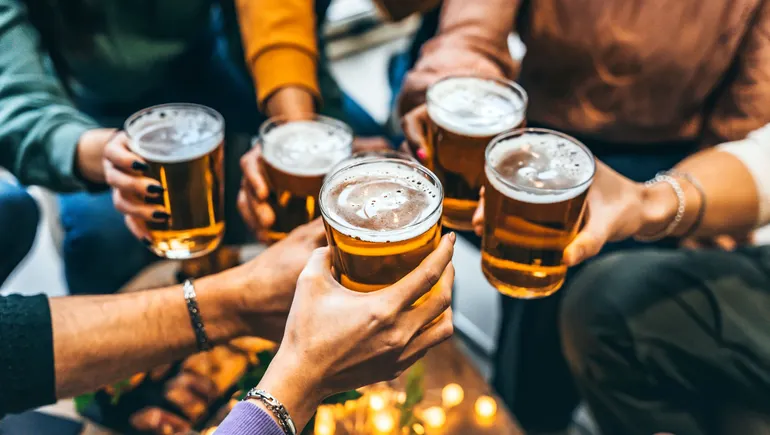

The number of Americans who are picking up an alcoholic beverage remains at a record low, halting a multiyear decline that has significantly impacted beer and spirit sales.
A new Gallup poll found 54% of Americans in 2026 drink alcohol, which is unchanged from the prior year and marks the lowest reading since Gallup began polling in 1939. The latest self-reported drinking rate in Gallup’s studies show the level is holding steady after three consecutive years of declines.
The drop since 2023 was seen across most demographic groups, including gender, race and age. Gallup noted none of these groups saw significant changes during the last year.
Declining alcohol consumption has forced beer and spirits companies to pivot their strategies and rethink their portfolios. A growing number of businesses have added more booze-free alternatives, stepped-up innovation and reviewed which alcohol brands generate the most positive attention.
Gallup’s new results could indicate that a drinking rate hovering above 50% is the new normal. This could be welcome stability to alcohol companies after years of changes, but they’re not out of the woods yet, with several in the midst of restructuring initiatives.
Because of the rise of nonalcoholic drinks, Gallup included questions about these alternatives in its survey for the first time. Among both drinkers and nondrinkers, 17% of respondents consumed nonalcoholic beer, wine or spirits instead of an alcoholic drink at some point in the last year. This includes 20% of drinkers and 14% of nondrinkers, according to Gallup.
By the numbers
54%
U.S. adults who say they drink alcohol, matching last year’s low
13%
U.S. adults who say they sometimes drink too much, also a record low
17%
U.S. adults who have substituted nonalcoholic beverages for alcohol
Americans who drink alcohol reported having an average of 3.2 drinks in the past week, up slightly from 2.8 last year but down sharply from the average of 3.9 during the last five years.
Gallup’s results show that drinkers choose beer most often, at 36%, followed by liquor at 32% and wine at 30%. Spirits volumes surpassed wine for the first time this summer, reflecting how consumer preferences are shifting toward liquor and ready-to-drink beverages.
Many alcohol companies have pointed to an increased interest in health and wellness beverages as a key reason for alcohol’s decline.
In Gallup’s study, more than half of respondents said having one to two alcoholic drinks a day is bad for their health, a stark contrast from 25 years ago. In 2001, just 27% of respondents considered drinking bad for their health, and 22% said it was good for them.
The rise in perception of alcohol’s impact on health could partially be due to increased awareness, with 86% of respondents saying they have heard about recent studies on the issue.
The amount of Americans who say they drink too much has also fallen, reaching a new low at 13%, according to Gallup. The highest year for reported over-drinking was in 1989 at 35%.
The results were gathered among adults 18 and older between July 1 and 19.
