
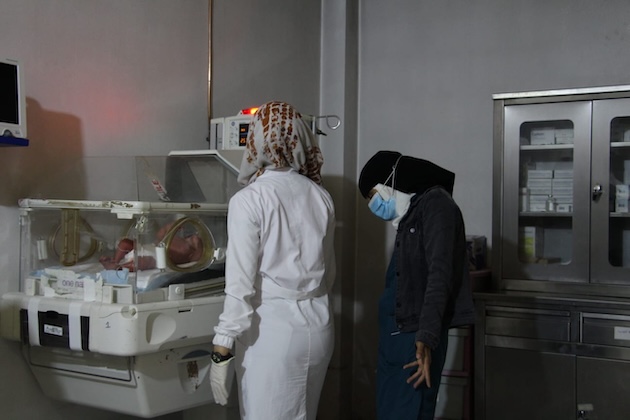

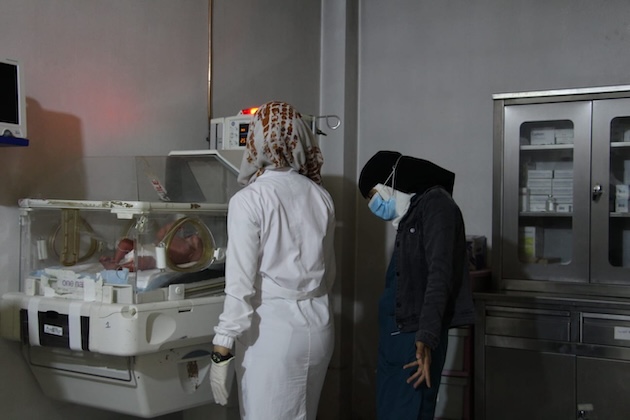
ALEPPO, Syria, August 11 (IPS) – The abuse 30-year-old Nour Al-Badawi experienced in an Aleppo public hospital while giving birth resulted in her having two major follow-up operations and left her with depression and anxiety.
She is one Syrian woman who spoke out to IPS about “obstetric violence” – a term that refers to physical, verbal, or psychological abuse by healthcare providers; medical interventions performed without the pregnant woman’s informed consent; and violations of her dignity and privacy within healthcare facilities.
The experience of these women extends far beyond medical challenges and harsh humanitarian conditions.
Obstetric violence encompasses all forms of abuse, neglect, violations of dignity and privacy, or the performance of medical interventions without informed consent.
Al-Badawi describes her most recent childbirth experience as one of the harshest chapters of her life.
“Poverty forces us to give birth in public hospitals and endure the mistreatment that takes place there. Because of the violence and abuse I experienced during childbirth, I no longer consider becoming pregnant again.”
Nour explains that her suffering was not limited to verbal insults and violations of her dignity but extended to violent practices during the delivery process, including forceful pressure on her abdomen, as well as an improperly performed procedure to widen the birth canal. This resulted in serious uterine complications that required two surgical operations to treat an obstetric urinary fistula.
The experience completely transformed Nour’s life. She developed severe depression and a constant desire for isolation. Her family also faced significant financial burdens to cover the costs of her treatment, forcing her to sell some of her belongings and resort to borrowing money.
Despite what happened to Nour, her husband chose not to make any comment and said he would not file a complaint or take legal action against the healthcare centre where the delivery took place, fearing further disputes and additional difficulties. Instead, he assumed responsibility for caring for his wife and covering her treatment expenses.
Farida Al-Hassoun (26), from Hama, also remembers the day she gave birth to her first child at a public hospital as one of the most difficult days of her life — not only because of the pain of labour, but also because of the way she was treated by nurses and midwives inside the hospital.
“I was screaming from the pain, but a nurse told me to be quiet and said I was exaggerating. No one explained what they were going to do. I was shocked when they stitched the wound resulting from childbirth without anaesthesia. At that moment, I felt indescribable pain,” Al-Hassoun said.
She points out that her fear increased as her questions were ignored and she received no psychological support during childbirth. After leaving the hospital, she was unable to forget the experience and continued to suffer from anxiety for months whenever she remembered the delivery room.
Al-Hassoun asks: “Can a Syrian woman give birth with dignity, or will violence inside delivery rooms remain a silent experience that no one steps forward to stop?”
Dr Ola Al-Omar (36), an obstetrician and gynaecologist, discusses the risks of obstetric violence, saying:
“In Syria, years of war and economic collapse have placed increasing pressure on the healthcare system, which has affected the quality of maternal care services. Shortages of medical staff, overcrowded hospitals, and declining resources have all contributed to creating an environment in which women are exposed to mistreatment during pregnancy and childbirth.”
She said that obstetric violence took many forms, including performing medical interventions without explaining them to the patient or obtaining her informed consent; using humiliating expressions; blaming women for crying out during labour; failing to respect privacy inside delivery rooms; depriving women of sufficient information about their health condition; ignoring their pain; or delaying the provision of necessary care.
She emphasises that every woman has the right to receive respectful maternity care, including the preservation of her dignity and privacy, obtaining informed consent before any medical intervention, receiving the necessary information to make decisions regarding her health, and being protected from humiliation, discrimination, or neglect.
Social and Psychological Counsellor Sereen Al-Sheikh (33), from the city of Idlib in northern Syria, speaks about the suffering of pregnant women, saying: “I have met many women who were subjected to artificial induction of labour to accelerate the delivery process, even though the mother’s cervix was already dilated, as well as repeated vaginal examinations that caused severe distress and trauma. In addition, patients are not allowed to have companions present during childbirth, and their movement is sometimes restricted.”
Al-Sheikh explains that these practices leave long-term psychological effects, including fear of becoming pregnant again, postpartum psychological disorders, and a loss of trust in healthcare institutions.
“Most women choose silence out of fear of social stigma, as well as because it is difficult to prove that violations or abuses have occurred. These incidents often take place without evidence or witnesses and, therefore, pass without accountability,” she says.
A childbirth experience may end with the arrival of a newborn into the world, but for some Syrian women, what follows is a long journey of fear and trauma.
At a moment that is supposed to be among the safest and most reassuring experiences in a woman’s life, some Syrian women find themselves facing an entirely different reality: cries that no one listens to, medical procedures carried out without explanation or consent, and harsh words that remain engraved in their memories for years after childbirth.
IPS UN Bureau Report
© Inter Press Service (20260811074401) — All Rights Reserved. Original source: Inter Press Service
