
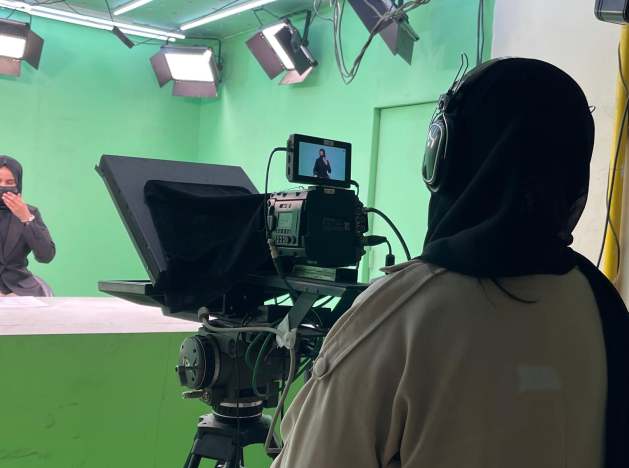

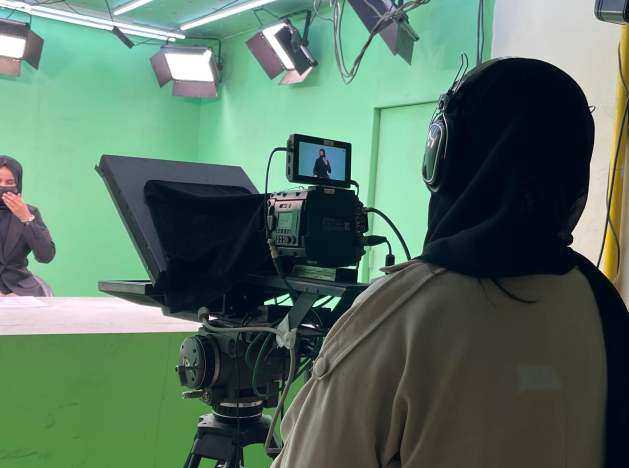
KABUL, October 8 (IPS) – It has become difficult for Afghan journalists to obtain information from the authorities, who are permitted to use smartphones only with special authorization. This ban particularly affects women, for whom face-to-face interviews are not an option.
The work of Hadia (name changed), a journalist at a Kabul-based radio station, has become significantly more difficult since the Taliban administration banned the use of smartphones within the Afghan government in June.
Many of Hadia’s stories remain incomplete because she can no longer obtain information from officials via phone as she used to.
“Landlines don’t offer the same capabilities as WhatsApp, and gathering information takes a lot of time. Most Taliban officials used to answer our questions via mobile apps. Where do we get our information now?” Hadia wonders.
Under the new rules, using a smartphone requires special permission, and officials who defy the ban risk having their phones confiscated and destroyed.
The ban hinders journalists’ access to information and particularly affects female journalists, who fear that the smartphone ban will further undermine their employment prospects.
Previously, even if officials did not wish to meet in person, they would still send information, photos, and audio files via WhatsApp or other smartphone apps. Now, that channel is closed.
The impact of the new smartphone ban is particularly significant outside the capital, where digital services have been crucial for accessing information.
“There have already been problems with several authorities. For instance, internet connections at the Herat police department and other offices are down because it is no longer possible to share a network connection from smartphones. Staff at some agencies said they could only answer questions after working hours because WhatsApp use was prohibited at the workplace,” says Nasrin (name changed), who works at a television station in the city of Herat in western Afghanistan.
According to Nasrin, the ban on smartphones in government offices reduces the number and influence of female journalists in Afghanistan’s media landscape.
The situation for female journalists in Afghanistan had already deteriorated following the Taliban’s return to power in 2021. They can no longer attend press conferences as they once did, and communication with authorities is restricted.
Officials increasingly refuse to grant face-to-face interviews to female journalists unless they are accompanied by a close male relative. At the same time, women have been gradually removed from the civil service, meaning they are no longer available for interviews either.
The number of female journalists has also plummeted. According to the Canadian organization Free Speech Centre, there were approximately 2,000 female journalists in Afghanistan before the Taliban took power; now, there are fewer than 200.
The independent journalists’ organization Afghanistan Journalists Center (AFCJ) has warned about the impact of the ban. According to the organization, it hinders journalists’ access to information and undermines press freedom. The organization suspects that this is an attempt by the Taliban to tighten control over communication and impede the operations of independent media.
Media executives are also concerned about the ban’s impact on access to information.
Taliban spokesperson Zabihullah Mujahid has sought to reassure the media, stating that the ban has not yet been confirmed and is still under discussion.
However, Hijran (name changed), a TV journalist working in Kunduz province in northern Afghanistan, is concerned.
“We will face real problems if the ban remains in effect. Sometimes we have to produce two or three news reports a day, which is feasible if we receive information via WhatsApp. Now, getting answers and arranging interviews can take several days.”
For this story, female journalists across Afghanistan were interviewed, and they all faced the same problems. Almost everywhere, female journalists have only been able to communicate with Taliban officials via smartphone apps.
Asma (name changed), a news manager at a radio station in Kabul, points out that everyone has the right to access information.
“If female journalists are cut off from information, why would they even remain in the media? Furthermore, no entity in Afghanistan holds the Taliban accountable if it fails to answer questions from journalists or citizens.”
© Inter Press Service (20261008110954) — All Rights Reserved. Original source: Inter Press Service
