
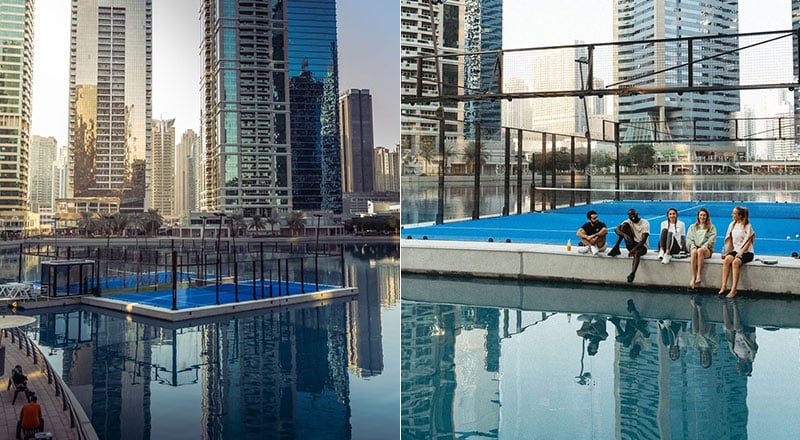

Dubai has established itself as a destination for innovative sports, leisure and entertainment concepts. Combining the popularity of padel with Dubai’s waterfront lifestyle creates an interesting business opportunity: the floating padel club.
Unlike a conventional padel facility, however, a floating padel club can involve multiple regulatory areas. Along with establishing the business and obtaining approvals for the sports activity, entrepreneurs may need to address maritime, structural, safety, environmental and location-specific requirements.
This 2026 guide explains the key considerations for starting a floating padel club in Dubai, from business licensing and approvals to construction, costs and operations.
What Is a Floating Padel Club?
A floating padel club is a sports facility where one or more padel courts are constructed on a specially engineered floating platform or waterfront structure.
Depending on the concept, the facility could include:
- Padel courts
- Reception and booking area
- Changing facilities
- Lockers
- Spectator areas
- Lounge or waiting areas
- Food and beverage facilities
- Retail space
- Coaching facilities
- Event areas
The exact licence and approval requirements will depend on the final business model, location and structure.
Why Start a Padel Club in Dubai?
Padel has developed into a highly visible recreational sport across Dubai.
A well-positioned floating concept can differentiate itself from conventional indoor and outdoor padel facilities by combining sport with a distinctive waterfront experience.
Potential revenue streams include:
- Hourly court bookings
- Membership packages
- Coaching sessions
- Padel academies
- Corporate events
- Private tournaments
- Sponsorships
- Equipment rentals
- Merchandise
- Food and beverage
- Brand activations
A floating facility can therefore be positioned as more than a sports court—it can become a lifestyle and entertainment destination.
How to Start a Floating Padel Club in Dubai
The process should begin with feasibility and regulatory assessment rather than construction.
Step 1: Develop Your Business Concept
Determine exactly what your floating padel facility will offer.
Consider:
- Number of courts
- Target customers
- Membership model
- Coaching services
- Tournaments
- Food and beverage
- Retail
- Corporate events
- Operating hours
- Waterfront location
- Platform design
These decisions can affect both licensing and external approvals.
Step 2: Choose the Appropriate Business Activity
The company must be licensed for the activities it intends to conduct.
Depending on the concept, activities may relate to sports facilities, recreational services, coaching, events or other commercial activities.
Additional activities may be necessary if the club includes retail, food and beverage or other services.
The exact activity should be confirmed before submitting the business licence application.
Step 3: Obtain Sports-Related Approval
Sports establishments in Dubai are subject to applicable Dubai sports regulations.
Your proposed facility, activities and operational model should therefore be assessed for the relevant sports approvals before significant investment is made in the project.
If you plan to organise competitions, tournaments or other sports events, additional event-related requirements may apply.
Step 4: Secure a Suitable Waterfront Location
Location is especially important for a floating padel project.
Potential locations could include suitable waterfront developments, marinas, hospitality developments or privately managed waterfront destinations, subject to approval.
Consider:
- Water depth
- Wave conditions
- Wind exposure
- Marine traffic
- Access
- Parking
- Utilities
- Emergency access
- Nearby residential developments
- Noise
- Customer accessibility
Permission from the relevant property, waterfront or berth operator may also be necessary.
Maritime Approval for a Floating Padel Club
A floating commercial facility can trigger additional maritime considerations that do not normally apply to a conventional land-based padel club.
Depending on how the floating structure is designed, classified, installed and operated, approvals or technical assessments from the relevant maritime authority may be required.
Requirements can relate to matters such as:
- Floating structure specifications
- Mooring and anchoring
- Marine navigation
- Berthing
- Access
- Safety equipment
- Emergency procedures
- Structural stability
- Marine operations
The proposed concept should therefore undergo regulatory and technical assessment before construction begins.
Floating Platform and Court Design
A floating padel facility requires specialist engineering.
The platform must be designed to accommodate the weight and operational loads associated with:
- Padel court structures
- Glass panels
- Artificial turf
- Lighting
- Players
- Spectators
- Furniture
- Equipment
- Utilities
Marine engineers and appropriately qualified contractors should assess buoyancy, stability, anchoring, wind loads, wave conditions and structural requirements.
Padel Court Dimensions
A standard padel court is generally approximately 10 metres wide and 20 metres long.
However, the actual floating platform needs considerably more space because the project may also require circulation areas, safety zones, access routes and supporting facilities.
The final dimensions should therefore be established by the project’s sports and marine design specialists.
Safety Requirements
Safety should be incorporated into the design from the beginning.
Depending on the project, considerations can include:
- Emergency exits
- Fire safety equipment
- Life-saving equipment
- Guardrails
- Non-slip surfaces
- Emergency lighting
- CCTV
- First-aid facilities
- Safe electrical installations
- Emergency access
- Evacuation procedures
Because customers are participating in sports over water, risk management should form a central part of the operating plan.
Documents That May Be Required
Documentation depends on the business structure, location and project specifications.
Typical documentation can include:
- Passport copies of shareholders
- Emirates ID and visa documents where applicable
- Trade name documents
- Business plan
- Description of proposed activities
- Site/location details
- Lease, berth or location agreement
- Floating platform drawings
- Padel court layout
- Engineering drawings
- Safety plans
- Operational plan
- Relevant NOCs and authority approvals
Additional technical documentation may be requested based on the project’s characteristics.
Floating Padel Club Setup Cost in Dubai
There is no universal fixed price for establishing a floating padel facility.
The investment can vary substantially depending on the scale and technical complexity of the project.
Major cost components can include:
Business Licensing
Company incorporation, business activity and licence-related expenses.
Sports Approvals
Costs associated with obtaining applicable sports establishment and activity approvals.
Waterfront Location
Lease, concession, berth or other commercial arrangements for the selected location.
Floating Platform
Engineering, fabrication, anchoring and installation can represent a significant proportion of the investment.
Padel Courts
Court structures, glass, artificial turf, fencing and associated equipment.
Lighting and Electrical Systems
Sports lighting and marine-compatible electrical infrastructure may be required.
Club Facilities
Reception, changing rooms, lockers, seating, lounges and other customer facilities.
Safety Systems
Marine safety, fire protection, emergency equipment and access infrastructure.
Technology
Online booking software, membership management, payment systems, CCTV and access-control systems.
Staffing
Managers, reception staff, coaches, maintenance personnel and other employees.
For this reason, investors should obtain a project-specific feasibility study and cost estimate rather than relying on a generic setup figure.
Can You Add a Café to a Floating Padel Club?
Potentially, but adding food and beverage operations changes the regulatory requirements of the project.
A café, juice bar or restaurant may require additional business activities, food-related approvals and compliant preparation/storage arrangements.
It is therefore advisable to include F&B in the original business plan rather than adding it after completing the sports facility.
Can You Offer Padel Coaching?
If the business intends to provide professional coaching or operate an academy, the appropriate activity and relevant requirements should be incorporated into the licensing plan.
Coaching can become an important additional revenue stream through:
- Individual lessons
- Group coaching
- Children’s programmes
- Beginner programmes
- Advanced training
- Corporate sessions
Can You Organise Padel Tournaments?
Tournaments and organised sporting events may require additional approvals.
Businesses intending to hold regular competitions should therefore account for event-related requirements in their operating model.
How Long Does It Take to Set Up a Floating Padel Club?
A floating padel facility can take considerably longer to establish than a conventional business licence because the project involves multiple stages.
The timeline can depend on:
- Company formation
- Sports approvals
- Location approval
- Maritime assessment
- Engineering
- Design approval
- Platform fabrication
- Construction
- Safety inspections
- Final operating approvals
Beginning construction before confirming regulatory requirements can create costly redesigns and delays.
Is a Floating Padel Club a Good Business Opportunity?
The concept offers strong differentiation, but its success depends on much more than the popularity of padel.
Investors should carefully assess:
- Location
- Customer demand
- Court utilisation
- Membership pricing
- Construction investment
- Lease or waterfront costs
- Maintenance
- Staffing
- Insurance
- Marketing
- Seasonal conditions
A detailed feasibility study should be completed before committing significant capital.
Start Your Floating Padel Club in Dubai
Setting up a floating padel club requires coordination across business licensing, sports regulations, location approvals and potentially maritime and technical requirements.
Planning these requirements before construction can reduce delays, unexpected costs and redesign work.
If you’re planning to establish a floating padel club or sports facility in Dubai, our business setup consultants can help you understand the licensing process, business activities, documentation and applicable approval requirements.
Contact us today to discuss your floating padel business setup in Dubai.
Frequently Asked Questions
Do I need a license to open a floating padel club in Dubai?
Yes. A commercial sports facility needs the appropriate business licensing and applicable sports approvals. A floating facility can also involve additional location, maritime and technical requirements.
Which authority regulates padel clubs in Dubai?
Sports establishments in Dubai are subject to Dubai’s sports regulatory framework, including relevant Dubai Sports Council requirements. The commercial licence is handled through the applicable licensing authority.
Does a floating padel court require maritime approval?
Potentially. Because the facility involves a floating structure or marine location, maritime requirements can apply depending on its design, classification, location and operations. The project should be assessed by the relevant authorities before construction.
How much does it cost to start a floating padel club in Dubai?
There is no single fixed cost. Investment depends on the number of courts, floating platform, location, engineering, construction, approvals, safety systems, club facilities and operating model.
Can foreigners open a padel club in Dubai?
Foreign investors can establish businesses in Dubai subject to the requirements applicable to their chosen business activity, legal structure and licensing jurisdiction.
Can a floating padel club have a café?
Potentially, but additional commercial activities and food-related approvals may be required.
Can I organise tournaments at my padel club?
Yes, subject to applicable sports-event licensing and approval requirements.
Can I offer padel coaching?
Coaching can be incorporated into the business model provided the appropriate activity and regulatory requirements are addressed.
What is the standard size of a padel court?
A standard padel court is approximately 10 × 20 metres. A floating facility will require additional space for access, safety areas and supporting infrastructure.
