
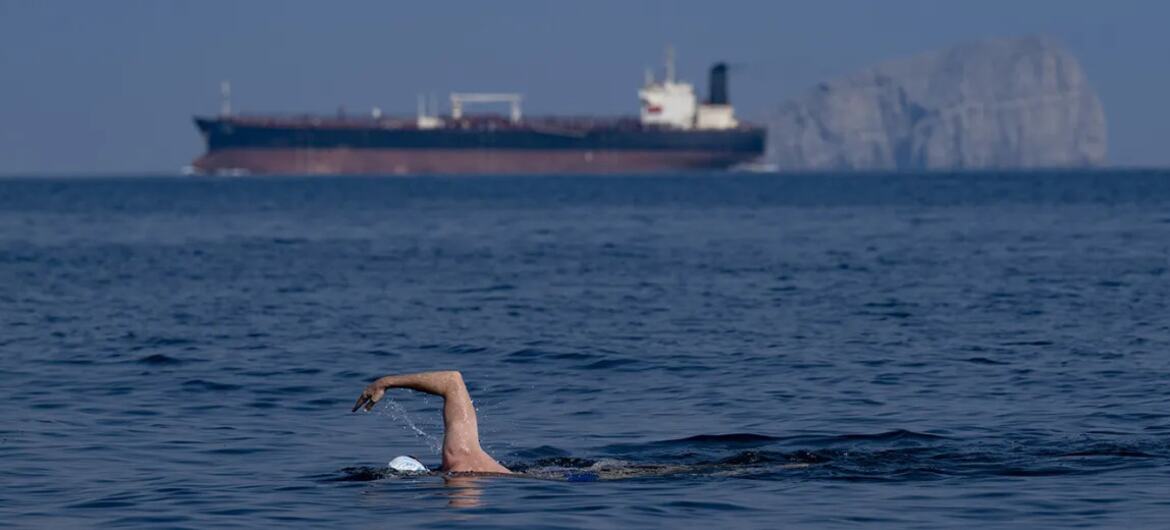

The UN Patron of the Oceans has undertaken extreme swims around the world – from Antarctic waters to a glacial lake on Mount Everest – to raise awareness of threats to fragile ecosystems. But this latest challenge, taking place in a conflict zone, was particularly extreme.
Driving him was the urgency of a mounting environmental crisis in the Gulf region sparked by the US-Israel attacks on Iran and counterstrikes from Tehran, following decades of pollution from oil and gas operations, industrial activities and desalination plants which have already put marine ecosystems under considerable strain.
Since hostilities rose amid attacks on shipping, oil pollution has risen sharply. The Gulf’s shallow, warm, highly saline and semi-enclosed waters also mean pollutants are likely to persist for years and spread across borders, threatening marine biodiversity, regional economies and livelihoods dependent on fisheries, tourism and desalination.
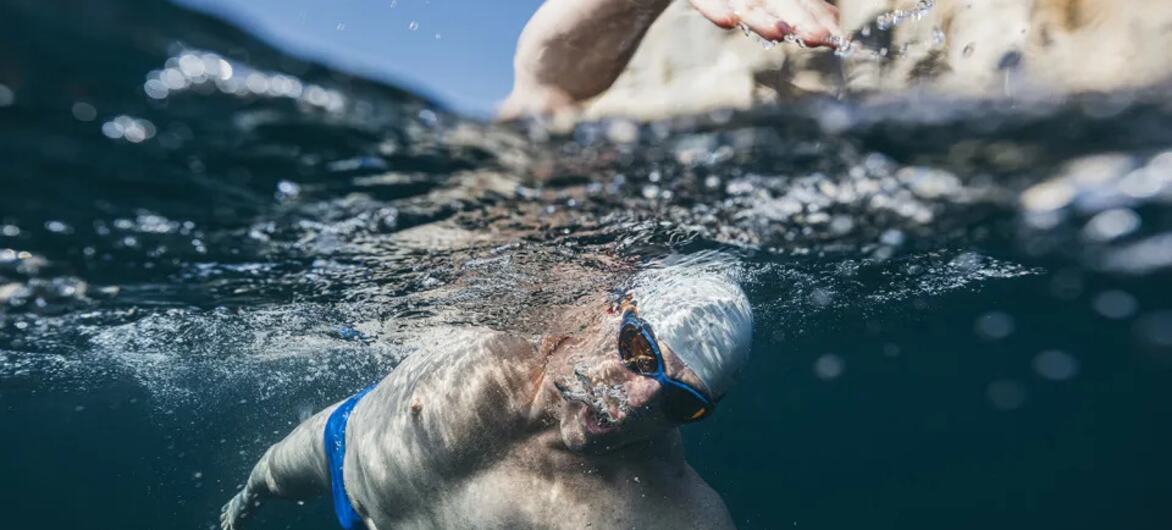
© Lewis Pugh Foundation
Pugh crossed the 15 km Strait of Hormuz in three days, a feat intended to draw attention to the devastating effects of conflict on ecosystems and biodiversity.
The UN Environment Programme (UNEP) caught up with Mr. Pugh following his epic swim across the strait:
What inspired you to undertake this swim?
War causes immense suffering. People are killed and families are torn apart. Hospitals, schools and homes can be destroyed in minutes.
But there’s another casualty that receives far too little attention, and that is nature itself.
I’ve wanted to highlight the impact of war on the environment for a long time. In the Strait of Hormuz, the reality in the water showed me just how important this message is right now.
We will never have lasting peace between nations if we destroy the very foundations of life on earth. And that’s what’s happening – every week, dozens of oil tankers, gas carriers and cargo ships are being targeted. This pollution kills wildlife, and it poisons marine ecosystems for decades to come.
Nobody wins here. It’s a lose-lose situation.
What makes the Strait of Hormuz special in terms of biodiversity, and what are the greatest threats it’s facing?
When most people think of the Strait of Hormuz, they think of a shipping lane, they think of geopolitics, they think of conflict, they think of oil tankers and gas carriers. But it’s so much more than that. It’s one of the most beautiful places in the world.
It has incredible mountains and islands and fjords. On the Gulf of Oman side, you’ve got coral reefs, and on the Iranian side you’ve got mangrove forests. In the water there are dolphins, sea turtles, dugongs and ospreys diving to catch fish. It’s a very special place.
But now, with oil tankers and gas carriers and cargo ships being targeted, there are significant oil spills, and the impact is going to last for years. It kills wildlife, and heavy metals and toxic chemicals will be contaminating the sea for decades.
© Lewis Pugh Foundation
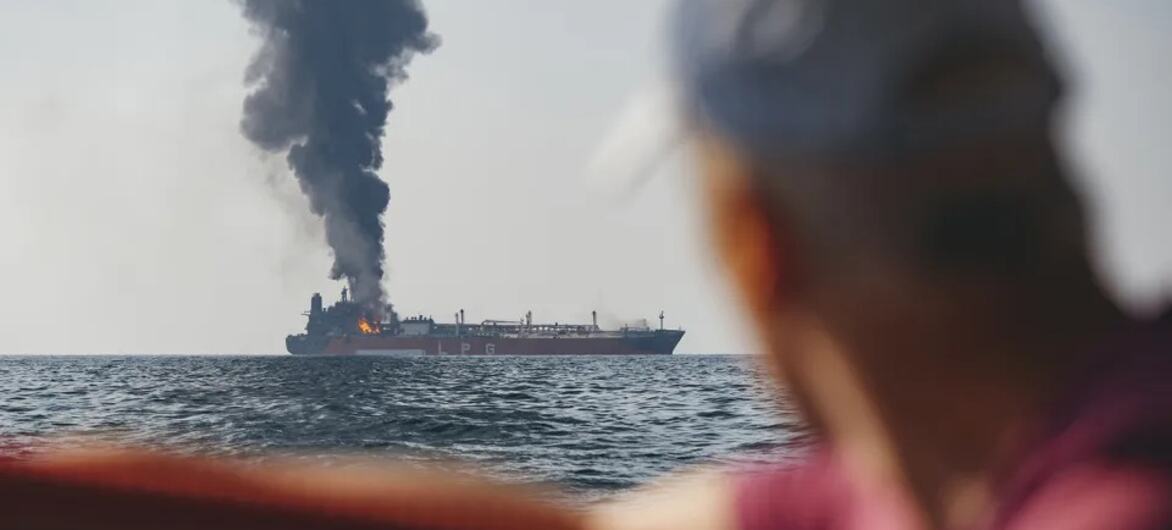
During his swim, Pugh witnessed two ships being attacked.
What are the most significant environmental impacts of this conflict?
When it comes to the triple planetary crisis – biodiversity loss, pollution and climate change – this conflict is all three of those wrapped up into one.
It’s loss of biodiversity, because it’s killing wildlife. It’s pollution, because it’s causing oil pollution, chemical pollution and heavy metal pollution. And it’s climate change, because this is about fossil fuels.
The impacts of war last a very, very long time. There will be people injured in this conflict who will be needing medical care for many years from now. But it’s the same with nature – the environmental impacts of this conflict will outlive us. It’s releasing oil, heavy metals and chemicals into the ecosystem. It’s polluting our water sources.
You can’t clean that up in a day. The impacts of this conflict on nature will outlive us.
What did you see during your swim that really brought this home for you?
The number of ships being struck every single day is significant. On the first day of my swim, there was an attack on an oil tanker. When the projectiles hit that vessel, it literally shook the sea.
The environmental consequences of targeting oil tankers can be devastating. Oil in the water decimates wildlife. It washes up onto the shores, and into the mangroves. It washes into the coral reefs. Birds just get covered in this stuff.
Dolphins and turtles are swimming there, and they’ll ingest it. Then it eventually settles down to the bottom, and it goes into the food chain. Fish will eat it. You could be far away from this conflict and still eat a fish carrying those toxins.
The next day, I witnessed a gas tanker being attacked. It was at the mouth of the most incredible fjord in the Musandam Peninsula.
I’d been there two days beforehand, swimming along the coast with dolphins. There were turtles in the water. And up on the mountainside, I saw this beautiful osprey come down and grab a fish. It’s a place of incredible natural beauty.
When the ship was hit, that fire burned the whole day, and there was a strong smell of chemicals. Even the sea around the vessel was on fire.
I just hope that the seafarers there got out alive. But the environmental impact on this region now is immense.
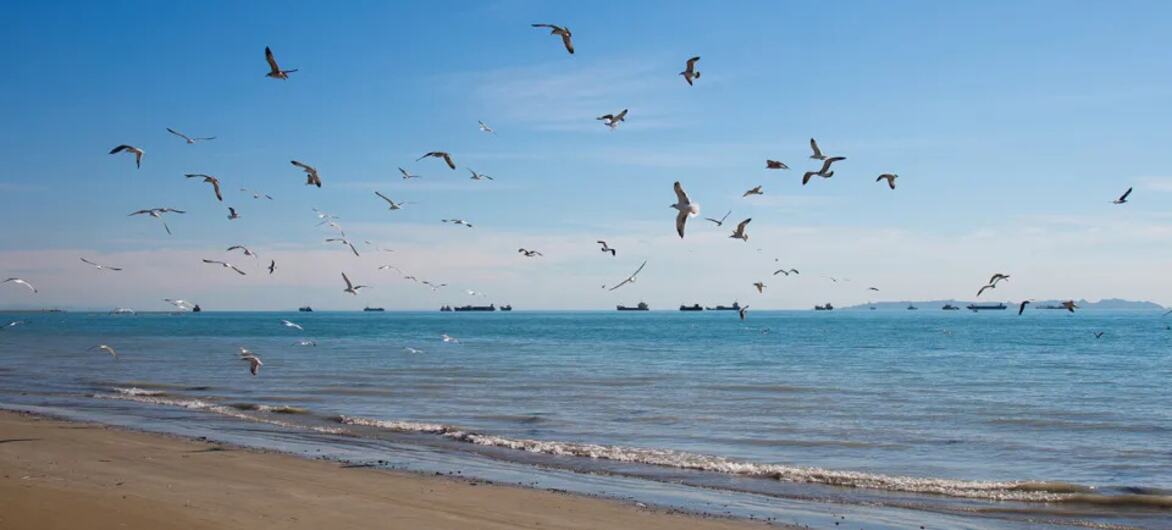
© Lewis Pugh Foundation
Pugh crossed the 15 km Strait of Hormuz in three days, a feat intended to draw attention to the devastating effects of conflict on ecosystems and biodiversity.
What needs to happen in the Strait of Hormuz for this ecological damage to be repaired?
The environmental cleanup needs to start as soon as possible. But that can’t take place while there is a conflict taking place, while shipping is being attacked. We need to stop this fighting, and we need to open up the Strait.
And it’s not just about the Strait of Hormuz. We’re seeing warfare in so many different parts of the world right now, but the environmental impact is often not spoken about. We need to speak about it; people need to understand the impact on life on Earth.
The interesting thing about a sport is that it opens doors. It builds bridges and brings people together. That’s what we need right now.
I hope it can help unlock the door to protecting our planet.
Watch this UN Video from 2023 when Lewis Pugh swam the length of the mighty Hudson River in New York, as UNEP’s Patron of the Oceans:
