


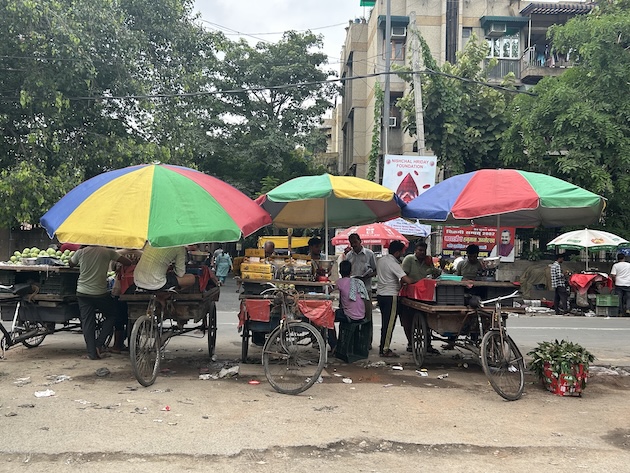
ANTALYA, Türkiye & SONIPAT, India, November 18 (IPS) – “Climate action has to deliver where people live,” COP31 President Murat Kurum said on Resilient Cities and Built Environment Day, part of the Leaders Summit. Cities, he said, are “where that implementation becomes real – in the homes people live in, the infrastructure they depend on and the energy they use every day.”
Kurum, who is also Türkiye’s environment and urbanisation minister, cited his country’s post-earthquake reconstruction as an example of resilient urban development.
The Presidency announced two initiatives: the Antalya Compact for Energy Efficient Buildings, which sets a voluntary target of reducing building energy intensity by 25% by 2035, and the Sustainable Urban Resilience Financing Facility (SURFF), intended to help cities turn climate plans into investment-ready projects. However, no budget or timeline was announced for the facility.
The question remains: will these commitments translate into funding for cities or remain declarations of intent?

A Long Climb Up the Agenda
Cities have gradually gained prominence in climate negotiations, largely through voluntary coalitions and initiatives rather than binding commitments.
COP26 Glasgow (2021) emphasised multilevel climate action and launched the Race to Resilience.
COP27 (2022) followed with the first-ever urban ministerial and launched the SURGe initiative.
COP28 (2023) introduced CHAMP, through which 64 countries agreed to involve cities in developing national climate plans. It also launched the Buildings Breakthrough, a 27-country initiative for near-zero-emission and resilient buildings by 2030.
COP29 (2024) in Baku established the Baku Continuity Coalition on Urban Climate Action and the MAP Declaration for resilient and healthy cities.
COP30 (2025) in Belém held the fourth Urbanisation Ministerial and introduced a heat-resilience initiative linked to the Global Cooling Pledge.
This attention is reflected in national climate plans. UN-Habitat found that 80% (2025-2026) of new climate plans have well-developed urban components, compared with 49% (2020-2021) earlier.
Yet only 47 of 128 plans identify a specific urban financing mechanism. Cities are increasingly part of climate commitments, but financial support has not kept pace.
What It Means for India
India illustrates the scale of this challenge. The World Bank estimates India’s cities will need around US$2.4 trillion by 2050, while private finance accounts for only about 5% of urban infrastructure investment.
WRI India estimates annual urban adaptation needs at US$67 billion. India’s 2031–35 climate plan supports resilient urban planning and efficient buildings but sets no specific targets for cities.
Aravind Unni, an urban practitioner and policy researcher, welcomes the attention but cautions against treating declarations as outcomes.
“Declarations are meant to signal the direction in which we may move,” he says. He considers the 25% building energy-intensity target something “that India would have anyways endorsed” and believes the country should “learn and use that in our domestic case”.
Unni is less convinced that the Presidency’s Climate Implementation Bridge, which aims to turn national plans into investment-ready projects, will address the needs of Indian cities.
Much of the work required, he argues, is “not really bankable”. “Adaptation and betterment of people’s lives cannot be dependent on private finance. It can be a part of the programme, but the huge section has to be reinvestment in cities through public finance.”
Private investment, in his assessment, will remain limited. The larger responsibility therefore rests with public finance, raising another question: who controls the money and decides how cities use it?
Money Needs Powers
For Unni, financing alone will not make cities resilient unless local governments have the authority to plan and implement climate action.
“Decentralisation is the key. Actual transfer of powers to the cities,” he says. He argues that the 74th Constitutional Amendment, implemented in 1993, which established the framework for urban local governments, needs to be “revisited and made better”.
Climate action is not explicitly listed among the 18 functions assigned to municipalities. However, urban planning, water supply, public health and urban forestry directly affect how cities prepare for heatwaves and floods.
Without adequate decision-making powers, cities remain dependent on higher levels of government, even when they bear the brunt of climate impacts. Unni argues that decentralisation is essential to ensure funding translates into local action.
Use What Is Already Being Built
India does not necessarily need to wait for new financing mechanisms to begin building climate resilience, Unni argues. Existing public investments in housing and infrastructure could incorporate climate adaptation.
“We are anyway constructing a lot of housing through public investments,” he says. The priority is to identify “what we can do within those schemes and projects.”
He points to Pradhan Mantri Awas Yojana (PMAY), the government’s flagship housing scheme, as an opportunity. Homes could incorporate designs that lower indoor temperatures by three or four degrees at night, allowing residents to recover from daytime heat.
For Unni, the issue is “more of a justice and a comfort issue rather than an efficiency issue”. Housing must protect people from the climate conditions they increasingly face.
“We can’t build our way out of this,” he adds. Existing housing schemes and urban master plans must incorporate climate considerations from the outset.
The housing ministry’s climate adaptation cell is an encouraging development, he says. However, the housing and climate ministries need to work more closely to integrate adaptation into public investment and urban planning.
Heat Shows What Money Can Do
Heat is one area where Unni sees the possibility of translating climate commitments into action. According to the government, heat action plans have been prepared by 23 states, 195 districts and 64 cities.
Another development is the inclusion of heatwaves in India’s list of notified natural disasters. The National Disaster Management Authority (NDMA) says mitigation funds can now support heat action plans.
“Heat action now has money attached to it,” Unni says. The challenge is to ensure this funding leads to sustained action on the ground.
Ahmedabad offers an example. Following the 2010 heatwave, associated with 1,344 excess deaths, the city introduced India’s first heat action plan.
A study supported by the NRDC found that the plan contributed to approximately 1,000 fewer deaths annually on hot days in the years following its full implementation in 2013.
However, Unni argues that heat planning must move beyond preventing deaths to addressing the longer-term effects of rising temperatures on people’s lives and livelihoods.
“Heat is not only a threat to life; it also affects how comfortable people are at home, how well they can work, and how much they earn,” he says.
He proposes a dedicated government scheme and legislation focused on thermal comfort and access to shade. The housing ministry could lead efforts to improve indoor comfort, while the labour ministry addresses outdoor workers’ exposure to extreme heat.
Communities as the Cheaper Route
Unni believes that involving communities in climate planning could also reduce the cost of building urban resilience.
“We already have communities which work on this,” he says. People working across India, from NGOs to local groups, to make cities and spaces more climate resilient. Governments should invest in these existing networks and make climate planning more participatory.
Recognising local knowledge and strengthening community-led responses could bring down the often-quoted costs of urban climate action “by a huge number”. Financial constraints, he argues, should not become an excuse for inaction.
What Comes Next
COP31 has given cities greater visibility through the Antalya Compact, the proposed financing facility and renewed political attention to resilient urban development. But these remain largely voluntary commitments, with no clear indication of how much funding cities will receive or when.
Whether cities get money or simply more recognition will become clearer in the negotiated outcomes on adaptation and finance expected at the conference’s close on 20 November.
For India, the test will be whether governments use existing housing investments, disaster mitigation funds and urban planning mechanisms to make cities safer and more liveable as climate risks intensify.
IPS UN Bureau Report



© Inter Press Service (20261118082157) — All Rights Reserved. Original source: Inter Press Service
