

The Premier League is renowned as the best league in the world given the notion any team can beat anyone.
In such a competitive league, it can often come down to the finer margins when looking for a breakthrough in the 90 minutes. Sometimes the crowd can play their part with some stadiums boasting a louder set of home fans than others.
However, Premier League stadiums are not restricted to all having the same sized pitch, which could create some issues for clubs who like to play their football in a certain way.
Here is a look at which club boasts the biggest pitch and which club may look to utilise their tight pitch.
What are the rules in the Premier League for pitch size?
Premier League clubs must abide by rules set by the Football Association when it comes to the dimensions of their pitches. The law states pitches must fall in the region of 90m – 120m in length and 45m – 90m in width.
The regulations show just how much difference there could be between pitches across the Premier League with teams able to make the playing surface to play to their advantage.
In fact, the regulations allow the playing surface itself to differ meaning clubs can only use a different grass type to what is used elsewhere. We’ve calculated the biggest and smallest pitches in the Premier League by using the length and width to find the area.
20
Craven Cottage (Fulham) – Area: 6,500m

Coming in as the smallest pitch in the Premier League is that of Fulham’s Craven Cottage. The pitch dimensions are just 100m x 65m, as Alvaro Arbeloa’s side look to suffocate their opposition in such a tighter space.
One of the league’s smaller grounds, the Cottage provides travelling sides with a lot less room to play their football.
19
Selhurst Park (Crystal Palace) – Area: 6,868m

Selhurst Park is known for being one of the tighter stadiums in terms of the distance between the stands and the pitch.
Crystal Palace play on one of the league’s smaller pitches and, alongside their hostile crowd, it is seemingly a recipe which works well for those in South London.
The Eagles are no stranger to getting a result against some of the bigger teams in the league in south London.
The pitch dimensions are 101m x 68m.
18
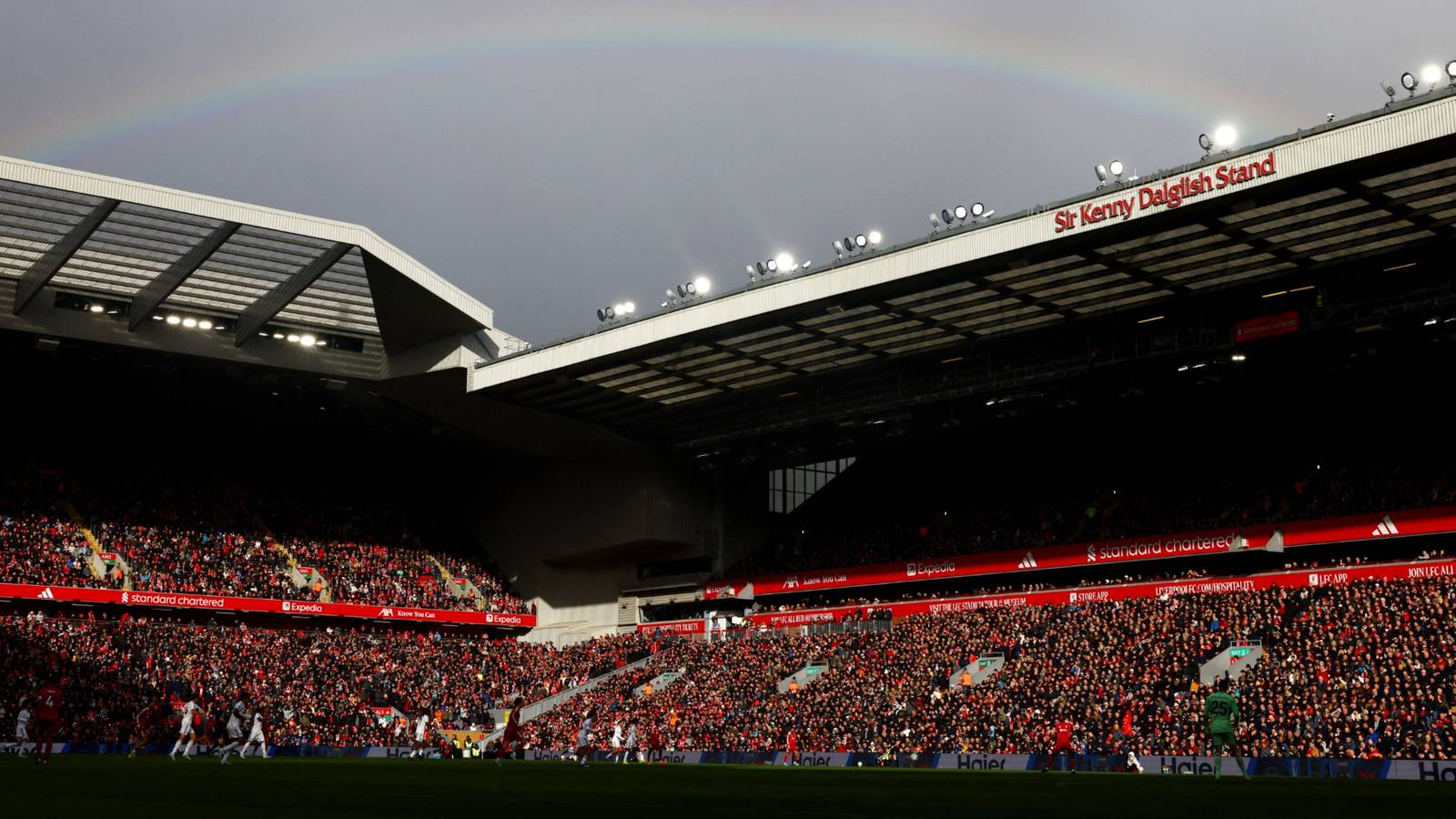
Anfield (Liverpool) – Area: 6,868m

Liverpool’s Merseyside home, Anfield. It has proven to be nothing short of a fortress over the years for the Reds and it appears they are doing so on a smaller – than standard – sized pitch.
The Reds are the only team to have broken Manchester City’s recent dominance, but after a tough campaign saw Arne Slot sacked last time out, it’s Andoni Iraola who has the task of restoring the Reds’ fortress.
The pitch dimensions are 101m x 68m.
17
Stamford Bridge (Chelsea) – Area: 6,901m

Now, we go to west London where Chelsea play on a slightly smaller pitch with an area of around 6,901m.
Despite being one of the league’s biggest teams, the Blues have a fairly standard sized ground – by Premier League standards – with a capacity of just over 40,000.
It is slightly surprising to see one of the most successful clubs in the league differ in their pitch size, but the Blues have proven to be one of the powerhouses over the last two decades so it seems something is working for them at Stamford Bridge.
The pitch dimensions are 103m x 67m.
16
CBS Arena (Coventry City) – Area: 7,140m

Back in the big time, Coventry City are doing their best to fit in. The Sky Blues have followed the norm when it comes to pitch size and Frank Lampard will be hoping to see that play a part.
Their home record will be the key to survival and more, just like it was for Sunderland in their first season back in the Premier League last time out.
15
Tottenham Hotspur Stadium (Tottenham) – Area: 7,140m

Having left White Hart Lane, Tottenham played their football at Wembley Stadium for a number of years before moving into their new north London home.
Despite building the league’s second-biggest stadium, the Lilywhites have not looked to go too big in terms of their pitch. They’ve looked to make their N17 home a bit of a fortress under numerous managers, but have consistently struggled – avoiding relegation on the final day last season.
The pitch dimensions are 105m x 68m.
14
Stadium of Light (Sunderland) – Area: 7,140m

Rivals in the north east, Sunderland’s home atmosphere at the Stadium of Light is also electric, with their ground holding around 49,000.
The Black Cats sealed promotion back to the Premier League in 2025 after an eight-year absence and have not looked back since, securing a shock European spot last season.
The pitch dimensions are 105m x 68m.
13
St. James’ Park (Newcastle) – Area: 7,140m

Newcastle United had a year to remember in 2025 after winning their first trophy in 70 years, but it has been misery ever since. They lost Eddie Howe, Anthony Gordon, Sandro Tonali and Bruno Guimaraes in the same summer this year.
Although St James’ Park is one of the league’s biggest and loudest, it wasn’t enough to keep hold of key figures and Matthias Jaissle has an almighty task on his hands.
The pitch dimensions are 105m x 68m.
12
Old Trafford (Man United) – Area: 7,140m

Much like their rivals, Manchester United also operate on the same sized pitch at Old Trafford.
The Premier League’s biggest stadium does not boast the league’s biggest pitch and is, in fact, considerably smaller than those that lead the way.
Although United may play on the same sized pitch as their arch rivals, the results in recent years have not been there to match that produced by others.
11
Etihad Stadium (Man City) – Area: 7,140m

Manchester City also play on a 7,140m pitch, and it is apparent it was just the right fit for Pep Guardiola’s men and may well be for Enzo Maresca’s side.
They have become the team to beat in the Premier League over the last decade and will be looking to snatch back their crown from Arsenal in a new era under Maresca.
It is interesting to consider the pitch at the Etihad is the same size as that at Bournemouth, for example, but it seems it is big enough for the Citizens to play at their full potential under their new boss.
