

Dive Brief:
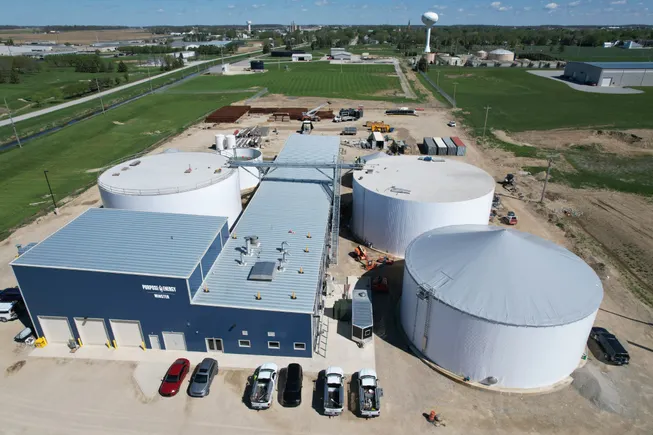
- Oikos maker Danone is set to convert waste from its largest U.S. yogurt manufacturing plant into renewable energy through a new $40 million facility.
- The facility in Minster, Ohio, has been commissioned by PurposeEnergy, which operates anaerobic digestion infrastructure for food and beverage companies. Once fully operational, the plant will process wastewater and organic food waste residuals into renewable biogas, treated water and nutrient-rich soil amendments.
- The project comes as Danone spends millions of dollars to expand the Minster factory and meet explosive demand for high-protein yogurts.
Dive Insight:
Danone is in the midst of transforming its global energy footprint, with the dairy giant aiming to use renewables such as solar and biogas for half its energy needs by 2030.
The biogas produced from the Minster facility will be piped to a dedicated boiler at Danone’s yogurt plant in Minster and will be used to offset conventional natural gas. PurposeEnergy estimates the plant, set to open next spring, is capable of displacing approximately 3,200 tons of carbon dioxide equivalent per year.
By piping residuals directly from the Danone plant, the project avoids 720 tons of carbon dioxide equivalent each year versus the previous off-site handling route.
PurposeEnergy said the new facility will be capable of processing up to 250,000 gallons of wastewater and residuals per day. The facility also reduces strain on local infrastructure by removing surplus nutrients from wastewater before reaching municipal treatment plants.
“What makes this project especially meaningful is how it brings together industry, local infrastructure, and community stakeholders around a shared goal,” Heiko Gerling, chief operating officer of Danone Americas, said in a statement. “It is a powerful example of how operational growth and environmental stewardship can go hand in hand.”
Biogas has remained a controversial source of renewable energy within the agricultural sector, where livestock farms are increasingly using anaerobic digesters to convert manure into energy.
The American Biogas Council estimates nearly half of all biogas capture systems in the U.S. operate at wastewater plants, followed by farms and landfills.
