
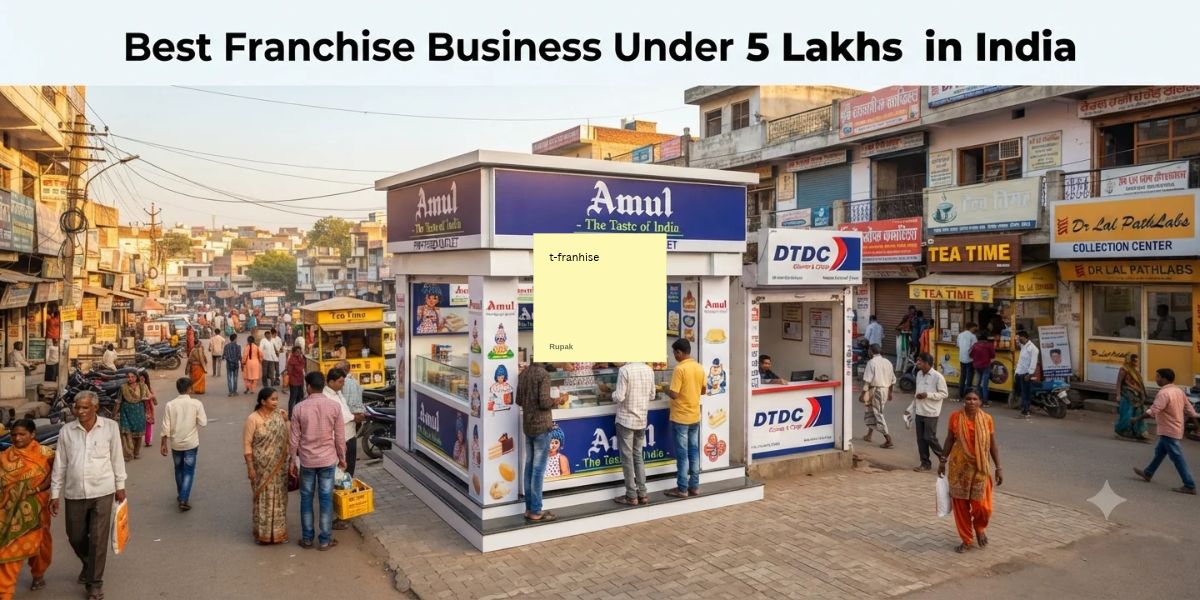

Finding a legitimate franchise business under 5 lakhs in India requires looking past glossy brochure figures. Many franchise ads quote a ₹1.5 Lakh or ₹2 Lakh “franchise fee” while leaving out commercial rent deposits, interior fit-outs, GST, and three months of working capital—pushing actual startup costs past ₹8 Lakhs.
However, several asset-light models in courier logistics, dairy retail, tea kiosks, pathology collection centres, and hyperlocal laundry pickup points genuinely launch as a profitable franchise business under 5 lakhs, especially in Tier-2 and Tier-3 towns where shop rents stay manageable. Below is a verified breakdown of the best sub-₹5 Lakh franchise opportunities, complete with real cost components, royalty structures, and agreement red flags.
What Your Budget for a Franchise Business Under 5 Lakhs in India Must Cover
Before signing any agreement or paying a token deposit for a franchise business under 5 lakhs in India, allocate your capital across six real-world expense buckets rather than spending everything on the brand fee:
- One-Time Franchise or Onboarding Fee: Typically ₹25,000 to ₹1.5 Lakhs (plus 18% GST), or ₹0 for pure supply-led retail models.
- Refundable Security Deposit & Advance Rent: 2 to 6 months of shop rent (₹30,000 to ₹1.2 Lakhs depending on city tier and market location).
- Basic Shop Fit-Out, Signage & Equipment: Counters, shelves, deep freezers, computers, barcode scanners, or display boards (₹75,000 to ₹2 Lakhs).
- Opening Inventory & Packaging: Initial stock or consumables (₹30,000 to ₹1 Lakh).
- Registrations & Licenses: Shop & Establishment license, Udyam registration, GST registration, and FSSAI license (for food/dairy outlets).
- Working Capital Buffer: At least 3 months of rent, electricity, and helper wages (₹60,000 to ₹1 Lakh) while local footfall builds up.
Quick Comparison: Top Franchise Business Under 5 Lakhs in India by Sector
Compare the five most viable categories for a franchise business under 5 lakhs in India by all-in investment, space requirement, ongoing royalty structure, and realistic break-even window:
|
Franchise Sector |
Representative Brands |
All-In Startup Cost |
Space Needed |
Royalty / Margin Model |
Realistic Break-Even |
|---|---|---|---|---|---|
|
Courier & Parcel Booking Counters |
DTDC (Flex/Smile), Shree Maruti, Trackon, Delhivery Partner |
₹1.2 Lakhs – ₹3.5 Lakhs |
150 – 300 sq. ft. |
Commission / revenue-share per booking (15%–25%) |
10 – 15 months |
|
Dairy & Ice Cream Parlours |
Amul Preferred Outlet (APO), Amul Ice Cream Scooping |
₹2.0 Lakhs – ₹4.5 Lakhs |
150 – 250 sq. ft. |
Zero royalty; retail margin on MRP (10%–20%) |
10 – 14 months |
|
Compact Tea & Beverage Kiosks |
Tea Time, Pandharpuri Chai, regional chai kiosks |
₹2.5 Lakhs – ₹5.0 Lakhs |
80 – 150 sq. ft. |
Zero royalty (supply-led) or fixed/percentage fee |
8 – 12 months |
|
Pathology Collection Centers |
Dr Lal PathLabs PSC, regional diagnostic networks |
₹2.5 Lakhs – ₹4.5 Lakhs |
200 – 250 sq. ft. |
Revenue-share per sample collected |
12 – 18 months |
|
Laundry & Dry-Cleaning Pickup Hubs |
Collection-point models (UClean / Tumbledry hubs) |
₹3.0 Lakhs – ₹5.0 Lakhs |
150 – 250 sq. ft. |
Revenue-share / royalty on processed orders |
12 – 16 months |
1. Courier & Hyperlocal Logistics Counters (₹1.2 Lakhs – ₹3.5 Lakhs)
With D2C e-commerce, regional B2B sellers, and document shipping growing steadily across smaller towns, a courier booking counter is one of the lowest-risk choices if you want a franchise business under 5 lakhs in India.
- How the Model Works: You operate a branded booking and parcel drop-off centre for a specific PIN code or commercial cluster, earning a commission or margin split on every domestic and international shipment booked.
- Setup & Equipment: Requires a compact 150–300 sq. ft. ground-floor shop near a market, industrial estate, or college, equipped with a desktop or laptop, thermal label printer, barcode scanner, digital weighing scale, and CCTV.
- Key Unit Economics: Brands such as DTDC (Smile/Flex tiers), Shree Maruti Courier, and Trackon allow entry between ₹50,000 and ₹1.5 Lakhs in onboarding and security fees, keeping total all-in setup under ₹3.5 Lakhs in Tier-2 and Tier-3 cities.
- Best For: Owner-operators willing to build direct B2B accounts with local garment traders, offices, and online sellers rather than waiting solely for walk-in envelopes.
2. Branded Dairy & Ice Cream Parlours (₹2.0 Lakhs – ₹4.5 Lakhs)
Unlike trendy food startups that burn cash on customer acquisition, established dairy networks offer daily household trust and zero-royalty retail structures, making them a dependable franchise business under 5 lakhs in India.
- How the Model Works: Under formats such as the Amul Preferred Outlet (APO) or compact scooping parlours, the brand supplies milk, curd, butter, paneer, beverages, and ice cream at wholesale margins without charging ongoing monthly royalties.
- Setup & Equipment: Needs a 150–250 sq. ft. shop in a dense residential colony, near a school, or on a neighbourhood high street, outfitted with deep freezers, visi-coolers, display racks, and billing hardware.
- Key Unit Economics: Packaged dairy products carry tighter retail margins (around 8%–12% on MRP) compensated by high daily turnover, while scooped ice creams, shakes, and beverages deliver higher gross margins (18%–25%).
- Best For: First-time retail owners seeking steady morning-to-night neighbourhood footfall and predictable product demand.
3. Compact Tea & Beverage Kiosks (₹2.5 Lakhs – ₹5.0 Lakhs)
Tea and quick-refreshment kiosks remain a popular franchise business under 5 lakhs in India because raw material costs are low and gross margins on brewed beverages routinely exceed 50%—provided commercial rent stays disciplined.
- How the Model Works: You buy proprietary tea premixes, leaves, cups, and branded consumables from the franchisor and sell hot tea, lemon tea, cold coffee, and quick snacks from an 80–150 sq. ft. takeaway counter.
- Setup & Equipment: Induction burners, tea urns, refrigeration, point-of-sale billing, illuminated fascia board, and basic counter fabrication.
- Key Unit Economics: Brands like Tea Time and Pandharpuri Chai market kiosk packages in the ₹2.5 Lakh to ₹5 Lakh band (often structured with zero royalty because the franchisor earns on proprietary supply).
- Critical Warning on Location: A ₹3 Lakh kiosk fails quickly if you sign a ₹45,000/month metro high-street lease. Keep monthly rent under 12%–15% of projected monthly sales, and target college gates, hospital zones, bus stands, or office clusters.
4. Pathology & Diagnostic Collection Centers (₹2.5 Lakhs – ₹4.5 Lakhs)
Healthcare diagnostics continue expanding across Tier-2 and Tier-3 towns as doctors and patients prefer trusted national lab networks over unorganised local labs. Operating a collection centre lets you enter healthcare as a franchise business under 5 lakhs in India without heavy lab equipment costs.
- How the Model Works: Rather than investing ₹25+ Lakhs in lab testing analysers, you operate a Patient Service Centre (PSC) or blood-sample collection point for an established diagnostic chain (such as Dr Lal PathLabs). Trained phlebotomists collect samples at your centre or via home visits, and the parent lab processes the tests.
- Setup & Equipment: Requires 200–250 sq. ft. on the ground floor near clinics or pharmacies, with a reception desk, air-conditioned sample collection chair, centrifuge/refrigerator, phlebotomy consumables, and lab software integration.
- Key Unit Economics: Operates on a transparent revenue-share per test billed, with strong repeat referrals once local physicians trust sample turnaround times.
- Best For: Entrepreneurs with a healthcare or pharmacy background or those partnering with a qualified lab technician or phlebotomist.
5. Laundry & Dry-Cleaning Collection Hubs (₹3.0 Lakhs – ₹5.0 Lakhs)
Full-scale live laundromats with commercial washers and hydrocarbon dry-cleaning machines typically cost ₹12 Lakhs to ₹25 Lakhs. However, collection-only laundry franchise hubs work well as an asset-light franchise business under 5 lakhs in India.
- How the Model Works: Your storefront acts as a customer drop-off, tagging, and home-pickup/delivery hub. Garments are transported daily to the franchisor’s central processing plant and returned pressed and packaged.
- Setup & Equipment: 150–250 sq. ft. shop near gated apartment societies, garment hanging racks, tagging system, billing counter, and a two-wheeler for doorstep pickup and delivery.
- Key Unit Economics: Zero heavy machinery maintenance or high commercial electricity and water bills at the store level, earning a fixed revenue share on recurring household laundry, shoe cleaning, and seasonal dry-cleaning orders.
5 Red Flags to Check Before Signing Any Franchise Agreement
Buyers searching for a franchise business under 5 lakhs in India are frequent targets of aggressive franchise brokers. Verify these five points in writing before transferring any deposit:
- Unverified “Guaranteed ROI” Claims: Treat any salesperson promising “100% return in 4 months” with scepticism. Ask for contact details of at least three existing franchisees operating for over 12 months in a similar city tier and visit one in person.
- Vague Territory Protection: Ensure your agreement specifies an exact radius (for example, 1.5 to 3 km) or list of pin codes where the franchisor will not open a competing outlet.
- Hidden Raw-Material Markups: Even “0% royalty” brands can squeeze your margins if their contract forces you to buy basic packaging, sugar, or generic supplies from them at 20%–30% above open-market rates.
- Broker vs. Direct Franchisor Confusion: Confirm you are paying fees directly into the parent brand’s official corporate bank account—not a third-party listing agent’s personal account.
- Exit & Renewal Penalties: Check the lock-in period (typically 3 to 5 years), renewal fees, and whether your security deposit is genuinely refundable if you exit after the lock-in term.
Step-by-Step Setup & Funding Checklist
Once you shortlist a franchise business under 5 lakhs in India and lock in a commercial shop lease, complete your legal and funding setup systematically:
- Choose Your Business Structure: Most single-outlet franchisees start as a Sole Proprietorship or Partnership to keep compliance simple. Read our complete walkthrough on how to register a company or startup in India before signing commercial leases.
- Complete Essential Registrations: Apply for free MSME recognition on the official Udyam Registration Portal, obtain a local Shop & Establishment (Gumasta) License, register for GST if required by your franchisor or turnover threshold, and secure FSSAI Registration for any food or dairy outlet.
- Explore Collateral-Free Bank Funding: If you have ₹1 Lakh to ₹1.5 Lakhs in personal savings, you can apply for collateral-free credit under Pradhan Mantri MUDRA Yojana (Kishore loans up to ₹5 Lakhs) or PMEGP through the government’s JanSamarth National Portal, and compare schemes in our guide to the best business loans for small businesses in India.
- Compare Verified Opportunities: Browse active listings across retail, food, logistics, and service categories in our Indian franchise directory before committing your capital.
Frequently Asked Questions (FAQ)
Which franchise business under 5 lakhs in India is most profitable?
Courier booking counters (DTDC, Shree Maruti), Amul dairy and ice cream outlets, and high-footfall tea kiosks offer the fastest payback periods (8 to 15 months) for a franchise business under 5 lakhs in India because they keep fixed overheads low and rely on daily repeat transactions.
Can I get a bank loan to open a franchise under ₹5 Lakhs?
Yes. Public and private sector banks fund franchise equipment, shop interiors, and working capital under the MUDRA Loan (Kishore category for ₹50,000 to ₹5 Lakhs) without requiring third-party property collateral, provided you submit a signed franchise letter of intent, shop rent agreement, and realistic cash-flow projections.
Is ₹5 Lakhs enough to open a franchise in a metro city?
In metro cities like Mumbai, Delhi NCR, or Bengaluru, ₹5 Lakhs is usually tight for high-street retail because commercial security deposits alone can consume ₹1.5 Lakhs to ₹3 Lakhs. In metros, stick to compact kiosks, courier counters, or residential collection hubs—or consider Tier-2 and Tier-3 cities where ₹5 Lakhs covers full setup comfortably.
Do all franchises under ₹5 Lakhs charge monthly royalties?
No. Many supply-driven retail models—such as Amul Preferred Outlets and several tea kiosk brands—charge zero monthly royalty and instead earn their margin on the wholesale inventory supplied to your store. Always check whether ongoing charges are calculated on gross sales, net revenue, or wholesale supply margins.

Jayashree Mukherjee | Business Strategist & Franchise Analyst.
Jayashree is a management professional dedicated to helping entrepreneurs find their “next what” in business. From analysing franchise opportunities to drafting solopreneur roadmaps, she provides the data-driven insights founders need to move from idea to execution.
Editorial oversight is provided by Rupak Chakrabarty, Editor, NextWhatBusiness.
