
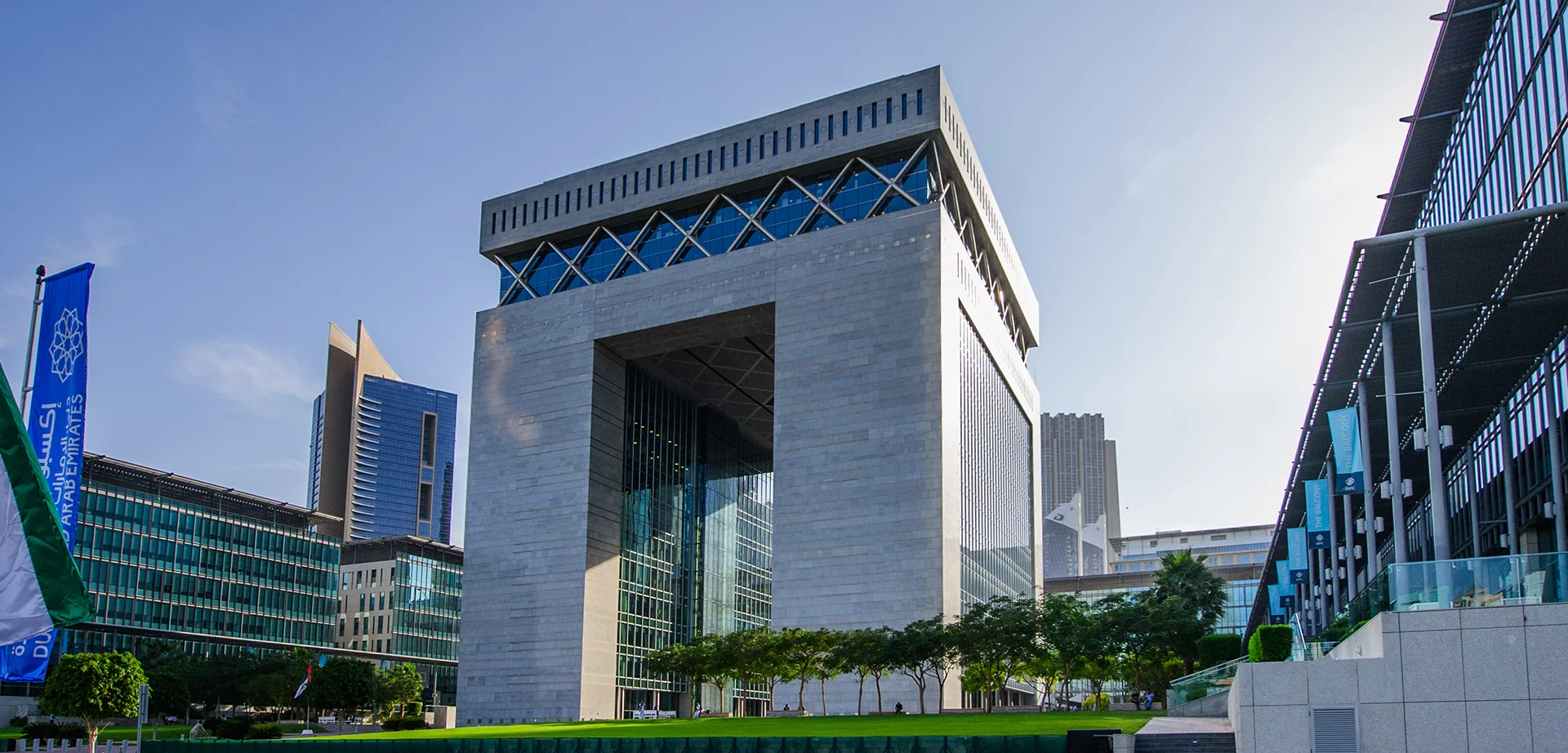

The Dubai International Financial Centre (DIFC) is one of the UAE’s most prominent business and financial districts, providing a specialised environment for financial institutions, professional firms, technology businesses, family offices, investment structures and international companies.
Located in the heart of Dubai, DIFC operates under its own legal and regulatory framework and is home to both regulated financial firms and a broad range of non-financial businesses.
If you are considering business setup in DIFC in 2026, choosing the correct legal structure, business activity and licence is essential because the registration process differs considerably between financial and non-financial companies.
This guide explains the DIFC company setup process, licence types, costs, requirements, DFSA approvals, legal structures and documents entrepreneurs should understand before applying.
What Is DIFC?
DIFC stands for the Dubai International Financial Centre.
It is a financial free zone in Dubai designed to support financial services, professional services, technology companies, investment structures and other eligible businesses.
Companies in DIFC operate within a specialised legal framework based substantially on principles of English common law.
DIFC also has its own:
- Registrar of Companies
- Commercial licensing framework
- DIFC Courts
- Regulatory environment
- Business infrastructure
- Office and coworking facilities
Financial services conducted in or from DIFC are regulated by the Dubai Financial Services Authority (DFSA).
Why Set Up a Company in DIFC?
DIFC can be particularly attractive for businesses that want to operate from an internationally recognised financial and professional services centre.
Potential advantages include:
- 100% foreign ownership for eligible entities
- Strategic location in central Dubai
- Internationally recognised legal framework
- Independent DIFC Courts
- Access to major banks and financial institutions
- Strong professional services ecosystem
- Suitable structures for holding and investment purposes
- Access to financial and technology companies
- Premium office and coworking facilities
- Variety of legal structures
- Dedicated innovation ecosystem
However, DIFC is not necessarily the cheapest business jurisdiction in Dubai, so companies should choose it based on strategic fit rather than licence price alone.
Types of Businesses Allowed in DIFC
DIFC currently divides business opportunities into several broad categories.
Financial Firms
Financial firms can include businesses operating in areas such as:
- Banking
- Investment banking
- Asset management
- Fund management
- Insurance
- Reinsurance
- Brokerage
- Capital markets
- Wealth management
- Private banking
- Islamic finance
- Investment advisory
- Other regulated financial services
These activities normally require regulatory approval from the DFSA.
Non-Financial Firms
DIFC also accommodates many professional and corporate businesses that do not carry out regulated financial services.
These can include eligible firms operating in areas such as:
- Legal services
- Accounting
- Tax advisory
- Management consultancy
- Corporate advisory
- Professional services
- Regional headquarters
- Holding and investment structures
- Family businesses
- Corporate offices
- Other approved non-financial activities
Technology and Innovation Companies
DIFC provides an Innovation Licence for technology-focused companies.
Eligible sectors currently include areas such as:
- Artificial Intelligence
- Machine Learning
- FinTech
- InsurTech
- PropTech
- RegTech
- HealthTech
- EdTech
- GreenTech
- ClimateTech
- MarTech
- E-Commerce
- Gaming
- AR/VR
- Other innovative technology businesses
Retail and Leisure Businesses
DIFC also accommodates selected retail and hospitality activities, including eligible:
- Restaurants
- Cafes
- Retail outlets
- Art and lifestyle businesses
- Other approved commercial concepts
Who Regulates Companies in DIFC?
Two organisations are particularly important when establishing a DIFC business.
DIFC Registrar of Companies – ROC
The Registrar of Companies is responsible for incorporation and registration of entities within DIFC.
For non-regulated businesses, the ROC also issues the corresponding DIFC commercial licence.
Dubai Financial Services Authority – DFSA
The DFSA is the independent financial regulator for DIFC.
Businesses that intend to provide regulated financial services in or from DIFC must obtain appropriate DFSA authorisation.
This distinction is crucial.
Receiving a DIFC commercial licence does not automatically authorise a company to conduct regulated financial services.
DIFC Financial vs Non-Financial Company Setup
The setup process differs considerably depending on the business activity.
Non-Financial Company
A non-financial business generally deals primarily with the DIFC Registrar of Companies.
Depending on the activity, the process can involve:
- Business application
- Initial approval
- Legal structure selection
- Company incorporation
- Office arrangement
- Commercial licence issuance
- Immigration and visa procedures
Financial Company
A financial business normally requires both DIFC incorporation and DFSA regulatory authorisation.
The process is more extensive and usually includes:
- Letter of Intent
- Regulatory Business Plan
- DFSA application
- Assessment of shareholders and controllers
- Compliance framework
- Capital requirements
- Senior management assessment
- DFSA in-principle approval
- DIFC incorporation
- Office establishment
- Final DFSA licence
Financial businesses should therefore allow substantially more preparation than a typical non-regulated company.
How to Set Up a Company in DIFC
The general process depends on whether the business is regulated or non-regulated.
Step 1: Select Your Business Activity
Identify exactly what the company will do.
This determines:
- Whether DFSA approval is required
- Licence category
- Legal structure
- Capital requirements
- Office requirements
- Setup cost
- Compliance requirements
Choosing the correct activity is one of the most important decisions in the DIFC setup process.
Step 2: Determine Whether the Activity Is Regulated
Ask whether the company intends to provide financial services.
If yes, DFSA authorisation may be necessary.
The DFSA regulates financial services conducted in or from DIFC.
Examples can include:
- Managing assets
- Providing investment advice
- Operating funds
- Arranging investments
- Banking
- Insurance
- Brokerage
- Other regulated activities
Do not begin operating a financial activity simply because the company has been incorporated in DIFC.
Step 3: Choose the Appropriate Legal Structure
DIFC offers several legal structures.
Depending on the applicant and activity, these can include:
- Private Company
- Public Company
- Recognised Company
- Limited Partnership
- General Partnership
- Limited Liability Partnership
- Recognised Partnership structures
- Foundation
- Prescribed Company
- Non-Profit Incorporated Organisation
- Other specialised entities
The correct structure depends on the purpose of the company.
Private Company in DIFC
A Private Company can be suitable for many financial and non-financial operating businesses.
It provides a separate legal entity that can undertake approved DIFC activities subject to licensing and regulatory requirements.
Recognised Company
A Recognised Company is generally used when an existing foreign or UAE entity establishes a registered presence or branch in DIFC.
DIFC Prescribed Company
A Prescribed Company is a specialised structure that can be used for qualifying holding, investment or special-purpose arrangements.
It is commonly considered for:
- Holding assets
- Investment structures
- Financing structures
- Ring-fencing assets and liabilities
- Special purpose vehicles
Eligibility requirements apply.
DIFC currently promotes SPV/Prescribed Company structures with comparatively low registration and annual licence fees for eligible applicants.
DIFC Foundation
Foundations can be used for purposes including:
- Wealth structuring
- Succession planning
- Family wealth
- Asset holding
- Philanthropic or other eligible purposes
Professional legal and tax advice is recommended before establishing a foundation.
Step 4: Submit the DIFC Application
For many non-financial businesses, applications can now be initiated through the DIFC Client Portal.
Information required can include:
- Proposed activities
- Shareholder information
- Director information
- Beneficial ownership information
- Company structure
- Business details
- Supporting documentation
Step 5: Obtain DFSA Approval if Required
Financial firms normally need to engage with the DFSA.
DIFC’s current financial setup process generally involves:
Stage 1: Letter of Intent
Submit a Letter of Intent describing the proposed business.
Stage 2: DFSA In-Principle Approval
Submit the regulatory application, including the required Regulatory Business Plan and supporting documents.
The DFSA evaluates matters such as:
- Proposed financial services
- Capital
- Ownership
- Controllers
- Governance
- Compliance
- Risk management
- Senior management
- Operational systems
Stage 3: Complete DIFC Setup
After receiving the relevant in-principle approval, the applicant proceeds with incorporation, office arrangements and other conditions.
Once the conditions are satisfied, the DFSA can issue the final licence.
Step 6: Arrange DIFC Office Space
Companies generally need an appropriate registered business address.
DIFC offers various workspace options, including:
- Commercial offices
- Business centres
- Serviced offices
- Coworking spaces
- Startup and innovation spaces
The required premises can depend on the business activity and regulatory conditions.
Prescribed Companies can have different registered-office arrangements under the applicable regulations.
Step 7: Complete Incorporation
Once the application requirements are satisfied, the Registrar of Companies can complete incorporation or registration.
Depending on the structure, DIFC can issue:
- Certificate of Incorporation
- Certificate of Registration
- Certificate of Continuation
- Commercial Licence
- Other applicable corporate documents
Step 8: Obtain Your Commercial Licence
For non-regulated businesses, the DIFC ROC issues the corresponding commercial licence alongside incorporation or registration.
The licence specifies matters such as:
- Entity name
- Licence number
- Legal status
- Address
- Permitted activities
- Authorised manager
- Issue date
- Expiry date
The commercial licence must be renewed according to DIFC requirements.
DIFC Company Setup Cost 2026
There is no single fixed cost for every DIFC company.
Current DIFC fees differ significantly according to:
- Legal structure
- Financial vs non-financial business
- Retail vs corporate activity
- Innovation licence
- Prescribed Company
- Representative office
- Office space
- Regulatory approval
- Visas
- Capital requirements
Therefore, old statements suggesting that every DIFC setup costs a fixed USD 21,000 or USD 50,000 should be avoided.
DIFC Commercial Licence Cost 2026
According to the DIFC Registrar of Companies’ current fee schedule, annual commercial licence renewal fees vary by structure.
For example:
Private or Public Company
Standard financial/non-financial licence renewal:
USD 12,000
Certain retail categories:
USD 5,100
Recognised Company
Standard financial/non-financial licence renewal:
USD 12,000
Certain retail categories:
USD 5,100
Prescribed Company
Annual licence:
USD 1,000
Foundation
Annual licence:
USD 350
Representative Office
Annual licence:
USD 4,000
Additional incorporation, registration, office, regulatory, visa and service fees may apply.
DIFC Innovation Licence Cost 2026
DIFC currently offers a subsidised Innovation Licence for eligible technology and innovation firms.
The published licence fee is:
USD 1,500 per year
The subsidised structure can apply for a period of approximately 2 to 5 years, subject to eligibility and DIFC conditions.
Eligible sectors include:
- AI
- FinTech
- InsurTech
- PropTech
- RegTech
- HealthTech
- ClimateTech
- E-Commerce
- Gaming
- Other innovation-focused activities
Companies can also access coworking facilities and discounted visa arrangements under applicable packages.
DIFC Prescribed Company / SPV Cost
DIFC currently promotes SPV structures with:
USD 100 incorporation application fee
and
USD 1,000 annual commercial licence
Eligibility conditions apply, so this should not be treated as a general low-cost operating company licence.
SPVs are primarily passive structures used for purposes such as:
- Asset holding
- Investment structuring
- Ring-fencing liabilities
- Joint ventures
- Financing arrangements
Is There a Minimum Share Capital for DIFC Companies?
Capital requirements depend heavily on the business type.
For non-financial businesses, requirements can differ according to legal structure.
Financial firms can face regulatory capital requirements imposed by the DFSA depending on the financial services they conduct.
Therefore, investors should avoid relying on a single generic minimum-capital figure.
A bank, asset manager and non-financial consulting business can have very different capital requirements.
Documents Required for DIFC Company Setup
Requirements depend on the legal structure and whether the entity is regulated.
For a typical non-financial application, documents can include:
- Passport copies
- Shareholder information
- Director details
- Beneficial ownership information
- Corporate documents for corporate shareholders
- Business activity information
- Proposed company information
- Registered office documentation
- Other DIFC-required forms
Additional Documents for Financial Firms
Financial businesses generally require substantially more information.
This can include:
- Regulatory Business Plan
- Ownership structure
- Organisational chart
- Shareholder/controller information
- Financial projections
- Governance framework
- Compliance policies
- AML systems
- Risk management framework
- Internal controls
- Information about senior management
- Audited financial information where required
- Capital information
- Other DFSA application documents
The requirements depend on the proposed financial service.
How Long Does DIFC Company Formation Take?
There is no single timeline applicable to all DIFC companies.
Processing time depends on:
- Activity
- Legal structure
- Documentation
- Financial regulation
- DFSA approval
- Office arrangements
- Shareholders
- Compliance requirements
A straightforward non-financial company can generally be established faster than a regulated financial institution.
Financial companies should allow additional time for regulatory assessment and DFSA authorisation.
Can Foreigners Own 100% of a DIFC Company?
Yes.
DIFC permits 100% foreign ownership for eligible company structures.
There is no general requirement for a UAE national to hold 51% of a standard DIFC company.
This makes DIFC attractive for:
- International businesses
- Financial institutions
- Professional firms
- Holding companies
- Technology businesses
- Investment groups
Does DIFC Have Its Own Legal System?
Yes.
DIFC operates an independent legal framework for civil and commercial matters.
DIFC Courts operate using a common-law-based judicial system.
This structure is one reason international financial and professional organisations choose DIFC.
DIFC Corporate Tax in 2026
Older articles sometimes describe DIFC as providing a blanket zero corporate tax guarantee.
That wording should no longer be used.
The UAE now has a federal Corporate Tax regime.
DIFC entities, including free-zone entities, need to evaluate their tax position under current UAE Corporate Tax legislation.
Depending on the circumstances, an eligible free-zone entity may qualify for preferential treatment on qualifying income if it satisfies all applicable requirements.
However, DIFC incorporation alone does not automatically mean that all company profits are taxed at 0%.
Businesses should evaluate:
- Qualifying Free Zone Person requirements
- Qualifying income
- Non-qualifying income
- Substance
- Transfer pricing
- Accounting
- Corporate Tax registration
- Tax filings
Professional tax advice is recommended.
VAT for DIFC Companies
DIFC companies can also have UAE VAT obligations depending on their activities and taxable supplies.
Businesses should evaluate:
- VAT registration thresholds
- Taxable supplies
- Zero-rated supplies
- Exempt supplies
- Input VAT
- VAT returns
DIFC status does not automatically exempt every company from UAE VAT.
DIFC vs Dubai Mainland
Choosing between DIFC and Dubai mainland depends on the business model.
DIFC May Be Better For:
- Financial institutions
- Investment firms
- Asset managers
- FinTech companies
- International professional services
- Regional headquarters
- Family offices
- Holding structures
- Businesses seeking a specialised common-law financial centre
Dubai Mainland May Be Better For:
- General trading
- Local commercial services
- Retail businesses outside DIFC
- Contracting
- General professional services
- Businesses prioritising broader Dubai operating locations
- Companies seeking potentially lower setup costs
DIFC should generally be selected because of its ecosystem and legal/regulatory advantages rather than simply because it is a free zone.
DIFC vs ADGM
DIFC in Dubai and Abu Dhabi Global Market (ADGM) in Abu Dhabi are both international financial centres.
When comparing them, investors should consider:
- Target market
- Dubai vs Abu Dhabi presence
- Regulatory requirements
- Financial activity
- Office location
- Fees
- Ecosystem
- Legal structure
- Client base
Both have specialised common-law-based frameworks and independent financial regulators.
DIFC for Holding Companies
DIFC can be attractive for investment and asset-holding structures.
Depending on eligibility and objectives, businesses can consider:
- Private Companies
- Prescribed Companies
- Foundations
- Proprietary Investment Companies
- Other specialised structures
The appropriate structure depends on tax, ownership, succession and investment objectives.
DIFC for Family Offices
DIFC has developed a strong ecosystem for family wealth and family businesses.
Possible structures can support:
- Family wealth management
- Investment holdings
- Succession planning
- Governance
- Family businesses
- Asset protection
- Cross-border investment
Professional legal and tax advice is strongly recommended when structuring family wealth.
DIFC for FinTech and AI Companies
Technology businesses can benefit from DIFC’s dedicated innovation ecosystem.
The Innovation Licence can be particularly relevant to startups involved in:
- FinTech
- Artificial Intelligence
- Web3
- RegTech
- InsurTech
- PropTech
- Digital finance
- Climate technology
- E-commerce technology
Companies actually conducting regulated financial services may still require DFSA approval regardless of their technology focus.
Do I Need DFSA Approval for Every DIFC Company?
No.
Only businesses carrying out regulated financial services or certain designated activities need the relevant DFSA authorisation or registration.
A typical non-financial consultancy, technology company or corporate office may not require a financial-services licence.
However, the distinction should be confirmed before setup.
Can a DIFC Company Open a UAE Bank Account?
A DIFC-registered company can apply for a corporate bank account.
Banks conduct their own KYC and compliance reviews.
They can request:
- DIFC incorporation documents
- Commercial licence
- Shareholder identification
- Beneficial ownership information
- Business plan
- Contracts
- Expected turnover
- Source of funds
- Client and supplier information
Bank account approval is not guaranteed simply because the company is established in DIFC.
DIFC Company Setup Checklist
Before applying, determine:
- Business activity
- Financial or non-financial classification
- DFSA authorisation requirement
- Legal structure
- Shareholders
- Beneficial owners
- Capital requirements
- Office requirements
- Visa requirements
- Incorporation fees
- Annual licence fees
- Compliance obligations
- Corporate Tax implications
- Banking requirements
Common Mistakes When Setting Up in DIFC
Assuming Every Business Needs DFSA Approval
Only regulated financial services require the relevant financial authorisation.
Assuming DIFC Means Zero Corporate Tax
The UAE Corporate Tax regime applies, and free-zone tax treatment depends on specific conditions.
Choosing DIFC Only Because It Is a Free Zone
DIFC can be more expensive than many conventional UAE free zones.
Choose it for the legal framework, ecosystem and business advantages.
Underestimating Compliance Costs
Financial businesses can face substantial compliance, staffing, audit and regulatory costs.
Choosing the Wrong Legal Structure
An operating company, SPV, foundation and branch serve very different purposes.
Looking Only at the Licence Fee
Budget for:
- Incorporation
- Office
- Visas
- Regulatory fees
- Compliance
- Audit
- Professional services
- Annual renewal
Is DIFC the Right Location for Your Business?
DIFC can be highly suitable if your company operates in financial services, professional services, investment, technology or international corporate activities.
It may be less suitable for businesses whose primary objective is simply obtaining the cheapest Dubai business licence.
Before proceeding, compare:
- DIFC
- Dubai mainland
- Other Dubai free zones
- ADGM
- Other UAE jurisdictions
based on your actual business requirements.
Start Your Business in DIFC in 2026
Setting up a company in DIFC provides access to one of the region’s most established financial and professional business ecosystems.
However, the process and cost differ significantly between a financial firm, non-financial business, Innovation Licence company and specialised structure such as a Prescribed Company.
The most important first step is determining whether your proposed activities require DFSA regulation.
Professional business setup assistance can help you evaluate your activity, choose the correct DIFC legal structure, understand the costs and complete the registration process.
Planning to set up a company in DIFC? Contact our business setup consultants today for guidance on DIFC company formation, commercial licensing, legal structures, office requirements and regulatory procedures.
Frequently Asked Questions About Business Setup in DIFC
1. What is DIFC?
DIFC is the Dubai International Financial Centre, a specialised financial free zone in Dubai offering company registration for financial, non-financial, innovation and selected retail businesses.
2. How do I set up a business in DIFC?
Choose your business activity and legal structure, determine whether DFSA approval is required, submit your application, arrange appropriate premises, complete incorporation and obtain the relevant commercial or regulatory licence.
3. How much does DIFC company setup cost in 2026?
There is no single setup price. Costs vary depending on legal structure, business activity, regulatory status, office requirements and visas.
4. How much is a standard DIFC commercial licence?
The current ROC fee schedule lists an annual licence renewal fee of USD 12,000 for many standard private/public and recognised financial or non-financial company structures. Other categories have different fees.
5. How much does a DIFC Innovation Licence cost?
The current published Innovation Licence fee is USD 1,500 per year for eligible technology and innovation businesses under the subsidised programme.
6. How much does a DIFC SPV cost?
DIFC currently advertises eligible SPV structures with a USD 100 application/incorporation fee and USD 1,000 annual licence, subject to Prescribed Company eligibility requirements.
7. Can foreigners own 100% of a DIFC company?
Yes. Eligible DIFC company structures can be 100% foreign owned.
8. Do I need a UAE local sponsor for DIFC?
A UAE national shareholder is not generally required for standard DIFC company ownership.
9. Does every DIFC company need DFSA approval?
No. DFSA authorisation is required for regulated financial services and certain designated activities. Many non-financial businesses are licensed through the DIFC Registrar of Companies without a financial-services licence.
10. What is the difference between DIFC and DFSA?
DIFC is the financial centre and business jurisdiction. The DFSA is the independent regulator responsible for financial services conducted in or from DIFC.
11. Can I open a consulting company in DIFC?
Eligible consultancy and professional-service firms can establish businesses in DIFC subject to activity and licensing requirements.
12. Can I start a FinTech company in DIFC?
Yes. DIFC offers an innovation ecosystem and subsidised Innovation Licence for eligible technology companies. Businesses conducting regulated financial services may also require DFSA authorisation.
13. Does a DIFC company pay Corporate Tax?
DIFC companies fall within the UAE Corporate Tax framework. Eligible free-zone entities may receive specific tax treatment if all applicable conditions are satisfied, but 0% tax should not be assumed automatically.
14. Does DIFC use English common law?
DIFC operates a common-law-based legal and judicial framework for applicable civil and commercial matters.
15. What company structures are available in DIFC?
Structures include Private Companies, Public Companies, Recognised Companies, partnerships, Foundations, Prescribed Companies and other specialised structures.
16. Is DIFC suitable for holding companies?
Yes. DIFC offers multiple structures that can potentially be used for investment or holding purposes, including Prescribed Companies and Proprietary Investment Companies, subject to eligibility.
17. Is office space required in DIFC?
An appropriate registered office is generally required. DIFC offers commercial offices, serviced offices, business centres and coworking spaces. Certain specialised entities have alternative registered-office arrangements.
18. Can a DIFC company sponsor UAE residence visas?
Eligible companies can undertake visa-related procedures subject to their licence, office arrangements and applicable immigration requirements.
19. Is DIFC better than Dubai mainland?
Neither is universally better. DIFC is particularly suited to financial, professional, investment and technology businesses seeking its specialised legal and commercial ecosystem, while mainland setup may be better for many general commercial activities.
20. Is DIFC expensive?
DIFC can have higher licensing, office and compliance costs than many conventional UAE free zones. The value comes primarily from its financial ecosystem, legal framework, location and international positioning.
SEO Meta Tags
Dubai is one of the top hubs in the region for finance, lifestyle, business, trading and what not? it’s the ideal destination for aspiring and young entrepreneurs and investors to set up here. The Dubai International Financial Center (DIFC) was created as the UAE’s response to major world financial centers such as London in Europe, Hong Kong in the Far East, and New York in the United States.
However, DIFC has grown over the years to become one of the leading financial centers in the Middle East and Africa region. The business incorporation process in the DIFC offers foreign investors the opportunity to take advantage of the region’s vast wealth opportunities.
The Dubai International Financial Centre is a well-regulated hub for financial organizations, investment companies and other designated professions and non-financial businesses. DIFC provides investors with quality infrastructure, modern office space, unique business licenses and progressive legislation.
DIFC Regulatory structure
Investors who want to know about the process of business formation in DIFC need to understand the financial free zone regulatory structure. The DIFC is regulated by three entities which are:
- DIFC Authority for Unregulated Entities
- Dubai Financial Services Authority for financial companies
- DIFC Courts for Arbitration Supervision
Perks of Starting a Business in DIFC
By establishing a business in DIFC, investors are entitled to the following benefits:
100% ownership
Foreign investors can enjoy full ownership of the companies formatted in DIFC. There is no condition to appoint a local sponsor while establishing a company in DIFC. in addition, the investors can have 100% return of profits as well.
Elite Regulatory Environment
The presence of the DFSA as one of the regulator or administrators has had a good impact on the financial services sector growth in Dubai. The DFSA is an independent regulator that licenses and regulates all banking and financial institutions activities in the DIFC.
The formation of the DFSA was based on the regulatory framework of the financial centers in London and New York. The DFSA has provided an efficient and secure platform for financial institutions to set up businesses in Dubai.
Efficiencies of Tax
The United Arab Emirates is generally known as a tax-free country, which is the main reason why investors around the world prefer to set up a business here. DIFC give guarantee of 40 years of zero taxes on profits and corporate income. Investors can benefit from the UAE’s extensive network of double taxation treaties with more than 100 countries. To better understand the tax requirements, consult with our beyond view business setup consultants.
A unique legal System
By formatting a business in DIFC, foreign investors gain access to a unique legislative system based on English Common Law. The entities of Courts in DIFC are responsible for the implementation of law and justice in the DIFC. The DIFC has its own independent jurisdiction over all civil and commercial disputes arising in the DIFC. The DIFC’s autonomous court system is a gift for entrepreneurs as they don’t have to be confused by the complexities of Islamic law.
Strategic Location
The strategic location of DIFC in Dubai, which is considered the entrance to the Middle East and other major industries. The location of DIFC is ideal to tap the potential of rising markets in the region of Asia and Africa. The free zone provides great connectivity by air, land and sea, which is easing the international business. Offices managements, family offices and holding companies can initiate their business near to the property they manage and own.
Clear pricing and Easy setup
DIFC is famous for its easy company formation process. But there will be little changes between regulated and non-regulated firms, and your company nature will also play as a big factor as well.
With that, living in the DIFC will not be cheap, but their straightforward and clear pricing structure will be of huge benefits and will reassure you that you are getting your money’s worth. Here’s a quick guide.
- Initial setup cost: $21,000
- Licensing fees, office costs, share capital: $50,000.
- Creating a proper plan of business may also cost a few thousand dollars.
Top business activities allowed in DIFC
Business activities Permitted in DIFC are key parameters that investors should go through before considering the process of setting up a business in Dubai Free Zones. The DIFC enables a myriad of activities that are beneficial. The following main activities are allowed in the DIFC:
- Banking
- Personal banking
- Investment banking
- Prescribed companies
- Insurance and collateral
- Professional service providers
- Islamic finance
- Fintech
- Private equity
- Capital markets
- Asset management
- Property management
- Private Equity
- Retail
- Cafes and restaurants
- Art gallery
- Company offices
- Brokerage
- Fund management
Required documentation for business setup in DIFC
- Detailed business plan
- Details of key controllers, major shareholders with more than 5% stake and certificate of key employees confirming the company’s ability to do business
- Organizational chart of proposed applicants
- Detailed information about operating systems and controls
- Company processes on compliance systems and internal audits.
- Audited financial report for shareholders for the last 3 years
- Completed anti-money laundering application
- If you are applying for a branch, the financial position of company and profile of regulatory history.
Innovation License
The Innovation License in DIFC allows innovators to establish, grow and broaden their innovation business. By obtaining an Innovation License in DIFC, entrepreneurs can connect with the community of banks, financial institutions and service providers. The DIFC Innovation License start at $1,500 per year with the best coworking and flexible workspaces access. Investors can apply for up to four first board visas. The DIFC Innovation License targets companies focusing on cutting-edge technology.
Unique feature of company incorporation in DIFC
The process of starting a business in DIFC is significantly different from the process of setting up a business in Dubai. One of the main dissimilarities is that investors establishing a DIFC financial services company will not be subject to the laws of the financial services regulators in UAE. However, these companies are subject to the UAE’s federal AML and Countering the Financing of Terrorism laws.
Why choose Beyond View as business setup consultant?
The procedure of setting up a business in the DIFC includes some common aspects that are uniform across almost all jurisdictions. However, as the DIFC is governed by its own independent laws, you need to know its rules. Taking a casual approach can confused the process, but business formation consultants in Dubai such as beyond view Business Setup Consultants can help you.
We can assist you with key services of setting up a business in Dubai such as opening a bank account, drafting documents, visa processing, VAT compliance, ESR compliance, anti-money laundering and anti-terrorist financing, ultimate beneficial ownership etc. Beyond view is the ultimate solution to all the problems associated with the company formation process in DFIC. Contact us today. we’d love to assist!
