


Weo, a prisoner at the Central Women’s Correctional Institution in Bangkok, prefers to sew by hand. She tried the sewing machine, but noticed that her mind was calmer when threading with her fingers directly. By not using a machine, she can produce a unique pattern that is hard to find in conventional shops.
She is explaining this to a group of design students who, sketchbooks in hand, are walking through the rows, observing the women who sew.
As time passes, some lose their initial apprehension and sit across from them, picking up fabric samples. Others ask about the products they are making. Some borrow their needles and, with the women’s guidance, try a bit of sewing themselves. A few sit on the floor in the basket-weaving corner with the women who have, by now, mastered the skill.
Today, the students have left the classroom behind to spend their morning at Thailand’s first women’s prison, where approximately 150 women learn weaving, knitting and machine sewing to make marketable products.
The students’ task is to design a product that these women can manufacture during their sentences.
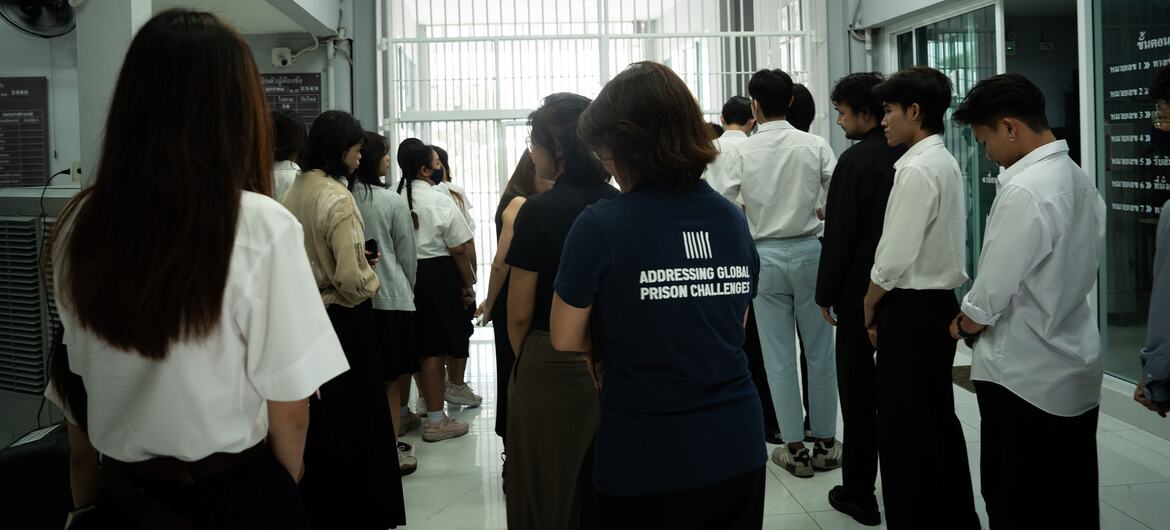
© UNODC/Laura Gil
Thai university students arrive at Bangkok Women’s Prison in the Thai capital.
Through the wall
The initiative, launched in November 2025 by the UN Office on Drugs and Crime (UNODC) and the Thailand Institute of Justice (TIJ) pairs design students with incarcerated women to create modern, sustainable products that can be sold outside prison.
Earlier this year, 22 students visited the prison and interacted with the women who are now manufacturing new products. Their designs had to appeal to modern consumers, be practical and tell a story linked to rehabilitation that would raise awareness of the critical role vocational training plays in reducing recidivism.
“The stigma surrounding those who have made mistakes has long been a wall in our society. To help them cross that barrier, we must restore their human dignity,” said TIJ’s Chontit Chuenurah.
“By weaving their stories into these products, we use the creativity of the youth to build a bridge between the prison and the outside world, replacing fear with understanding.”
Under the theme Through the Wall, the initiative seeks to dismantle physical and social barriers, helping incarcerated women return successfully to society, she added.
“The project aims to create prison-made goods that appeal to modern consumers while equipping correctional officers with essential marketing skills,” said Aki Okanan, former prison reform expert at UNODC.
The project also raises international awareness of the role of rehabilitation and vocational training in reducing re-offending she added.
Time well spent
A panel of judges evaluated nine projects from 19 students in a competition earlier this year.
The winner was Time-Made, featuring intricately smocked watch straps.
For the students behind the design, time has a two-fold meaning: the sentence that prisoners can reduce by working in prison, and the time that people outside value, a privilege sometimes taken for granted.
“We wanted our product to remind people that we can use time carefully and meaningfully. That we can watch our time,” says Game, 21, co-winner of the competition.
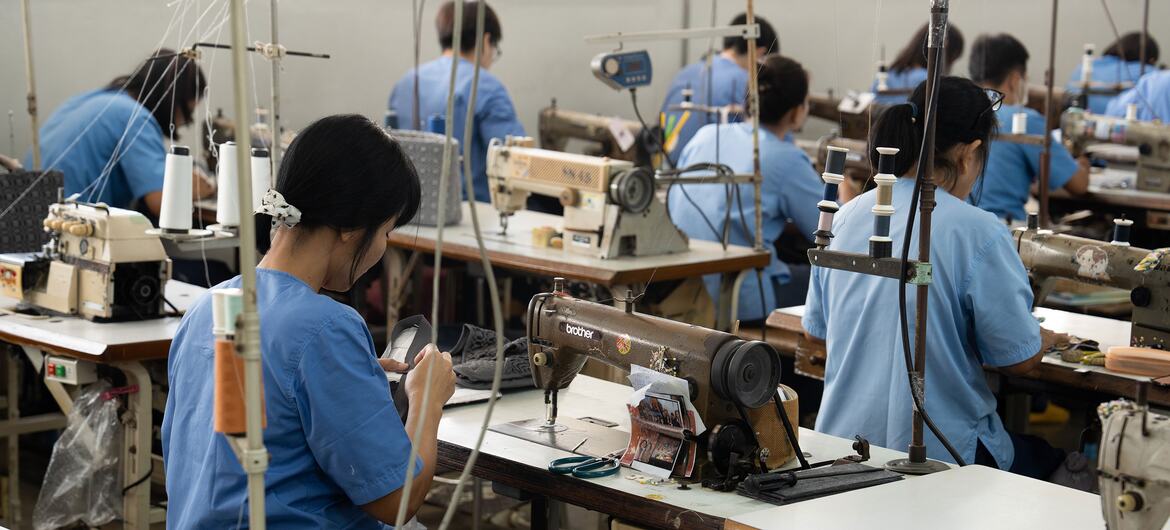
© UNODC/Laura Gil
Incarcerated women learn sewing skills at Bangkok Women’s Prison.
First steps
All designs received support for product development and marketing, and the winning product, together with a selection of others, will be produced in collaboration with partner correctional facilities.
Natty, also 21, has been studying lifestyle products for three years. She had expected the prison to look gloomy and scary and was surprised to find the workroom bright and airy. Still, she noticed that most prisoners used dark colours.
“I want to take the skills they have and show them brighter fabrics and see what happens,” she said.
Sitting by Weo’s side, Ana*, from Latin America, tells the story of how she was caught attempting to smuggle cocaine into Bangkok. After four years in prison, she can produce perfect stuffed animals and is fluent in Thai, although she has never seen Thailand outside prison.
“I heard it’s beautiful here, but it doesn’t matter. After this, when I manage to get back to Brazil, I will start an import business and sell stuffed animals from Thailand. I know how to do it. I have the connections, and I speak the language.”
As the students pass through the gates and security controls to leave, their enthusiasm wanes. Although the prisoners cannot leave, this collaboration connects them to the outside world, the first step in reintegration.
