


The world is getting hotter. And the consequences are already being felt.
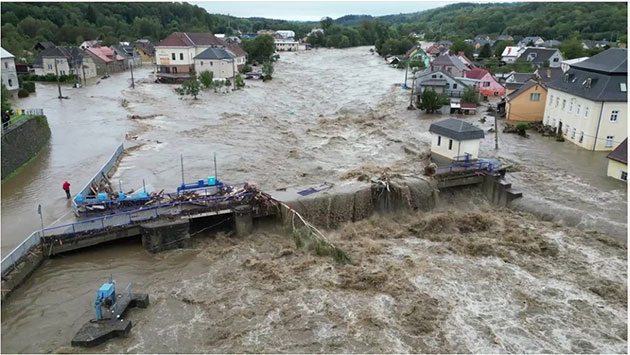
From devastating floods and prolonged droughts to intensifying heatwaves, climate change is disrupting lives and livelihoods across the globe.
According to the World Meteorological Organization, the eleven years from 2015 to 2025 were the hottest ever recorded.
In 2025, global temperatures were approximately 1.43 degrees Celsius above pre-industrial levels.
And the human impact is growing.
UNICEF reports that more than 171 million students had their education disrupted by climate-related hazards in 2025.
Three-quarters of those affected lived in low- and lower-middle-income countries.
Now, a new United Nations Environment Programme report delivers another warning.
Its 2026 Emissions Gap Report concludes that temporarily exceeding the Paris Agreement’s 1.5-degree warming threshold is now unavoidable.
But how far temperatures rise, and for how long, still depends on decisions made today.
UNEP estimates that limiting this overshoot requires global greenhouse gas emissions to fall by 18 percent by 2030, and 45 percent by 2035, compared with 2025 levels.
Current national climate commitments fall far short.
Yet solutions exist.
Renewable energy, cleaner transport, energy efficiency and stronger climate policies can reduce emissions.
And investment in climate adaptation can help protect vulnerable communities from worsening impacts.
On October 24th, International Day of Climate Action draws attention to the urgent need for collective action.
The challenge is no longer simply to prevent warming.
It is to limit the damage, protect lives and build a more resilient future.
Because every fraction of a degree matters.
IPS UN Bureau



© Inter Press Service (20261022065256) — All Rights Reserved. Original source: Inter Press Service
