
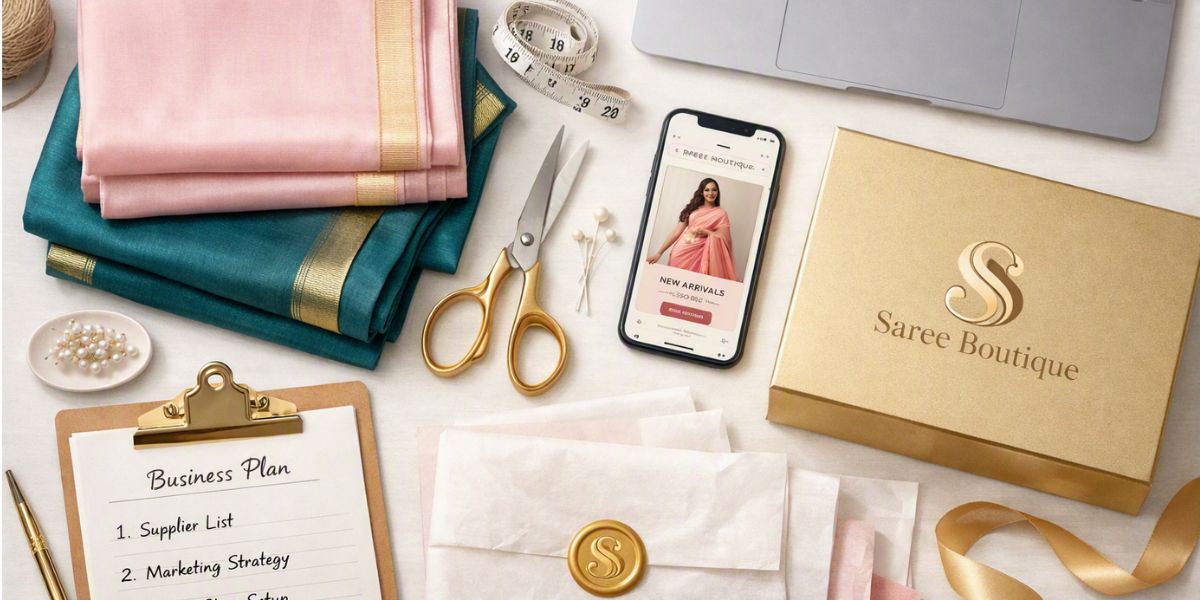

The saree remains one of the most culturally resilient, evergreen, and commercially lucrative apparel segments in the Indian retail ecosystem. India’s ethnic wear market generates tens of thousands of crores annually, with sarees accounting for a massive share of total garment sales. Whether worn as daily office wear, casual household attire, or ultra-luxurious bridal silk, the saree transcends age, region, and economic class.
For aspiring entrepreneurs, learning how to start a saree business offers a distinct structural advantage over traditional Western apparel retail: zero sizing inventory risk. Unlike stitched garments that require stocking five to six different sizes per style, a saree is an unstitched 5.5-meter to 6.3-meter fabric draft. This single characteristic drastically lowers inventory holding costs, eliminates size-based stock clearance, and simplifies storage operations.
Whether you plan to launch a home-based social commerce venture, an online D2C brand, or a high-footfall retail boutique, this comprehensive guide provides the operational blueprint, sourcing maps, legal checklist, and profit strategies needed to build a successful saree enterprise.
1. Choosing Your Business Model
Before purchasing a single piece of inventory, you must select an operational model that aligns with your capital investment capacity, risk tolerance, and personal bandwidth.
A. Home-Based &Social Commerce (Low Capital)
- Capital Required: ₹10,000 – ₹50,000
- Operational Mode: Selling via WhatsApp groups, Instagram Live sales, Facebook Marketplace, and local pop-up exhibitions.
- Best For: First-time entrepreneurs, homemakers, and boutique curators testing regional market demand without fixed overheads.
B. E-Commerce Brand / D2C Storefront (Moderate Capital)
- Capital Required: ₹1.5 Lakhs – ₹5 Lakhs
- Operational Mode: Operating a dedicated website paired with performance marketing on Meta and Google.
- Best For: Digital-first founders focused on building a scalable national or international brand.
C. Brick-and-Mortar Retail Store / Boutique (High Capital)
- Capital Required: ₹5 Lakhs – ₹20+ Lakhs
- Operational Mode: Leasing a commercial shop in a prime high-street or local textile market, complete with counter displays and floor seating.
- Best For: Experienced retailers aiming to capture walk-in foot traffic and offer an immersive, tactile shopping experience.
Read: Top Saree Franchise Businesses to Start in India
D. Wholesale & B2B Distribution (High Capital, High Volume)
- Capital Required: ₹10 Lakhs – ₹50+ Lakhs
- Operational Mode: Start a wholesale business by sourcing bulk consignments directly from textile mills or master weavers and supplying small regional retailers.
- Best For: B2B traders with established logistics networks and credit-risk management skills.
E. Saree Manufacturing (Capital & Scale Intensive)
- Capital Required: ₹15 Lakhs – ₹1 Crore+
- Operational Mode: Setting up power loom/handloom units, sourcing raw yarn (silk, cotton, polyester), managing warping/weaving setups, or coordinating job-work units (embroidery, dyeing, digital printing).
- Best For: Industrialists and experienced entrepreneurs aiming to supply B2B wholesalers, exporters, and large retail chains.
- Detailed Guide: For a deep dive into machinery selection, loom setups, raw material sourcing, and plant operational workflows, read this complete guide on How to Start a Saree Manufacturing Business.
2. Defining Your Saree Niche & Target Market
A common pitfall for new business owners is attempting to cater to everyone by stocking every imaginable saree variant. Successful saree brands win by dominating a specific niche before expanding into adjacent categories.
|
Saree Niche Category |
Key Fabrics & Weaves |
Target Audience & Occasion |
Average Retail Ticket Price |
|---|---|---|---|
|
Synthetic & Daily Wear |
Poly-Georgette, Chiffon, Poly-Crepe, Printed Art-Silk |
Daily household wear, budget office wear, college wear |
₹350 – ₹1,200 |
|
Cotton, Linen & Handloom |
Mulmul, Chanderi, Kota Doria, Tant, Linen, Khadi |
Working professionals, teachers, eco-conscious buyers, summer wear |
₹800 – ₹3,500 |
|
Traditional & Bridal Silk |
Pure Kanchipuram, Banarasi, Paithani, Pochampally, Uppada |
Weddings, major festivals, bridal trousseaus, heirloom buyers |
₹5,000 – ₹50,000+ |
|
Value-Added & Designer |
Organza, Tissue, Net, Embellished/Sequin, Pre-Draped |
Evening parties, festive gatherings, Gen-Z / Millennial buyers |
₹2,500 – ₹15,000 |
Niche Selection Checklist
- Identify Regional Preferences: South Indian markets heavily favor heavy silk, zari, and structured drapes (Kanchipuram, Mysore Silk), while Eastern and Northern markets have immense demand for Tant, Tussar, Banarasi, and lightweight georgette prints.
- Evaluate Price Sensitivity: Decide whether your brand positioning relies on high-volume, low-margin sales (synthetic) or low-volume, high-margin sales (authentic pure silk).
3. Wholesale Sourcing Hubs in India
To maintain healthy saree business profit margins, you must bypass middlemen and source directly from primary manufacturing clusters or master weaver cooperatives.
A. Surat (Gujarat) – The Synthetic & Printed Capital
- Speciality: Poly-georgette, chiffon, weightless, brasso, digital prints, and budget art-silk.
- Top Wholesale Markets: Ring Road Market, Millennium Textile Market, Zampa Bazaar.
- Best Used For: High-volume daily wear, budget ranges, and online reselling catalogues.
B. Kanchipuram & Bengaluru – The South Silk Axis
- Speciality: Mulberry silk, real gold/silver zari borders, heavy bridal weaves.
- Top Sourcing Points: Weaver cooperatives in Kanchipuram town, Chickpet market in Bengaluru.
- Best Used For: Premium wedding collections, heirloom bridal stock, and high-ticket retail.
C. Varanasi (Uttar Pradesh) – Banarasi Brocades & Organza
- Speciality: Katan silk, Tanchoi, Tissue, Organza, Georgette Jacquard with intricate kadwa or cutwork motifs.
- Top Sourcing Points: Chowk area, Peeli Kothi, direct weaver households in Lallapura.
- Best Used For: Royal festive wear, North Indian bridal collections, and statement designer pieces.
D. West Bengal & South India Cotton Belts
- Speciality: Breathable pure cottons, Jamdani, Tant, Linen, and Mercerised Cotton.
- Top Sourcing Points: Shantipur and Phulia (West Bengal); Salem, Coimbatore, and Chettinad (Tamil Nadu).
- Best Used For: Summer catalogues, formal corporate ethnic wear, and sustainable fashion lines.
Sourcing Best Practices
- Inspect Fabric Count and Weight: Test sample swatches for colour fastness, thread density, and shrinkage before placing bulk orders.
- Negotiate MOQs (Minimum Order Quantities): Suppliers often lower MOQs for new buyers if you select stock from their active production runs rather than requesting custom dyeing.
- Verify Authenticity Claims: Ensure suppliers offering “Pure Silk” provide verifiable certification details (such as Silk Mark tags).
4. Financial Planning, Budgeting & Profit Margins
Understanding unit economics is critical for long-term survival in the apparel sector. Here is a realistic cost breakdown for setting up an online or physical saree retail operation.
Estimated Startup Cost Breakdown
|
Expense Head |
Home-Based Setup |
D2C E-Commerce Brand |
Retail Store / Boutique |
|---|---|---|---|
|
Initial Inventory Purchase |
₹20,000 – ₹35,000 |
₹1,00,000 – ₹2,50,000 |
₹3,50,000 – ₹8,00,000 |
|
Shop Deposit & Interior Fit-outs |
₹0 |
₹0 |
₹2,00,000 – ₹6,00,000 |
|
Packaging & Branding Material |
₹2,000 |
₹25,000 |
₹50,000 |
|
Website Development & POS System |
₹0 |
₹30,000 |
₹40,000 |
|
Product Photography & Modelling |
₹1,000 (Phone) |
₹35,000 |
₹30,000 |
|
Initial Marketing & Launch Ads |
₹2,000 |
₹50,000 |
₹50,000 |
|
Working Capital Reserve |
₹5,000 |
₹60,000 |
₹1,50,000 |
|
Estimated Total Capital Needed |
₹30,000 – ₹45,000 |
₹2.5 Lakhs – ₹4.5 Lakhs |
₹8 Lakhs – ₹16+ Lakhs |
Unit Economics & Profit Margins
Saree retail yields attractive profit margins when managed efficiently:
- Synthetic & Daily Wear: 15% – 25% Net Profit Margin (High turn rate, volume-dependent).
- Cotton & Handloom: 25% – 40% Net Profit Margin (Steady demand, moderate holding periods).
- Pure Silk & Designer Wear: 35% – 55%+ Net Profit Margin (High ticket size, lower turnover speed).
Sample Unit Economics Calculation:
- Sourcing Price (Ex-Factory): ₹1,000
- Transport & Packaging: ₹100
- Marketing / Customer Acquisition: ₹250
- Total Unit Cost: ₹1,350
- Retail Selling Price (MSRP): ₹2,450
- NET PROFIT PER UNIT: ₹1,100 (44.8% Margin)
5. Business Registration, Legal & Tax Compliances
Operating a legal, compliant business builds trust with banking institutions, payment gateways, and end consumers.
Business Entity Registration
- Sole Proprietorship: Easiest for home-based setups or single owners.
- LLP or Private Limited Company: Recommended for D2C brands seeking investor funding or co-founder setups.
Tax & Government Licenses
- GST Registration: Mandatory if your annual turnover exceeds threshold limits (₹40 Lakhs for goods in most states, ₹20 Lakhs in special category states). Note: GST registration is mandatory immediately if you plan to sell inter-state through an e-commerce platform.
- Udyam MSME Registration: Free online registration providing access to government subsidies, priority bank lending, and MSME protection laws against delayed payments.
- Shop & Establishment License: Required if you open a physical store, office, or commercial warehouse space.
Quality & Authenticity Credentials
- Silk Mark: Issued by the Silk Mark Organisation of India (SMOI) to certify genuine natural silk fabric.
- Handloom Mark & Geographical Indication (GI) Tags: Helps authenticate regional weaving heritage (e.g., authentic Chanderi, Kanchipuram, or Pochampally sarees).
6. Branding, Product Photography & Cataloguing
Sarees are highly visual products. Customers buy based on colour perception, fabric drape, border intricate details, and overall aesthetic appeal.
Photography & Visual Presentation Standards
- High-CRI Lighting: Saree fabrics—especially silk and metallic zari—change appearance under poor lighting. Use colour-accurate daylight studio lighting to ensure online photos match physical products.
- Three-Angle Showcase Rule:
- Full Drape Shot: Shows the full saree length on a model or mannequin to display drape and silhouette.
- Pallu & Border Close-Up: High-detail macro shot highlighting weave patterns, thread quality, and zari shine.
- Blouse Piece Shot: Clear view of the unstitched blouse fabric piece.
- Video Content Strategy: Short-form vertical videos showing the fabric flowing, light reflecting off the weave, and live drape demonstrations convert significantly better than static photos alone.
Clear Product Description Template
Always include key technical specifications in your catalogue listings:
- Fabric Composition: (e.g., 100% Pure Mulberry Silk / Poly-Georgette Blend)
- Saree Length: Standard 5.5 meters
- Blouse Piece: Included (0.8 meters, running or contrast)
- Weave Type: Jacquard / Handloom / Digital Print
- Care Instructions: Dry Clean Only / Gentle Hand Wash
7. Sales Channels: Setting Up Online & Offline Operations
To maximise market reach, build a structured sales funnel tailored to your target audience.
A. Physical Retail Experience
If operating a retail boutique, store design significantly impacts average order value:
- Floor Seating & Counter Systems: Traditional Indian saree shopping relies heavily on full-breadth fabric opening on white mattresses (gaddi system). Include comfortable floor seating for family bridal shopping groups.
- Mirror & Lighting Placement: Position warm-neutral lights directly above mirrors to accurately reflect fabric sheen without casting harsh shadows on shoppers.
B. Online E-Commerce & Social Selling
- E-Commerce Platform: Build your website using custom setups or platforms like Shopify or WooCommerce, ensuring mobile responsiveness since over 85% of Indian fashion traffic originates from smartphones.
- Payment Gateway Integration: Offer multiple Indian payment modes, including UPI, credit/debit cards, and Cash on Delivery (COD).
- Logistics Aggregators: Partner with courier aggregators to gain access to 24,000+ Indian PIN codes and automated COD remittance management.
8. Marketing, Customer Acquisition & Scaling
Building a loyal customer base requires a mix of organic brand building and targeted performance marketing.
A. Performance Marketing & Paid Ads
- Meta Ads (Instagram & Facebook): Run carousel ads featuring high-converting video reels. Target interests like Ethnic Wear, Saree, Indian Weddings, and Handloom Fashion.
- Lookalike Audiences: Once you hit 100+ website orders, create Lookalike Audiences based on existing buyers to scale ad reach efficiently.
B. Retention Marketing & WhatsApp Automation
- WhatsApp Business API: Automate order confirmation messages, shipping tracking links, and abandoned cart recovery notifications via WhatsApp.
- Festive VIP Lists: Build an exclusive broadcast list for regular buyers, offering them early access to festive collections (Diwali, Durga Puja, Wedding Season) before public site releases.
C. Content & Influencer Collaborations
- Partner with regional lifestyle micro-influencers and saree styling experts (drapers) who have engaged, authentic followings.
- Host live streaming sessions on Instagram showcasing new stock arrivals, demonstrating drape techniques, and offering real-time Q&A on fabric texture.
Common Pitfalls to Avoid in the Saree Business
- Buying Based on Personal Taste: Purchasing inventory solely according to your own colour preferences rather than analysing market sales trends led by customer data.
- Ignoring Fabric Moisture Protection: Sarees stored in humid environments without proper plastic covers or silica gel packs can develop mildew stains, odour, or zari tarnishing.
- Misrepresenting Synthetic Fabric as Natural Silk: Falsely marketing synthetic blends as “Pure Silk” damages brand credibility, leads to high product return rates, and violates consumer protection laws.
- Neglecting RTO (Return to Origin) Costs in COD Sales: Cash-on-delivery orders carry higher rejection rates. Always verify COD orders via automated WhatsApp OTPs before dispatching parcels.
Frequently Asked Questions (FAQs) on How to Start a Saree Business
Can I start a saree business from home with low capital?
Yes. You can start a home-based saree business with an investment as low as ₹10,000 to ₹30,000. Focus on curated stock, sell through WhatsApp and Instagram, and utilise pop-up exhibitions or word-of-mouth marketing within your local community before scaling to a physical store.
Is GST registration mandatory for selling sarees online?
Yes. Under Indian tax laws, while offline brick-and-mortar stores selling goods may enjoy annual turnover exemption thresholds (up to ₹40 Lakhs in most states), inter-state e-commerce sellers are required to obtain a GST registration to sell across state borders through online platforms or custom storefronts.
What is the average profit margin in the saree business?
Net profit margins typically range between 15% and 25% for budget synthetic sarees, 25% to 40% for pure cotton and handloom sarees, and 35% to 55%+ for high-end pure silk, bridal, and designer sarees.
Which city is best for wholesale saree sourcing in India?
Surat (Gujarat) is the top hub for synthetic, printed, and art-silk sarees. For pure silk and traditional weaves, Kanchipuram (Tamil Nadu), Varanasi (Uttar Pradesh), and Bengaluru (Karnataka) are the primary manufacturing clusters. For cotton and handlooms, Shantipur/Phulia (West Bengal) and Coimbatore (Tamil Nadu) are industry leaders.
How can I verify if a silk saree is authentic?
Look for the official Silk Mark certification label issued by the Silk Mark Organisation of India (SMOI). Additionally, authentic pure silk can be verified using a burn test: a few threads pulled from the warp/weft burn slowly with a smell similar to burning hair and leave a crushable black ash, whereas synthetic threads melt into a hard bead.
Conclusion
Starting a saree business in India connects rich cultural heritage with long-term retail profitability. By selecting a clear niche—whether retail curation, e-commerce, or direct manufacturing—establishing direct sourcing connections with clusters in Surat, Kanchipuram, or Varanasi, maintaining precise stock management, and creating an engaging multi-channel sales strategy, your saree brand can achieve consistent growth and build enduring customer loyalty.

We are a passionate and dedicated team of small business experts, committed to helping entrepreneurs and small business owners achieve their dreams. With a wealth of experience and a deep understanding of the unique challenges faced by small businesses, our mission is to provide new business ideas, actionable insights, and practical advice, to fuel your business growth.
