
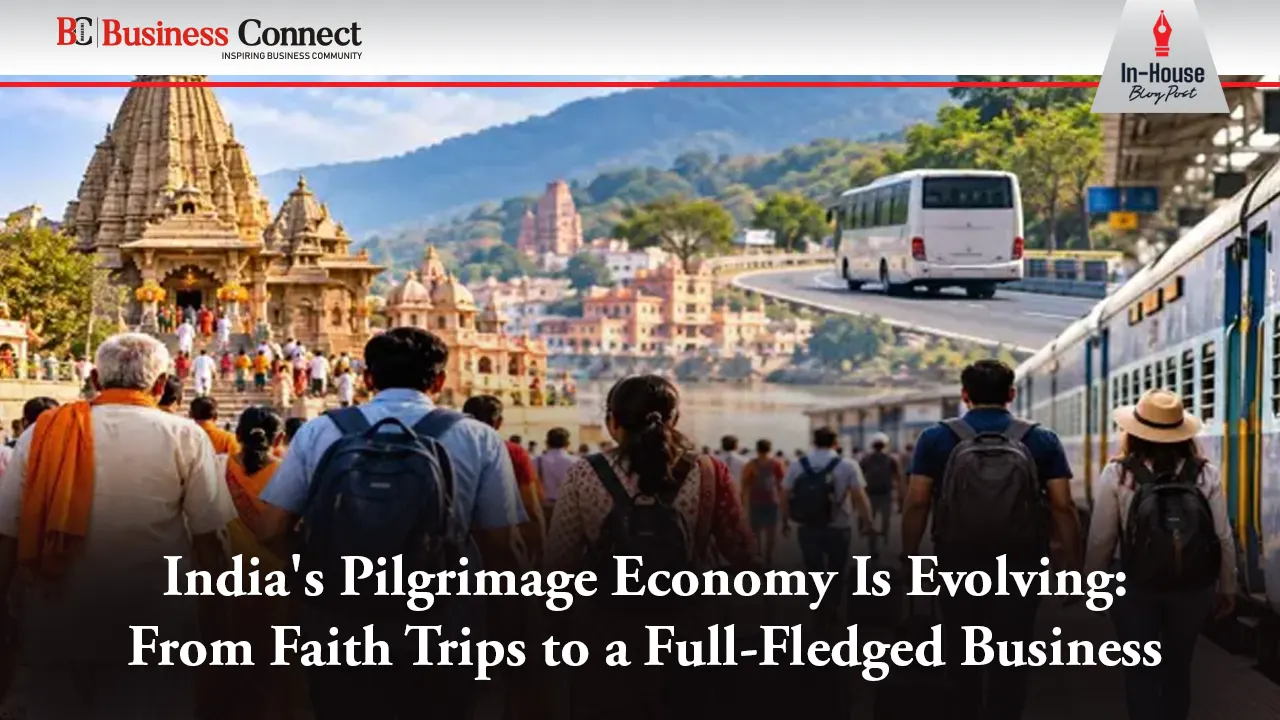

Pilgrimage has become one of the biggest reasons Indians travel. Hotels, state governments and operators are taking it as a serious business. Travellers now want to experience a journey, which was earlier just a darshan. Pilgrimage travel is offering a great opportunity; businesses can win by offering the right and required service.
Key takeaways
- The concept of pilgrimage travel is changing. Families and younger visitors want to worship with comfort, wellness and short breaks.
- At present, religious destinations hold a small share of branded hotel rooms. It is expected to hold a much bigger share in the near future.
- Crowds, seasonality and sanitation are some major risks in pilgrimage business.
Pilgrimage and religious travel contribute 48% of domestic overnight trips in India in the year ended June 2026, according to a MoSPI survey. A government survey also revealed that pilgrimage and religious travel was the main purpose behind domestic overnight trips, at 48%, ahead of every other. While this market has always been big, now it is being organised, upgraded and priced like an actual industry. This is how the pilgrimage economy in India is evolving and where the business opportunities are emerging.
The Recent Changes in Pilgrimage Economy
A few years back, a pilgrimage was considered a once-in-a-lifetime event. Now it has become a habit. Market reports show that people are going on pilgrimage as a regular activity that gives hotels, transport operators and local service providers more predictable demand.
The old pilgrimage was simple: people arrive, pray, and leave. In the new experience economy, visitors want to hear stories, become part of festivals, guided tours and wellness around the shrine.
When going on pilgrimage, people did not look for luxury facilities. These places were never designed as hospitality businesses. People have to stay at guesthouses, budget lodges, dharamshalas and family-run stays. Now honest brands have noticed the gap.
Religious and spiritual destinations hold about 6% of India’s branded hotel rooms today, but nearly 14% of the branded pipeline, about 19,760 rooms by 2030.
Potential Business Opportunities
redBus research cited in a recent trade report says Gen Z contributes 53% of spiritual travel bookings.
For a business owner, this presents a great opportunity in the industry. People want clean rooms, family-friendly food, senior-friendly design, easy transport and well-run experiences. A taxi driver, homestay owner, restaurant, handicraft seller, photographer or local guide can all become part of the visitor economy. Technology can also help in booking, live-streaming and digital planning tools are making pilgrimage trips easier to organise and manage.
Apart from the opportunities, the market is full of challenges. Sharp seasonality, sudden increases in crowds, traffic stress and sanitation issues are the main constraints. So plan your business for the peaks, but build it so it still works on an ordinary day.
Overall, the pilgrimage economy is moving from informal and seasonal to organised and year-round travel plans. The footfall is already there, and businesses will earn that by making the journey safer, cleaner and more comfortable without commercialising what people came for. Nashik’s Simhastha Kumbh, running from late 2026 to mid-2028, is expected to draw over 12 crore devotees. Businesses that plan early will show how this shift can work.
Frequently Asked Questions
What is the importance of pilgrimage in India?
Pilgrimage has an important role in shaping how India travels. Almost half of all domestic overnight trips are planned for religious reasons, so temple towns depend on it for jobs, trade and income. Pilgrims’ travel also pushes governments to work on roads, rail links and public facilities.
Is tourism in India increasing or decreasing?
It is continuously increasing. Domestic travel is rising, and religion-led trips are a big part of it. Better road connectivity, new hotels and government-backed infrastructure projects are making travel easier, so more families are taking short religious trips across the country.
What is the largest pilgrimage in India?
The Kumbh Mela, held in rotation at four river sites, is the largest. The 2025 Maha Kumbh drew over 66 crore devotees across 45 days, according to HVS, making it one of the biggest gatherings anywhere.
What is the most visited pilgrimage place in India?
Ayodhya, Varanasi, Tirupati, Amritsar and Vaishno Devi are among the busiest and most visited pilgrimage places. Visitor figures vary by source, year and counting method, so rankings differ depending on where you look.
What are the four main pilgrimage sites in Hinduism?
The four main pilgrimage sites are known as Char Dham; they include Badrinath in the north, Dwarka in the west, Puri in the east and Rameswaram in the south. A separate Himalayan circuit in Uttarakhand, also called Char Dham, covers Yamunotri, Gangotri, Kedarnath and Badrinath.
Add Business Connect magazine to your Google News feed
