

Caption for above image: The cladding is created from salvaged floorboards.
I met Roxane at the Design Institute of Australia’s Graduate of the Year awards, which I was shooting last year. I didn’t know it at the time, but she was on the SA/NT DIA Council, and we would become firm friends. We swapped thoughts on India, my home country, as she was about to travel there to give a talk on the ethics of design-led reuse practice in a colonial community.
Fast-forward a year and we arrive at this shoot of her design-led reuse practice, appropriately landing during Adelaide Design Week.
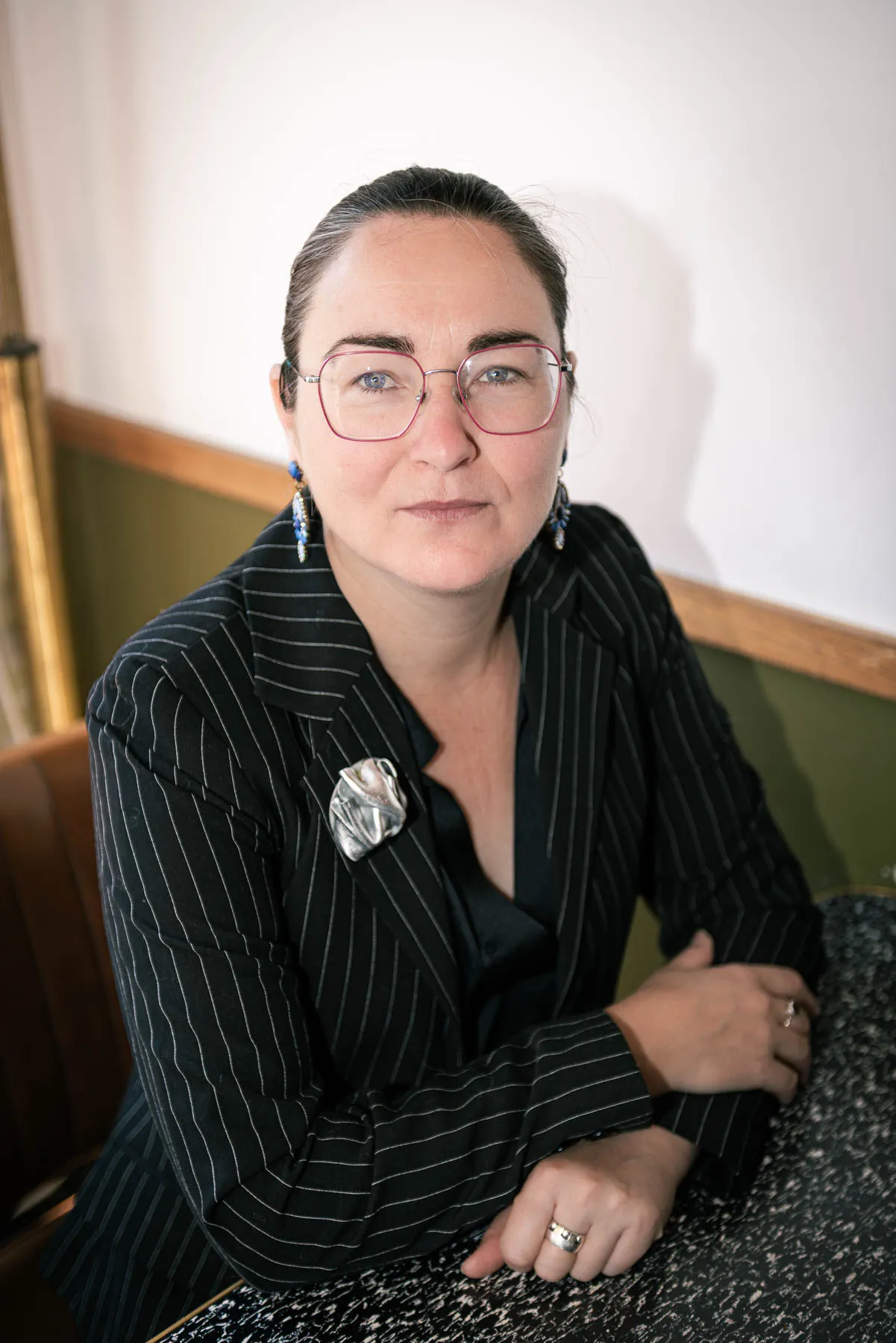
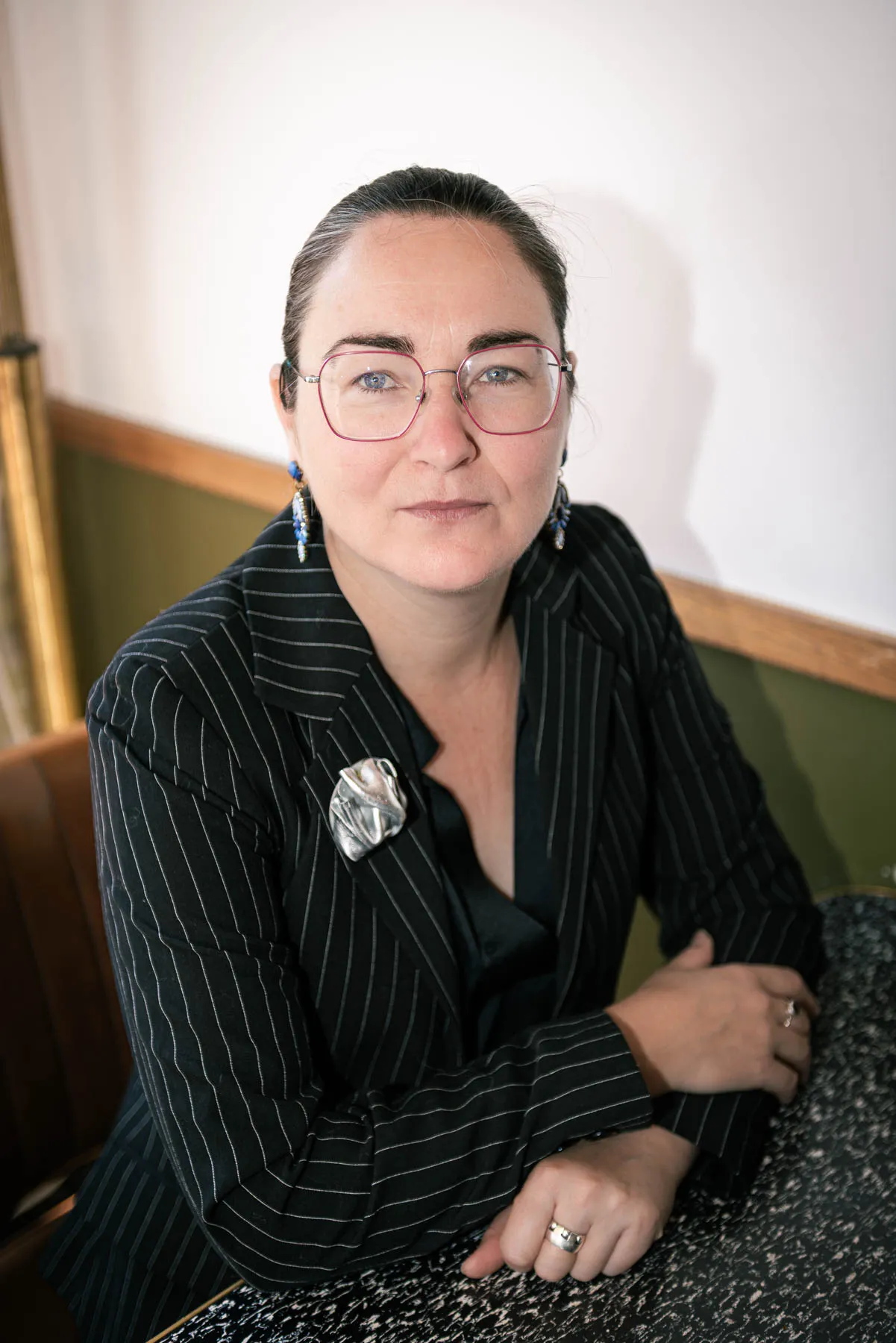
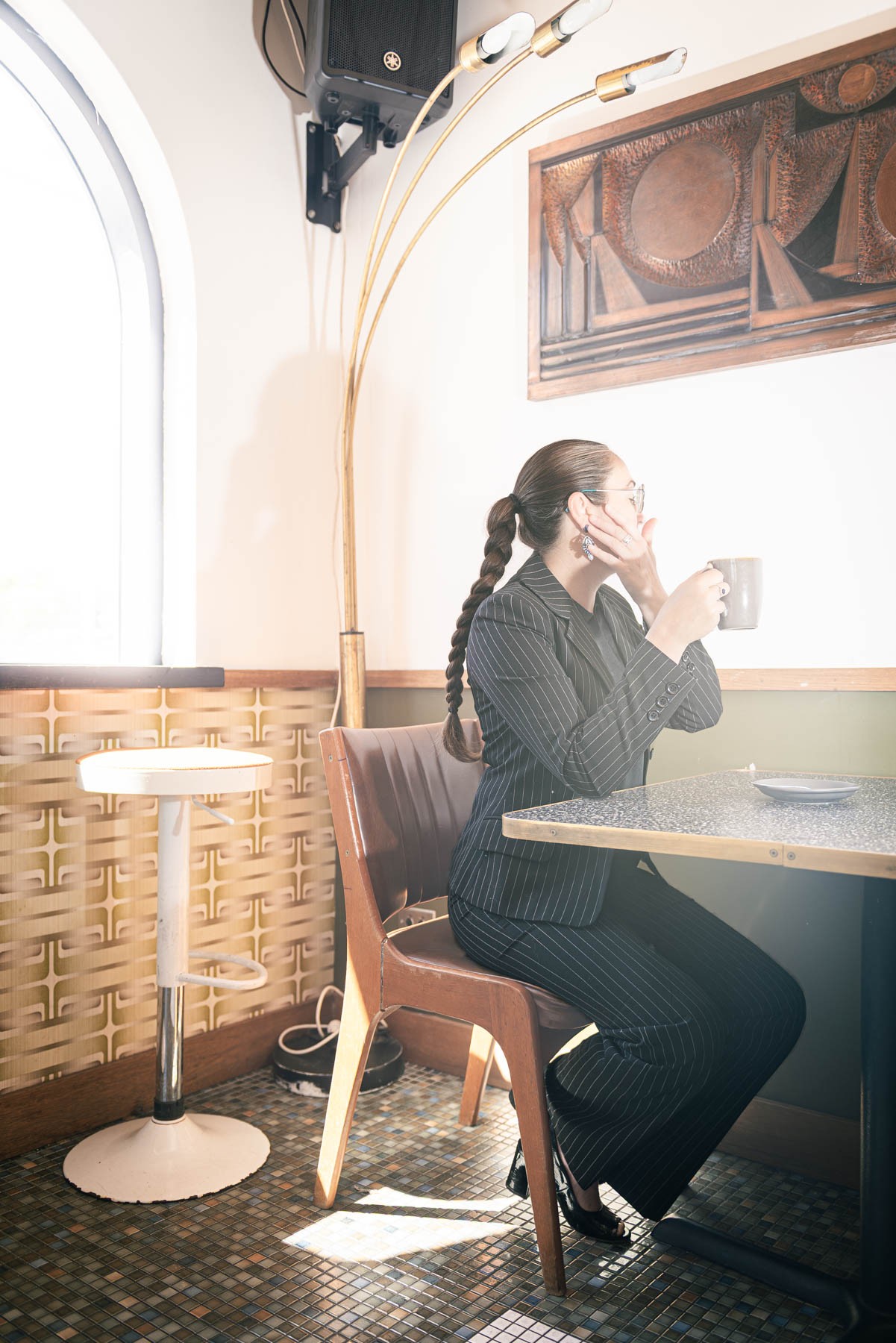
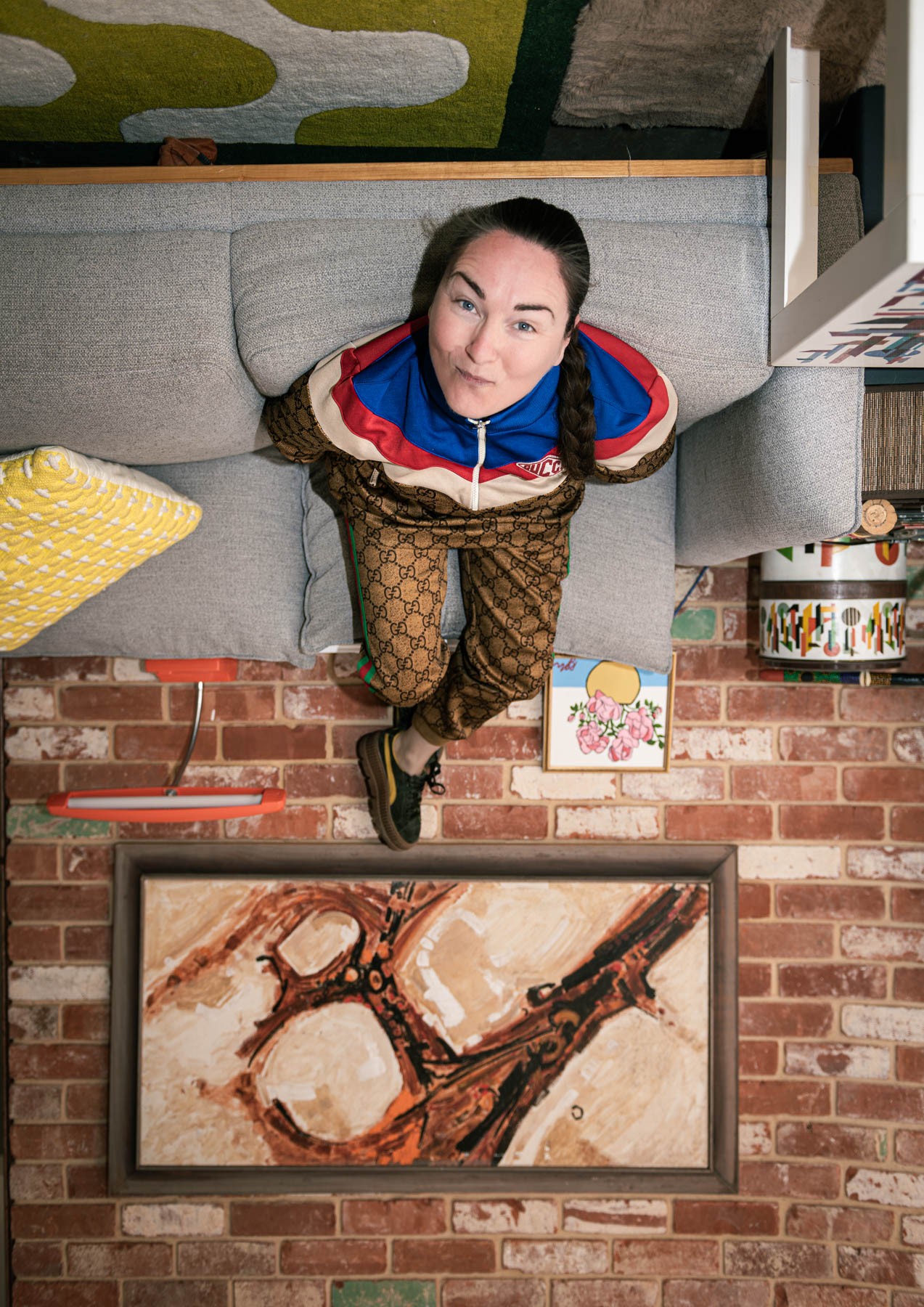
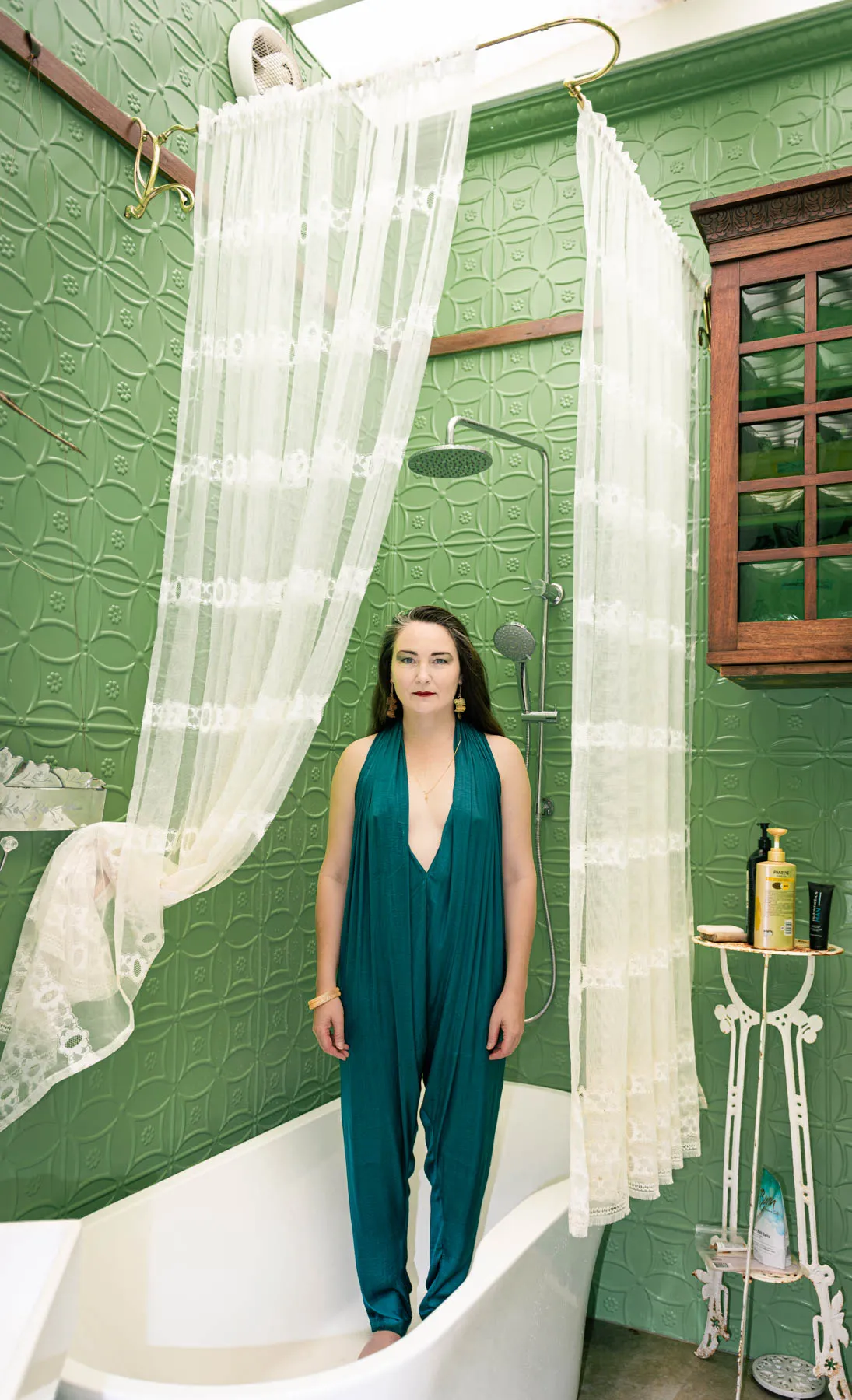
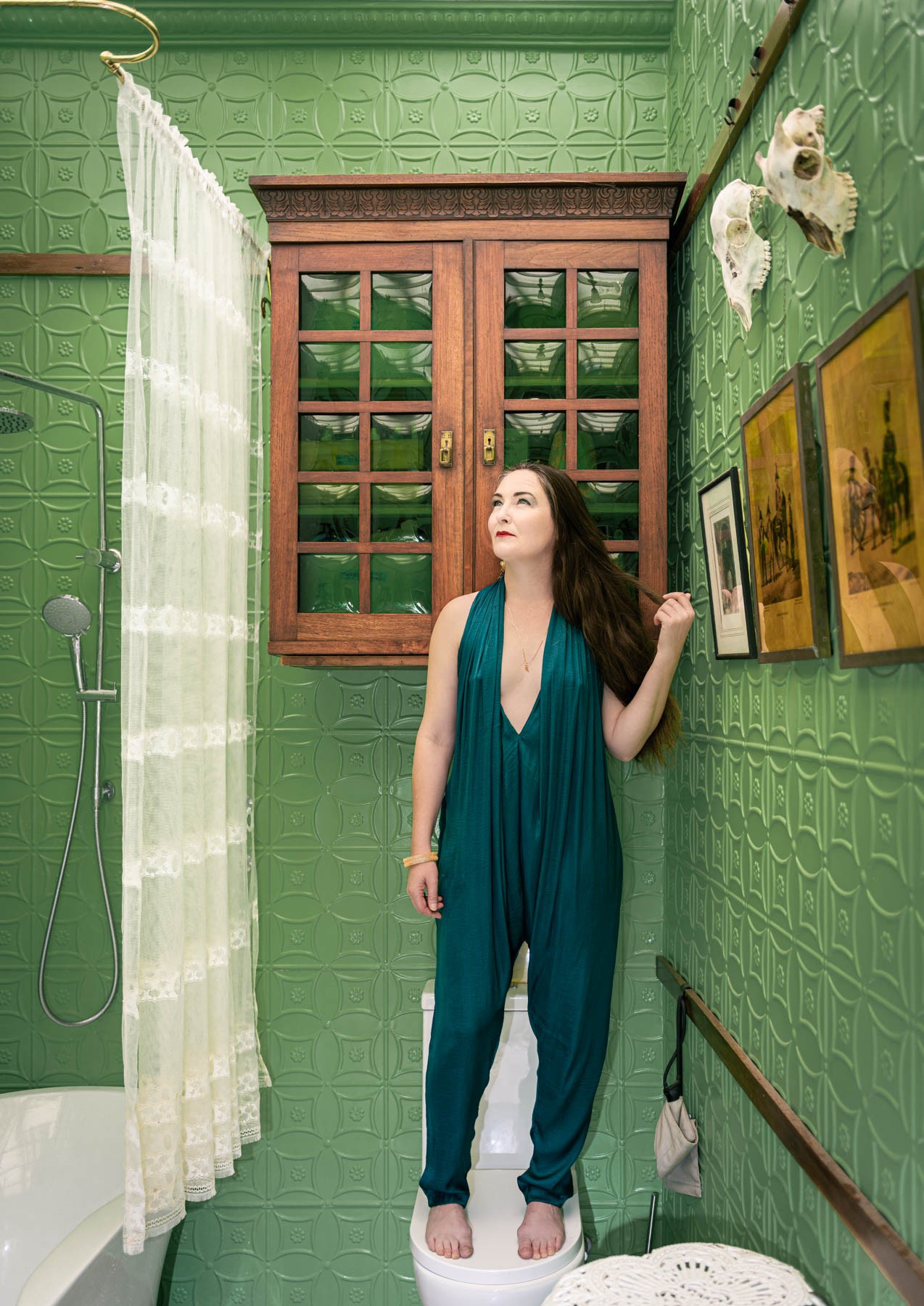
At a time when concern for environmental peril is at an all-time high, but the desire for beauty and craft hasn’t waned, Roxane’s work with what I might call “rubbish” and she calls “treasure”, is fitting. This photo series captures her design work at Mister Sunshine’s cafe in Thebarton and her own architecturally designed home (a collab with Fireside Architecture). I caught up with her about all things radelaide for a new photo / interview series I’m launching, EyesForAdelaide: The People.
N: I know you’ve travelled extensively internationally. Why have you chosen to base yourself in Adelaide?
R: About 20 years ago I was living in Milan, working for Noona Smith-Petersen. My sister was having the first grand-baby of the family back in Adelaide, and I returned for that reason. To be honest though, industrial relations in Italy, and most places, are nowhere near as good as they are here. If they were, I would have stayed. I grew up in Sydney, with two sisters still there, and I’m a huge advocate for Adelaide. Everything is accessible, it’s clean, the climate is awesome, and professionally we punch above our weight.
What is often cited as a drawback, our small population, is a benefit for me because it pushes us to know more. In places with larger populations, you can specialise very narrowly, but here we need to do it all because there just isn’t the population to specialise. This means that when we compare ourselves to practitioners elsewhere, we tend to demonstrate broader competence.
I also find there’s everything you want here, and so many people willing to help and collaborate. But our culture is to be quite underground, not because we want to be cool, but because we tend to be reserved about our talents and offerings. This can come across as cliquey, but on the whole I don’t think it is. It can be hard for newcomers to find the creative, unique and edgy here, not because it’s missing, but because it isn’t flaunted and so needs to be found. We could probably find a balance…
N: Yeah, I’ve found it a bit challenging as a migrant to find how to build creative relationships here.
R: I think we forget how hard it is to enter the city solo, and that we actually need to play a role in fostering the integration of our new creatives. It’s part of the easefulness of Adelaide that we forget it’s hard for some!
N: So tell me about your creative practice. What do you do, and what motivates you about it?
R: I’m interior architecture-trained, but my design work has spanned interiors, structures and landscape. My first natural pool design is being constructed in Aldgate at the moment, so I’m super excited about that! I love problem-solving, and weirdly I think that’s what I love most about design. It’s not just about creating something beautiful. It’s always about solving problems, one of which is how to make it aesthetically right for the task.
N: And I understand the problem of rubbish is central to your design work, is that right?
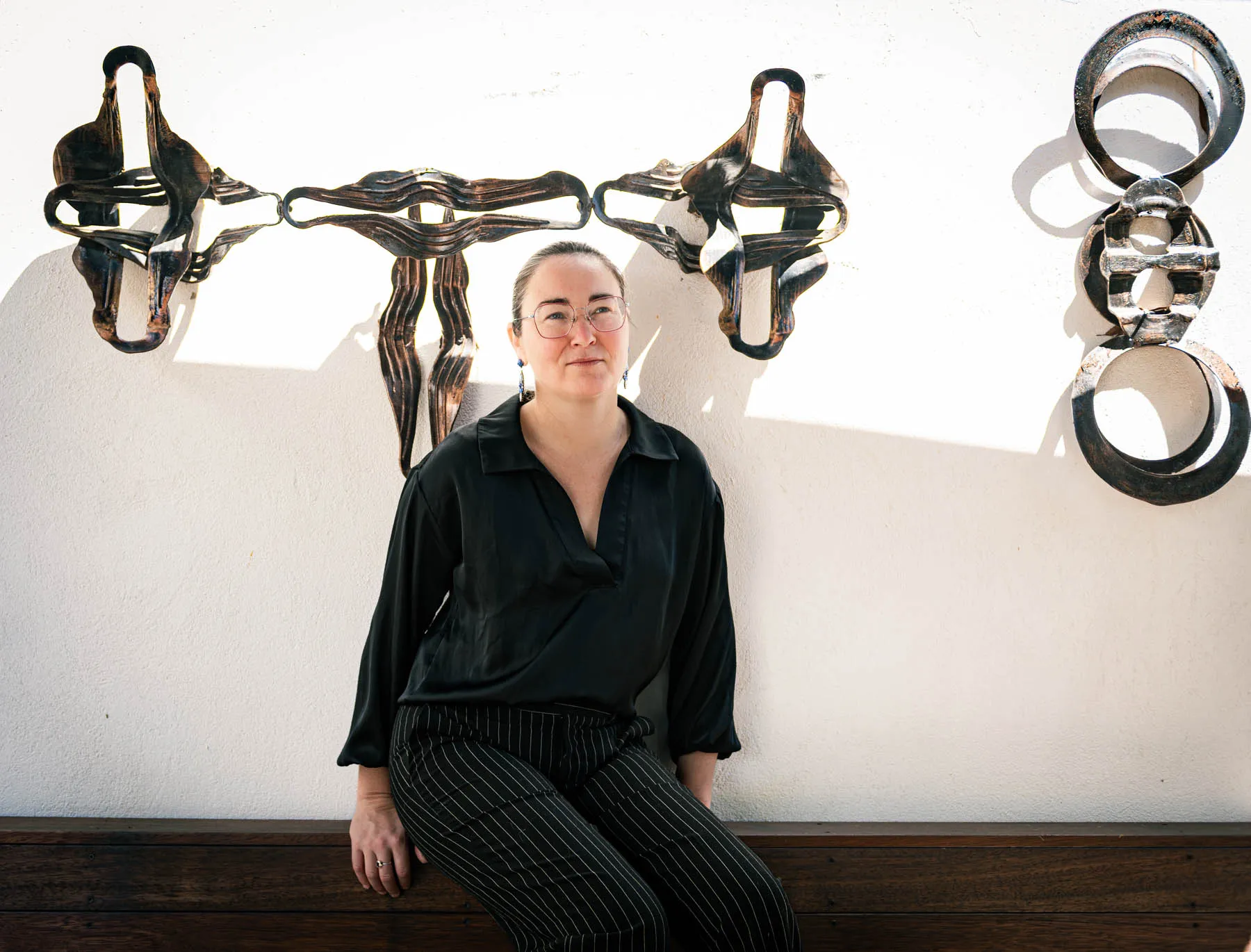
R: It sure is. I’m at the tail end of a PhD exploring how to help architects and designers bring salvaged materials into their digital design workflow, but it’s what I do as standard. I grew up in poverty, so a frugal mentality is in my DNA, but the need now goes beyond economics. It’s planetary. We have way too much rubbish and we’re still producing way too much stuff. Once you really see the volume of waste, it’s overwhelming. The design and construction sector is a big producer of waste and pollution, so I can’t unsee that, and I take responsibility for it in my practice.
N: So what do you actually do?
R: I make sure that at every turn I’m reusing materials and objects. At Mister Sunshine’s, the wallpaper, art, furnishings, glass panes and lighting were all salvaged. In my home, most of the structure is salvaged, as well as the furnishings and fittings. One of my favourite elements in the house is a window frame made from the Jarrah joists that previously held the floor up. A bug ate into the timber at some point and left a mark, which is now a feature of the frame. I just love it.
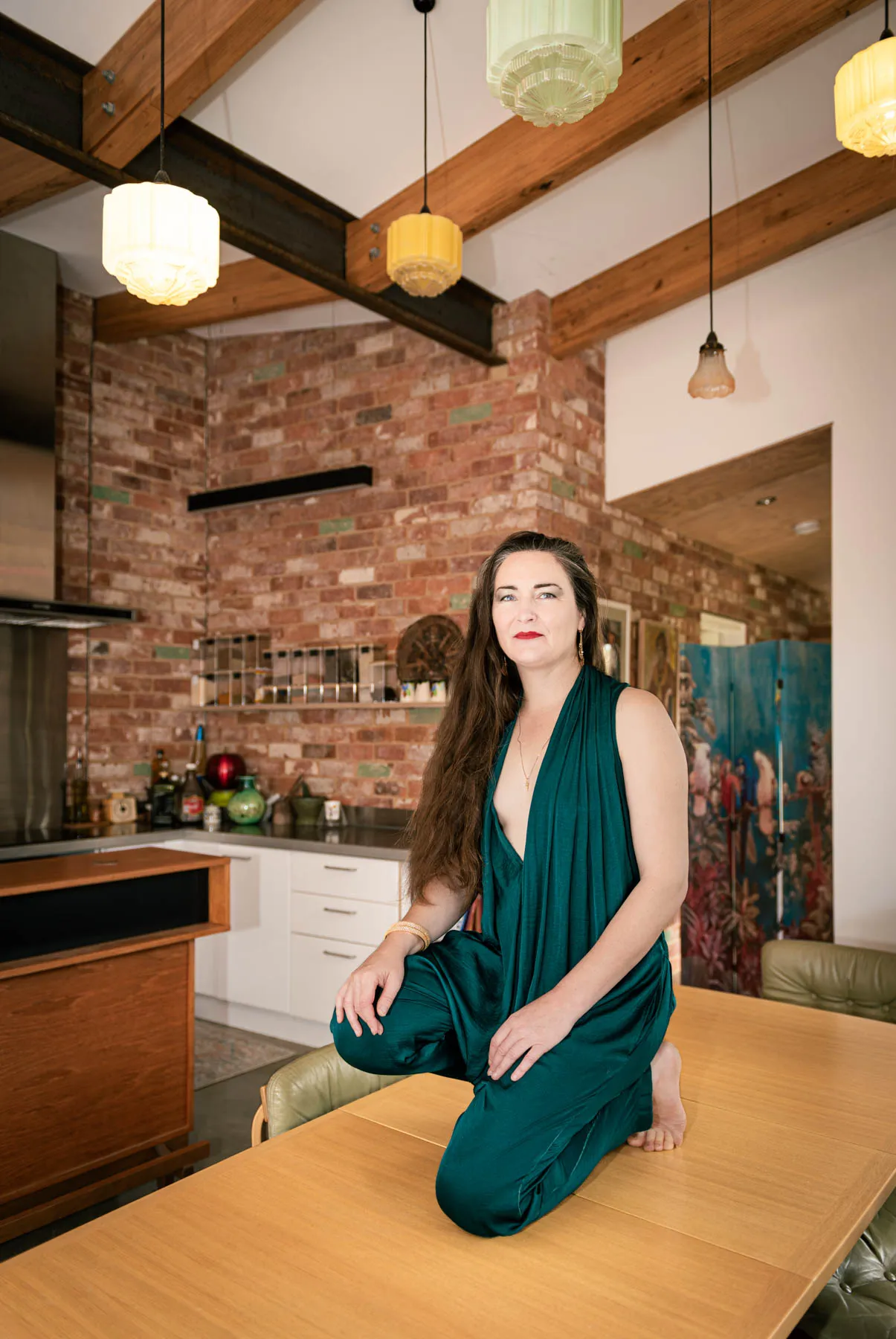
Roxane Adams is a designer and academic whose practice spans interiors, structures and landscape. Trained in interior architecture, she is completing a PhD exploring how architects and designers can incorporate salvaged materials into their digital design workflows. From commercial interiors to her own home, reusing existing materials is central to how she approaches design.
All images photographed by Naina.
EyesForAdelaide: The People is a new series featuring Adelaide creatives, makers, business owners and regular folks doing interesting work. If you’d like to be featured, email me at [email protected] with a few lines about what you do and where you’re based. I reserve discretion over who is featured.
