
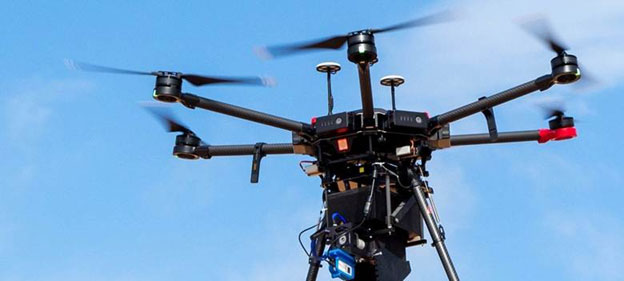

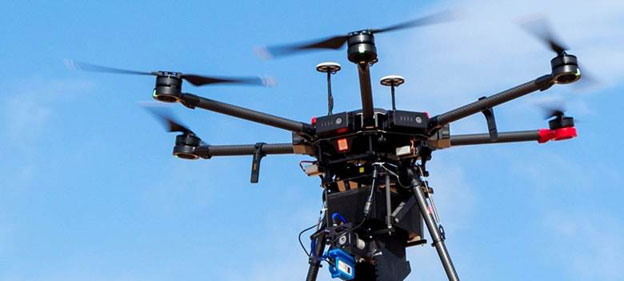
UNITED NATIONS, November 24 (IPS) – The growing deployment of autonomous weapons — particularly drones– in ongoing military conflicts in Ukraine, Palestine, Lebanon, Iran and in civil wars in Africa, has triggered a call for a treaty to curb the use of these unmanned deadly weapons.
Addressing delegates from more than 120 Member States last week, Secretary-General Antonio Guterres urged them, in a video message, to move towards negotiating a legally binding instrument to regulate the rapidly evolving technology, to include “clear prohibitions and restrictions”.
Even war has limits and “the nature of warfare is changing”, he told the 7th Review Conference of the Convention on Certain Conventional Weapons.
“New technologies, including autonomous weapons systems, present new humanitarian, legal, ethical and security challenges…I urge you to seize this moment. Take action to prevent the use and spread of these merciless weapons.”
Meanwhile, the UN High Commissioner for Human Volker Turk urged UN member states to urgently agree to such a treaty. In a statement, Turk cited the rapid pace of technological development and the risk that autonomous weapons systems could soon become widely accessible
But regrettably, the treaty, a legally binding protocol, never got off the ground –after 13 years of discussion.
The strongest resistance came mostly from the US and Russia, two veto-wielding permanent members of the UN Security Council.
Nicole van Rooijen, executive director of Stop Killer Robots, was quoted as saying: “Delaying the creation of a legally binding instrument puts civilians and humanity at risk”.
Meanwhile, in Ukraine, drone attacks across the country have damaged or destroyed homes, hospitals, education facilities, bridges and railway stations, while disrupting electricity, water and heating, leaving some 80,000 households and businesses without heat, with schools switching to remote learning.
The multiple lethal drone attacks have also killed humanitarian partners, along with destruction of UN buildings.
According to a report in the New York Times last month, drones in Ukraine have made battle tanks and armored personnel carriers (APCs), as well as helicopters, largely obsolete in the battle front.
The Times said the drone is capable of carrying thermal cameras, as well as equipment that can intercept electronic communications. In the US, it is called a “hunter killer”.
According to US Defense Secretary Pete Hegseth “drones are the biggest battlefield innovation in a generation, accounting for most of this year’s casualties in Ukraine”.
Meanwhile, in a recent report, the United Nations said it is alarmed by the continued drone strikes across Sudan that are killing civilians, including children, and that are disrupting essential services.
“Over the weekend, drone attacks reportedly killed at least 19 people, including 10 children, and injured others across West Darfur, South Darfur and North Kordofan States. We condemn all of these attacks unequivocally”.
“We are also deeply saddened by the killing of a Sudanese Red Crescent volunteer last week who was providing first aid at a health center in Um Darfa in Blue Nile State, that followed a drone attack on the facilities”.
Since the conflict began in April 2023, 25 Sudanese Red Crescent volunteers have reportedly been killed while on duty. The targeting of those who put their own lives at risk to help others in humanitarian settings is particularly heinous.
“We reiterate that civilians and civilian infrastructure, including medical facilities and personnel, must be protected in accordance with international humanitarian law”.
An October 22 New York Times report said a single drone attack had killed over 150, according to a Sudanese official.
Against the back drop of the Seventh Review Conference of the High Contracting Parties to the Convention on Certain Conventional Weapons (CCW), which took place in Geneva last week, Guterres said the Convention must remain fit for today’s world and called on countries to move towards negotiating a legally binding instrument to regulate autonomous weapon systems, with clear prohibitions and restrictions.
The Secretary-General said the Convention has helped reduce human suffering caused by weapons, but the nature of warfare is changing and new technologies, including autonomous weapon systems, are creating new humanitarian, legal, ethical and security challenges.
He said that the Convention must remain fit for today’s world and called on countries to move towards negotiating “a legally binding instrument to regulate autonomous weapon systems, with clear prohibitions and restrictions.”
Expressing his personal views, Tariq Rauf, former Head of Verification and Security Policy at the Vienna-based International Atomic Energy Agency (IAEA, told Inter Press Service (IPS) the Seventh CCW Review Conference (16–21 November 2026 in Geneva) ended without formal adoption of its agenda or rules of procedure. Russia blocked the opening session over EU’s speaking rights.
In international arms control forums such as the UN General Assembly’s First Committee (Disarmament), the nuclear Non-Proliferation treaty (NPT) review process, IAEA General Conference and Board meetings, and now at the CCW review conference, increasingly the EU is perceived as a “disruptive actor” and “hypocritical” by many delegations, given its strong interventions on the matter of the Ukraine war but relative silence on the Gaza genocide and attacks on Iran, he pointed out.
“The entire week was conducted informally, depriving the Conference of its mandate to review the Convention. On lethal autonomous weapons systems (LAWS), the Conference fell short of treaty negotiations”.
After overnight talks, Rauf said, States agreed to language directing them to “elaborate, by consensus, an instrument” over 2027–2028 (not “negotiate”; “prohibitions and restrictions” dropped at Russia’s insistence).
The legal status and content of any future instrument remain deliberately ambiguous, subject to CCW consensus (single-party veto).
The lack of a LAWS outcome is a missed opportunity after more than a decade of work. States most committed to legally binding autonomous weapons rules are increasingly prepared to pursue them outside the CCW framework if the CCW remains blocked.
Whether a comparable “Oslo Process” for autonomous weapons will be launched depends on whether the 2027–2028 CCW elaboration process produces meaningful results, and on the political will of the pro-treaty majority to shift venue if it does not. An “Oslo Process” alternative hinges on 2027–2028 CCW progress and pro-treaty States’ political will,” declared Rauf.
Laura Bruun, Senior Researcher, Governance of Artificial Intelligence, at the Stockholm International Peace Research Institute (SIPRI) told IPS: “This is a critical juncture for future governance of Autonomous Weapons Systems (AWS).”
After 10+ years of discussions, most states argue that the time is ripe to move towards negotiating a new protocol. Specifically, a majority of states, cross-regionally, call for the need for a legally binding instrument to prohibit and regulate AWS (along the lines of the calls made by the UN Secretary-General), she said.
This includes the Arab Group, the Non-Alignment Movement (NAM), the African Group and a group of 7 states counting Austria, Belgium, Brazil, Ireland, New Zealand and Panama.
Meanwhile, few, but major military states like the USA, Israel and Russia are against a legally binding instrument. The USA proposes a new 5-year mandate towards a non-binding instrument, Bruun pointed out.
“Russia has spent the week stalling the meeting, raising procedural issues over the participation of observers. This means that instead of discussing what the next mandate should be, states have been forced into informal mode to discuss how to solve the procedural issue.”
She said the CCW has not adopted a new protocol in 30 years and the pressure is on for it to show that it is an effective IHL instrument. However, the AWS debate is challenging for many reasons.
First, for the first time, states are not discussing the regulation of a tangible weapon or certain effects; they are discussing the human role in targeting decisions which give rise to a number of conceptual, legal and ethical issues not considered by the arms control community before.
But the AWS debate, she argued, is also challenged by the political climate in which negotiations take place.
‘We are in what we call an ‘arms control winter’ where states are more interested in rearming rather than disarming, or watering down (or even opting out) of existing legal obligations (consider the debate around states leaving the anti-personnel land mine treaty)’.
Therefore, if the CCW fails to deliver in the eyes of the majority of states arguing for a legally binding instrument, it is not unlikely that states will take the process outside of the UN, following the paths of the Ottawa and Oslo Conventions.
This has the benefit that they can develop the instrument they see fit, but with the clear disadvantage that there will be less (if any) buy-in from militarized states and so it will not apply to them.
‘So, I guess the question facing the majority of states is what’s best: having a watered-down conversation that has everyone in it (not least the big military powers) or pursuing a substantial instrument that, however, only applies to states unlikely to use AWS anyway,’ she declared.
IPS UN Bureau Report



© Inter Press Service (20261124065723) — All Rights Reserved. Original source: Inter Press Service
