
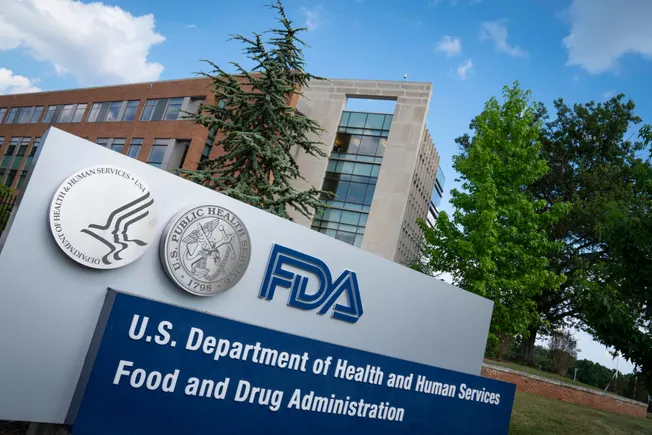

The FDA on Monday proposed a rule requiring food companies to provide more information on new ingredients before they enter the food supply, addressing a so-called “loophole” that has become a major policy priority of Health and Human Services Secretary Robert F Kennedy Jr. and the Make America Healthy Movement.
The rule does not establish a new premarket review system for ingredients, but instead requires companies to submit data for ingredients self-affirmed as safe under a controversial approval framework called Generally Recognized as Safe, or GRAS.
GRAS allows food manufacturers to bypass premarket review on certain chemicals or additives if they are considered safe among qualified experts. While companies can petition the FDA to review an ingredient and grant it GRAS status, they also can “self-affirm” that their products are safe based on the conclusion of a scientific expert panel.
The self-affirmation pathway has become a major target of Kennedy’s MAHA agenda, and the Trump administration has argued that the voluntary framework allows companies to sneak in ingredients that could potentially be unsafe to consumers. The new rule would shift to a mandatory notification system and close “a decades-old information gap,” Acting FDA Commissioner Kyle Diamantas said on a press call.
“Because manufacturers can self-affirm GRAS status without informing the agency, the FDA continues to lack a complete inventory of substances in the domestic food supply,” Diamantas said. “Decades of administrative experience demonstrate a clear need to update this voluntary structure to enable FDA to better carry out its statutory responsibility to prohibit the use of unsafe additives in food.”
All manufacturers introducing a new ingredient to the food supply under the newly proposed GRAS pathway will need to notify the FDA detailing why the company believes the product is safe. Companies will also need to submit information for ingredients already on the market through the self-affirmed GRAS framework, with Diamantas saying there will be a “streamlined submission pathway” for these substances.
Companies who previously petitioned the FDA to approve an ingredient under GRAS and received a “no safety questions” determination will be exempt from the rule.
Safety information provided by companies will be housed in public online inventories to “ensure greater transparency” for consumers, Diamantas said. The information will also give the FDA more visibility to make post-market safety determinations as the agency looks to revisit approval of chemicals already in the food supply.
The GRAS framework has existed since 1958, but the FDA introduced the self-affirmation pathway in 1997 after the agency said “it could no longer devote substantial resources” to determining whether an ingredient is safe. The agency is supposed to respond to companies who provide safety data within 180 days under current rules, though the process commonly took five months or more.
Under the new rule, the FDA will have to make a pre-filing decision within 45 days to ensure companies have satisfied all elements of the GRAS notification process. The agency will then make its safety determination within 180 days.
The FDA’s authority to require companies to submit GRAS notifications is unclear, especially in light of a recent Supreme Court ruling that reduced the power of federal agencies. Diamantas added that the FDA is working with Congress on legislative options “to further address the GRAS process and nutrition reform through statute,” which could potentially shield the agency from future litigation.
Diamantas noted limitations to FDA’s authority on the press call and stressed that companies can still enter the market during the evaluation of the GRAS process.
“The proposed rule advances and improves transparency and the agency’s oversight of the U.S. food supply while respecting the limitations of our authority under the relevant statute,” Diamantas said.
The GRAS notification rule will be available for public comment for 120 days. HHS and the USDA have also submitted a proposed definition of ultra-processed foods for review, with officials saying more information will be shared at a later date.
